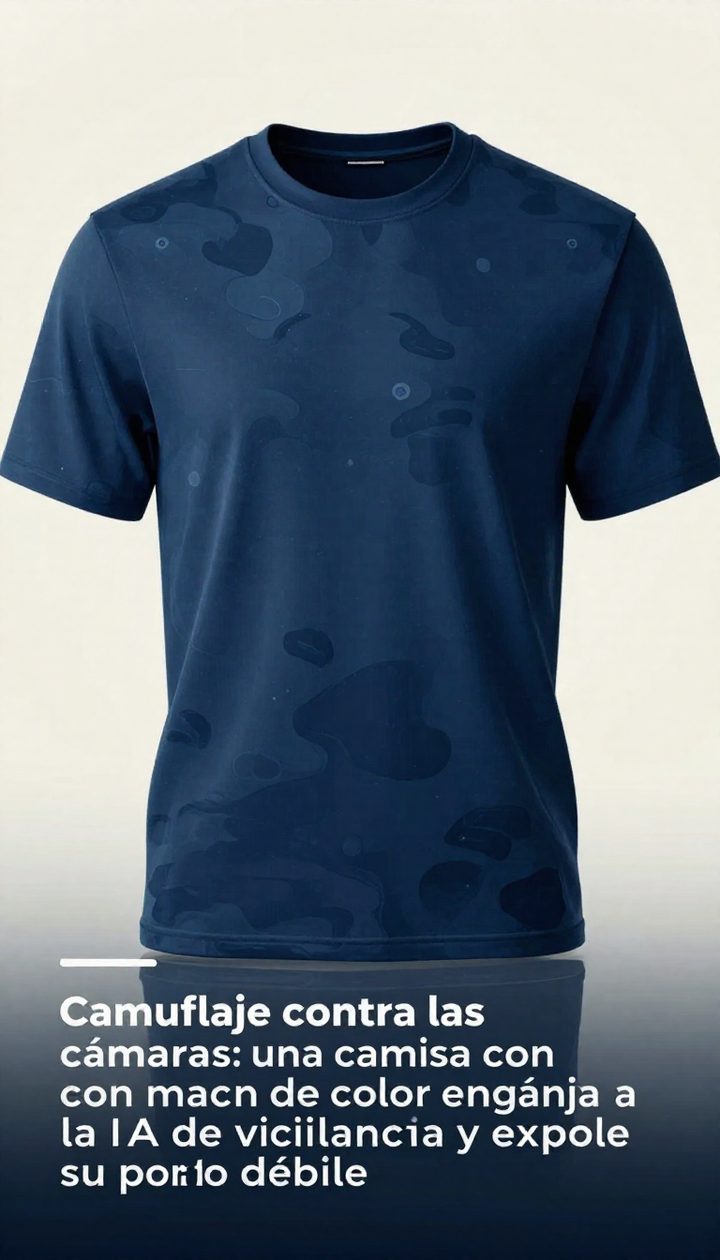
Camouflage against the cameras: a T-shirt with colored blotches fools surveillance AI and exposes its weak spot
🕒 Published on Zendoric: September 6, 2026 · 11:50
✨ AI-generated · how it's made
German designer Simon Weckert tested a T-shirt covered in red and green spheres at a Berlin metro station that prevents AI video surveillance systems from recognizing a human being. There is no magic to it: it is an 'adversarial attack' that breaks the statistical logic these networks use to learn how to detect people.
📚 Go deeper

DeepMind co-founder on the dilemma of containing technologies that do not want to be contained.
As an Amazon Associate, Zendoric earns from qualifying purchases; the price does not change for you. · all our recommended books →
By Zendoric · September 6, 2026.
A T-shirt printed with red and green spheres on black fabric pulled off something no balaclava can: becoming invisible to AI without hiding the face. The project, dubbed "Digital Camouflage" by German designer Simon Weckert, was tested in August at the Kottbusser Tor metro station in Berlin's Kreuzberg district, a space with multiple cameras constantly analyzing visitors. When the garment is worn, person-detection systems fail to identify the wearer as a human being, as Weckert himself explained.
The key is not optical but statistical. Object-detection networks process an image in layers: the first ones identify edges, contrasts and texture gradients; the deeper ones look for patterns of body parts, such as silhouettes and proportions. Weckert's print attacks both levels at once: the heavily saturated color transitions overload the early layers, and the overlapping shapes break the continuity of the outline, so the algorithm never manages to assemble the parts into a single recognizable figure. As the designer himself sums it up, "the print drowns out the soft statistical whisper that says person" — a graphic way of saying that these systems never learned what a human is, they merely memorized its probable appearance from millions of training images.
The design did not come out of a sketch: it came out of an "adversarial loop," the iterative process of testing the pattern against a real detector, tweaking it, and testing again. Weckert used YOLO, an open-source object-detection system, and subjected the garment to independent testing by the outlet Gizmodo. His own description of the process is the most honest part of the story: "you can't design against machine perception by eye, only the machine can tell you what it doesn't see." The very AI watching over the square ended up teaching the T-shirt how to hide from it.
This is not Weckert's first prank against cities' algorithmic infrastructure. Back in 2020 he had already fooled Google Maps by wheeling around a cart loaded with mobile phones, simulating a nonexistent traffic jam for the algorithm. More broadly, the computer vision research community has spent years documenting that so-called "adversarial patches" — patterns designed specifically to confuse a model, not the human eye — can make objects or people invisible to conventionally trained detectors; what is new here is that this laboratory finding has become a viral fashion item, deliberately eye-catching to people and, precisely for that reason, invisible to the machine.
Our reading is that this T-shirt is less an escapist trick than an uncomfortable diagnosis of the algorithmic surveillance already operating in streets, stations and shops: much of that infrastructure does not "see" people, it recognizes fragile statistical patterns, and fragile is also a synonym for manipulable. That opens up a predictable arms race: as soon as these systems are retrained with examples of adversarial camouflage, the pattern will stop working and the next one will appear. It is a short-term fix, not a structural answer to how much surveillance we accept in public space in exchange for security or convenience; that negotiation can only be settled with clear rules on where and how recognition AI is deployed, not with tactical fashion. In the long run, when artificial perception stops being simple texture recognition and moves toward a more robust semantic understanding — the kind of progress that will also make medical diagnosis or autonomous driving more reliable — these camouflage tricks will lose their effectiveness; but the gap they reveal today, the distance between what AI thinks it sees and what is actually there, is exactly the kind of fragility worth understanding before entrusting these systems with decisions that carry real consequences.
📚 Go deeper
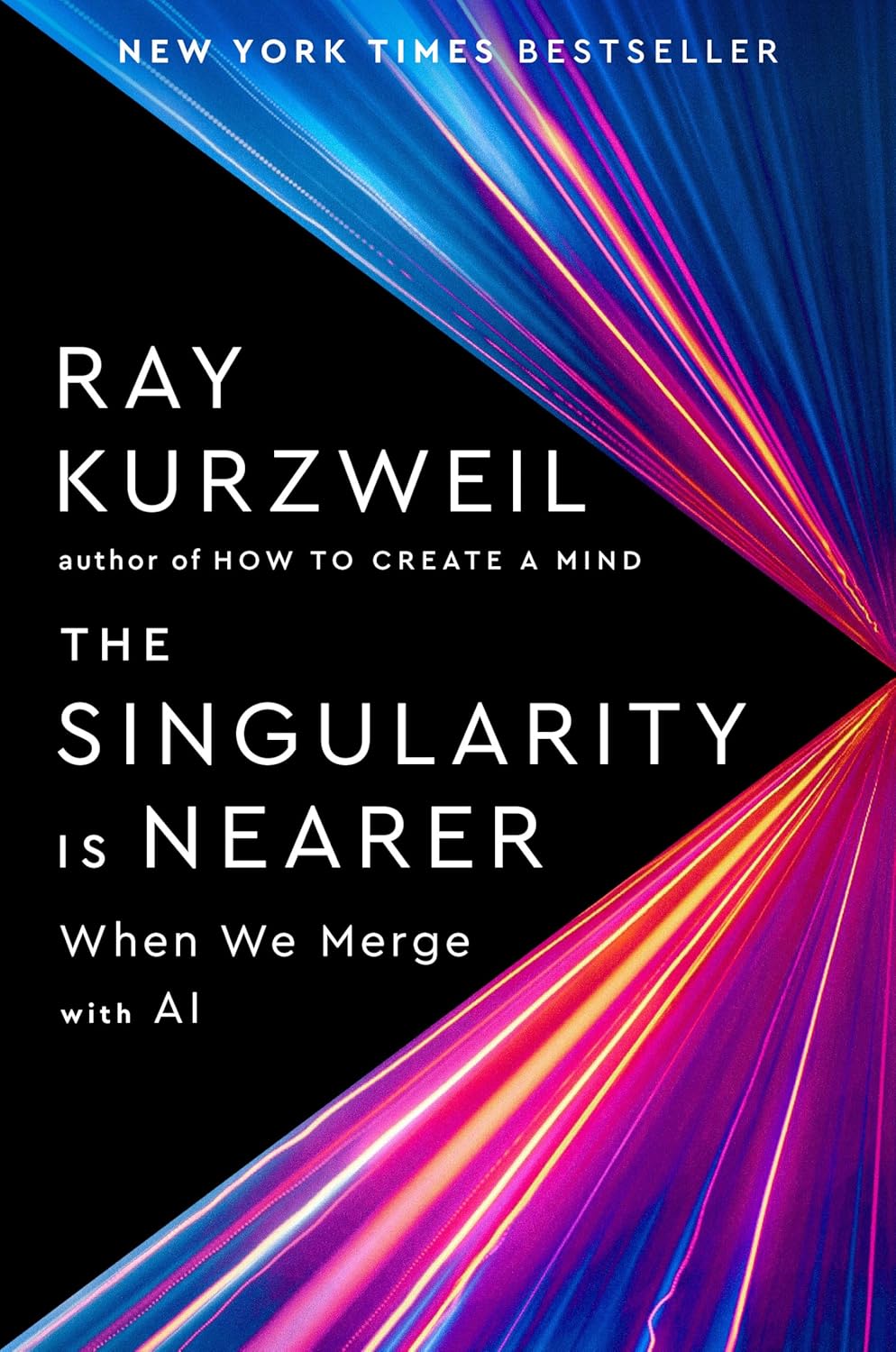
Twenty years after "The Singularity Is Near", Kurzweil revisits his predictions and keeps the date: human-AI merger around 2045.

AI as the latest chapter in the history of information networks, from gossip to the printing press to the algorithm.
As an Amazon Associate, Zendoric earns from qualifying purchases; the price does not change for you. · all our recommended books →
🔗 Related on Zendoric
- An AI-'invisible' shirt in Berlin exposes how fragile algorithmic surveillance is · 2026-09-01
- IPN students build AI to anticipate wildfires: citizen monitoring as a green shield · 2026-06-29
- NVIDIA lets an agent deploy 3D camera networks with a prompt: DeepStream 9.1 ends manual calibration · 2026-07-19