AI moats in the era of scaling laws

🕒 Published on Zendoric: September 4, 2026 · 09:12
✨ AI-generated · how it's made
The article, an opinion piece, poses a central question: what is the economic value of being first to reach a given level of artificial intelligence when that intelligence is increasingly reproducible by others?
📚 Go deeper
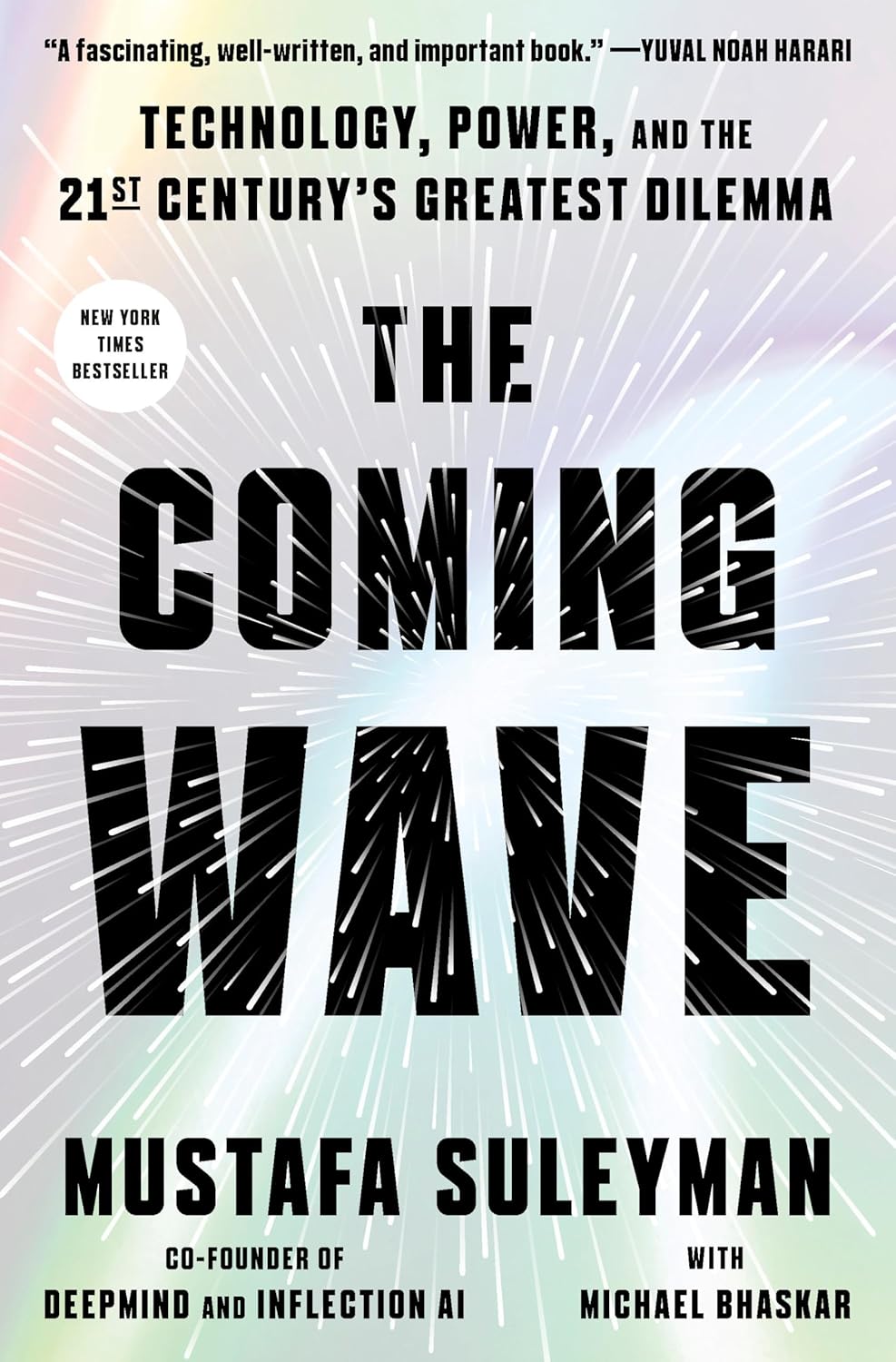
DeepMind co-founder on the dilemma of containing technologies that do not want to be contained.
As an Amazon Associate, Zendoric earns from qualifying purchases; the price does not change for you. · all our recommended books →
By TheSequence · The Sequence Opinion, Issue 926.
The article, an opinion piece, poses a central question: what is the economic value of being first to reach a certain level of artificial intelligence when that intelligence is increasingly reproducible by others?
To illustrate the point, the author proposes a thought experiment: imagine an AI lab that invests several billion dollars in chips, energy, researchers and data, and as a result trains the world's best model. Benchmarks improve, developers migrate to that model, and its release becomes an event for the entire industry. For a moment, that company looks like a medieval castle with very thick walls.
But the text notes that something strange happens soon after: in barely six months, another lab reaches roughly equivalent capability. An open model delivers most of those capabilities at a fraction of the price. Distillation makes it possible to compress parts of the original model's behavior into smaller systems. And a 'router' quietly starts sending each query to whichever model is cheapest or most suitable at any given moment. The castle, the author says, is still impressive, but the defensive moat has shifted.
To analyze this phenomenon, the article turns to Hamilton Helmer's 'Seven Powers' framework, which is useful because it distinguishes between having a good product and having a durable business. Under that framework, competitive power requires two elements: a benefit (something valuable) and a barrier (something that prevents competitors from easily replicating it).
The author argues that AI is unusually good at building 'castles': scaling laws have made model capability partly predictable, so adding compute, data and engineering tends to translate into performance gains. He qualifies that the AI frontier is not an exact vending machine —you cannot insert a billion dollars and get a precise unit of intelligence— but he acknowledges that it comes closer to that model than almost any previous technology.
That predictability, he notes, makes capital enormously important to competing at the AI frontier. But he also warns that it is dangerously easy to mistake that capital for a genuine 'moat' or defensive barrier: spending a great deal of money to train the best model does not, on its own, guarantee a sustainable competitive advantage, precisely because other players (rival labs, open models, distillation techniques, model-routing systems) can erode that advantage within months.
The email excerpt cuts off just as the next section, titled 'Progress Is Not Power...', begins, so the subsequent development of the argument is not available in the body received.
📚 Go deeper

The only novel on the list, by a Nobel laureate: an artificial friend observes humans with a blend of lucidity and innocence no essay achieves.

An MIT computer scientist connects AI, quantum physics and video games to take an uncomfortable question seriously: what if we live in a simulation? M
As an Amazon Associate, Zendoric earns from qualifying purchases; the price does not change for you. · all our recommended books →
🔗 Related on Zendoric
- China puts the AI business in check: models almost as good as Claude or ChatGPT and far cheaper · 2026-07-31
- China puts the AI business in check: models almost as good as Claude or ChatGPT and far cheaper · 2026-08-31
- Guterres warns that AI is advancing faster than the rules and calls for a global pact to protect children · 2026-07-07