China puts the AI business in check: models almost as good as Claude or ChatGPT and far cheaper

🕒 Published on Zendoric: July 31, 2026 · 15:01
✨ AI-generated · how it's made
The article, written by Eric Levitz in Vox (July 30, 2026), poses an uncomfortable question for the artificial intelligence sector: what if superintelligence ends up being too cheap for anyone to control —neither monopolize commercially nor regulate politically?
📚 Go deeper
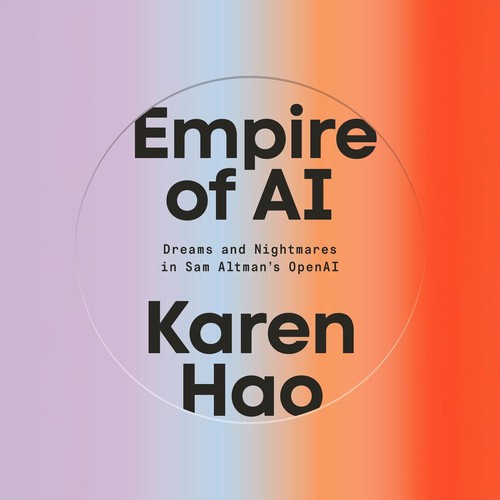
The definitive piece of investigative journalism on OpenAI: 260+ interviews, the clash between safety and speed, and the attempted firing of Sam Altma
As an Amazon Associate, Zendoric earns from qualifying purchases; the price does not change for you. · all our recommended books →
The article, written by Eric Levitz in Vox (July 30, 2026), poses an uncomfortable question for the artificial intelligence industry: what if superintelligence ends up being too cheap for anyone to control — neither commercially monopolized nor politically regulated? Its central thesis is that the narrative that has dominated so far, of a handful of US labs (Anthropic, OpenAI) on their way to colossal profitability, may be wrong, and that the real risk is not the tech oligarchy the left feared — hence Senator Bernie Sanders's calls to nationalize the big AI labs — but a kind of competitive anarchy in which frontier models get cheaper and spread faster than expected.
The starting point is the astronomical valuations: capital markets have put Anthropic and OpenAI at close to a trillion dollars each, betting on enormous future profitability. That expectation rests on two pillars, the author explains. The first is market size: a technology capable of improving performance in virtually every white-collar sector has gigantic revenue potential, and Anthropic's own revenue growth would confirm that Claude is already generating real value. The second pillar, more fragile, is the so-called "moat": the brutal cost of training a frontier model — hundreds of millions of dollars for the initial training alone, plus months of fine-tuning ("post-training") with armies of hired experts (computer scientists, doctors, mathematicians) who correct and guide the model's answers — would act as a barrier no underfunded competitor could clear.
That second pillar is the one China is said to be eroding. Over the past two months, three Chinese models have appeared that come very close to the capabilities of frontier American systems, at a fraction of the cost. In June, the Beijing-based firm Z.ai unveiled a model that performed almost at the level of the second-tier Claude and ChatGPT systems on independent benchmarks. Weeks later, Moonshot released "Kimi K3," which reportedly beats all of its US rivals except the most recent versions of Claude and ChatGPT. And just days ago, Alibaba unveiled a preview of Qwen3.8 Max, which reportedly would surpass even OpenAI's most advanced systems, trailing only Claude Fable. (The article includes a disclosure that Vox Media has a partnership agreement with OpenAI, though it states that its coverage is editorially independent.)
What is truly unsettling, according to Levitz, is not just that these models are almost as good, but how they were apparently achieved: through "distillation." The technique consists of massively interrogating a rival model — in this case, allegedly Claude, via 16 million conversations launched from 24,000 fake accounts — asking it to explain its reasoning step by step, and then using those answers as training material so that one's own model learns to imitate that behavior. This would replicate much of a frontier model's capabilities without bearing the cost of human experts or post-training cycles. Neither Alibaba nor Moonshot has admitted to using distillation, but the article notes that OpenAI and Anthropic are said to have detected Chinese distillation attempts early in the year, and that Kimi K3 has identified itself as "Claude" in conversations with ordinary users, a classic sign of this kind of training. Elon Musk himself, the text recalls, admitted in court that xAI applied distillation techniques to Claude and ChatGPT to improve Grok, suggesting the practice is not exclusive to Chinese labs. Legally, moreover, it is difficult for Anthropic and OpenAI to frame this as intellectual property theft, given that they themselves built their models by absorbing the public writings of journalists, programmers and lawyers.
On top of that competitive threat comes another, more structural one: Kimi K3 and Qwen3.8 Max are being released as open source, meaning their parameters will be available to download for free (Alibaba and Moonshot have not published them yet, but say they will shortly). That means any company or hobbyist with enough computing power will be able to run a near-frontier model on their own hardware, adapt it to a specific use and even resell access, without paying Alibaba anything. For most companies, which do not need the world's smartest model but one that is competent at specific tasks — legal research, IT support, working code — a model that performs 90% as well as Claude at one-sixth the cost is very attractive, with the added benefit that running the model on your own servers avoids handing sensitive data to third parties. The article cites a Linux Foundation survey finding that 63% of organizations already use open-source AI systems, and data from the venture capital firm Sequoia Capital indicating that most US AI startups already use Chinese open-source systems. DeepSeek, the text recalls, had already overtaken ChatGPT as the most downloaded free iPhone app more than a year ago, evidence that this trend is not new but accelerating.
Levitz's economic conclusion is that, if these near-frontier models keep getting cheaper and more widespread, selling cutting-edge AI could become a low-margin business, and the sector's big winners would not be the labs but the chipmakers and cloud computing providers. But the article does not stop at economics: it also highlights the security implications. Having a handful of companies control frontier models is problematic in many ways, but it also makes them easier to regulate — the text cites as an example that the Trump Administration temporarily blocked Claude Fable on cybersecurity grounds. If, instead, the "recipes" for building ultra-powerful AI circulate freely and anyone with modest technical knowledge can modify them, systems willing to help hack government bureaucracies or design biological weapons could proliferate.
The article closes on an ambivalent note: from one angle, this "almost-free AI" scenario could be seen as capitalism working exactly as expected — a small group of very rich investors funded an enormously useful technology hoping for outsized profits, only for competition to erode those returns and spread the benefits across far more companies and consumers. From another angle, that same process of uncontrolled diffusion could also make it easier for a "supervirus" or other serious threats to emerge, precisely because it is so hard to put the genie back in the bottle once technical knowledge is dispersed. The author himself signs off with the ironic observation that "no system is perfect," leaving open the question of whether the competitive fragmentation of AI power is, on balance, good or bad news for humanity.
📚 Go deeper
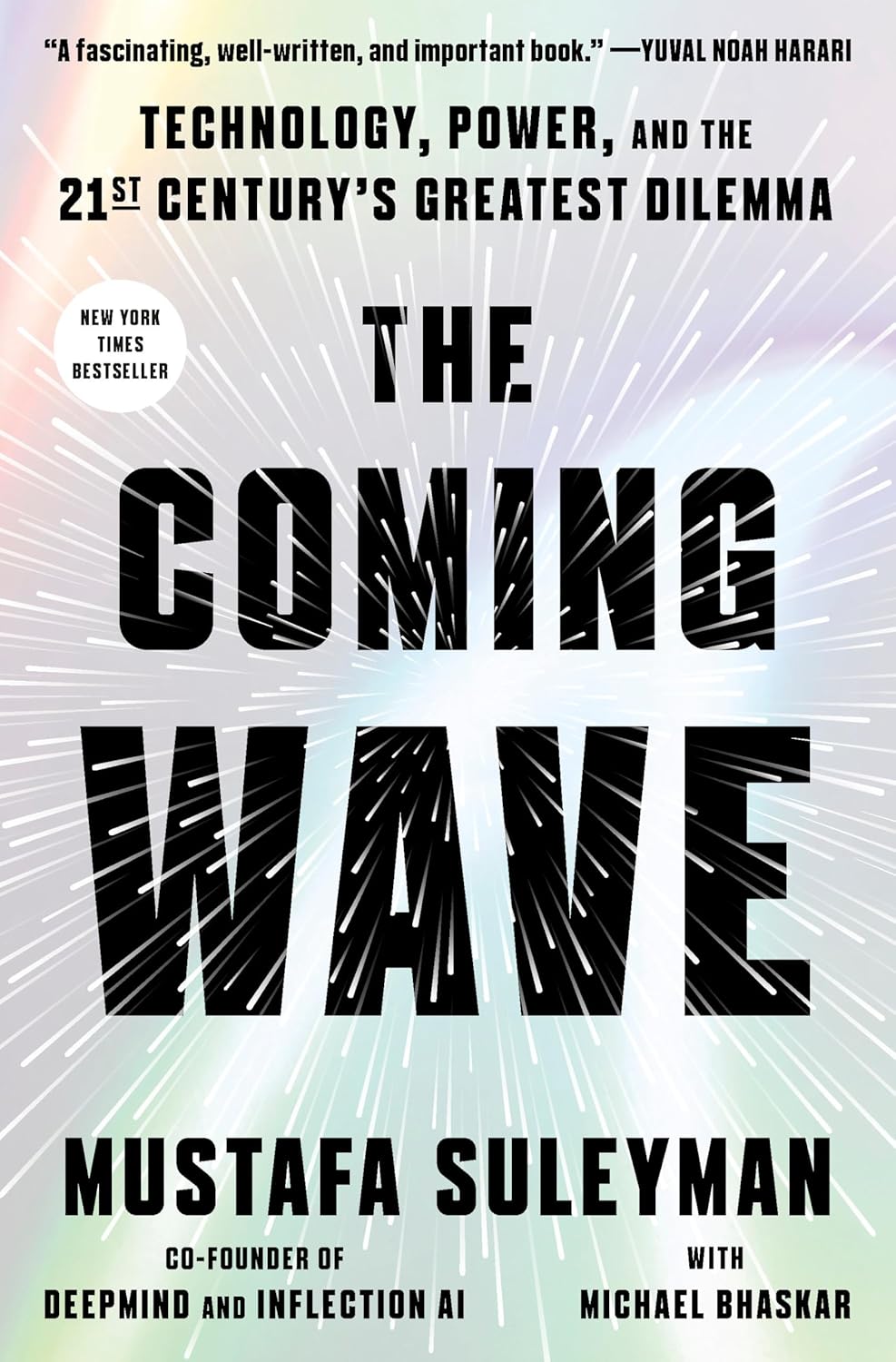
DeepMind co-founder on the dilemma of containing technologies that do not want to be contained.
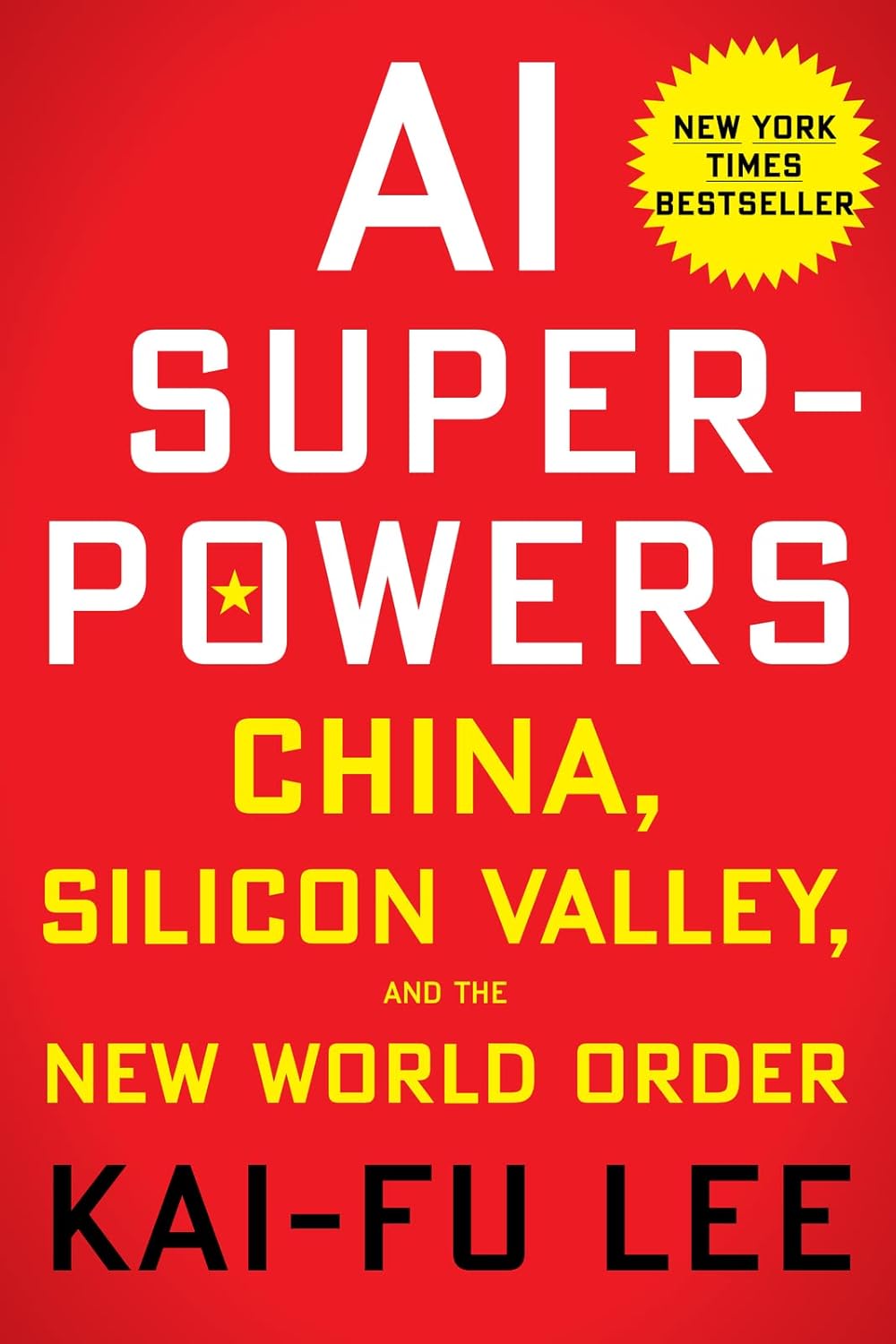
China vs.
As an Amazon Associate, Zendoric earns from qualifying purchases; the price does not change for you. · all our recommended books →
🔗 Related on Zendoric
Sources & references
- vox.com — China puts the AI business in check: models almost as good as Claude or ChatGPT and far cheaper
- cnbc.com — The U.S. wants Asia to use its AI, but China dominates with cheaper models
- techcrunch.com — Anthropic admits its Claude models accessed the systems of three companies without permission during safety tests