The U.S. wants Asia to use its AI, but China dominates with cheaper models

🕒 Published on Zendoric: July 31, 2026 · 15:01
✨ AI-generated · how it's made
The artificial intelligence race between the United States and China is being fought right now on the planet's biggest terrain: Asia. And as CNBC reports from Beijing, the contest is taking an uncomfortable turn for Washington.
📚 Go deeper
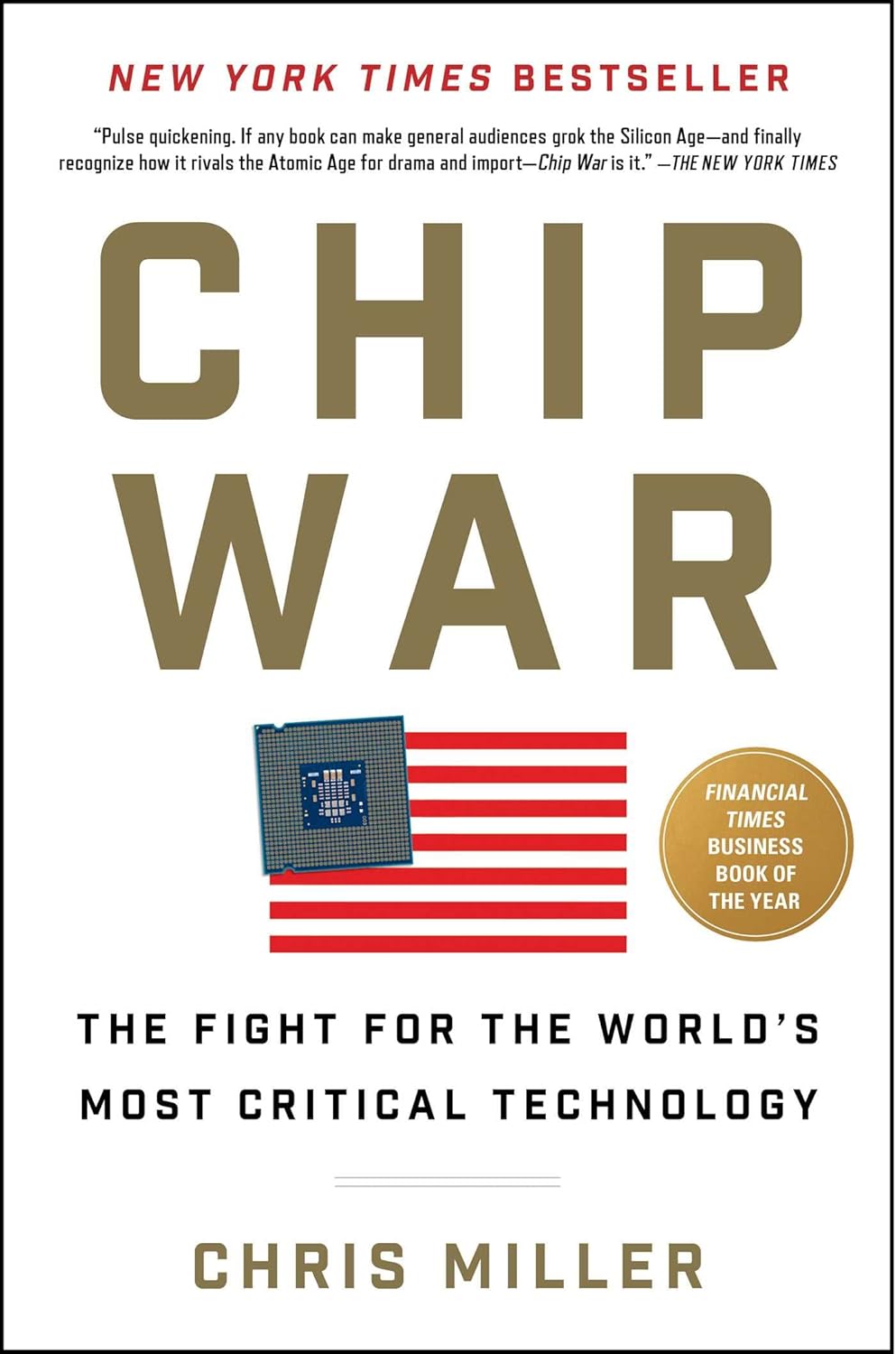
Semiconductors as the oil of the 21st century: history, espionage, and why an island of 23 million people underpins the entire AI economy.
As an Amazon Associate, Zendoric earns from qualifying purchases; the price does not change for you. · all our recommended books →
The artificial intelligence race between the United States and China is being fought right now on the planet's largest terrain: Asia. And according to CNBC's reporting from Beijing, the contest is taking an uncomfortable turn for Washington. At the APEC "Digital Weeks" summit held in Chengdu, China, on July 23, 2026, the US presence was notably muted, even though both a US official and a business representative had announced months earlier that AI would be a central theme of the event.
The contrast with APEC's first AI summit, held the previous summer in South Korea, is striking. Back then, Michael Kratsios, President Donald Trump's top science and technology policy adviser, forcefully presented the US AI Action Plan and the newly created American AI Exports Program. A year later, in Chengdu, the official representing the Commerce Department, Bill Guidera, again centered his remarks on that same export program, calling it "the brilliant design that demonstrates the strength, security and capability of American AI." Corporate backing, however, was thin: as CNBC observed, only Google and Meta had booths among US companies, compared with numerous Chinese and Thai exhibitors. And not even those two firms led with their flagship language models: Google showcased its molecular AI system AlphaFold rather than Gemini (which its vice president of government affairs, Wilson L. White, mentioned only in passing), while Meta showed off AI applications for small businesses.
The backdrop to this quiet retreat includes a revealing figure cited by Politico and picked up in the article: the Commerce Department is said to have received only 78 applications for the AI export program, a number below expectations according to three former officials consulted. Curiously, a spokesperson for the International Trade Administration (ITA) told CNBC that the volume of applications "exceeded our expectations," a contradiction the article itself leaves unresolved and that points to a degree of confusion — or messaging dissonance — within the Administration over how its technology export strategy is actually performing. The White House, for its part, did not respond to CNBC's request for comment.
On the other side, Beijing has seized the moment with a well-orchestrated diplomatic offensive. Chinese President Xi Jinping announced at the World AI Conference in Shanghai on July 17 that China will offer developing countries 5,000 AI training places and seminars, in addition to creating AI application cooperation centers with Southeast Asia and other regions. Days later, Beijing sent Vice Premier Zhang Guoqing to make the case for joint technology standards before other economies in the region at the Chengdu summit itself. The result: APEC's 21 member economies, including the United States, agreed on July 23 to endorse open-source artificial intelligence "with robust security," a move that, according to Wei Sun, principal AI analyst at Counterpoint Research, gives China's open-model strategy "greater regional legitimacy," especially in emerging Asian economies where deployment cost and technological sovereignty are priorities. At the event, Tencent Vice President Cai Guangzhong took the stage right after Google's representative to tout growing adoption of its Hunyuan model and a cloud project in Thailand.
Gary Dvorchak, managing director of The Blueshirt Group, sums up the underlying logic: the US strategy is aimed at preventing China from becoming the dominant AI supplier for the rest of Asia "and, frankly, for the entire world." While he acknowledges that Chinese alternatives are cheaper, he argues the US still offers a more complete solution, from chips to models. But the article suggests that the "full technology stack" argument runs into a practical reality: new Chinese models have launched capabilities similar to their US counterparts for far less money, just as Anthropic was backtracking on the launch of its Fable model because of abrupt shifts in US policy (an episode mentioned without further detail in the article).
Southeast Asia's own geography does not make a single-bloc solution easy either. With more than 1,300 living languages in that subregion alone, according to figures cited in the article, simply adopting a US or Chinese model does not solve the problem of linguistic localization. That is where Votee AI operates, a privately funded startup whose chief executive, Pak-Sun Ting, says he works with at least five governments — two of them in Southeast Asia — and generates more than $10 million a year in revenue helping adapt AI systems to local languages; by his account, governments in the region are spending "billions" on this task. Ting explains that Southeast Asian entities typically use Nvidia chips, above all for training, though they may use other chips to run the models, and he reveals a detail that neatly illustrates the mix of ecosystems: Votee's open-source model for Cantonese speakers was developed in part from Alibaba's open-source Qwen model.
That blend is precisely what several analysts cited in the article anticipate. Wei Sun believes a world split into pure US or Chinese AI spheres is unlikely; she expects instead a combination of both technologies, especially in Asia. Yue Su, principal economist at the Economist Intelligence Unit, agrees that, despite competing fiercely in AI technology and diplomacy with different approaches, Washington and Beijing cannot fully decouple. Su also cautions that the muted US presence at APEC should not be overstated: on July 24, the South Korean government was holding a parallel AI Summit in San Francisco, where President Lee Jae-myung met with the leaders of US frontier AI — Sam Altman (OpenAI), Dario Amodei (Anthropic) and Jensen Huang (Nvidia) — to bolster South Korea's chip and artificial intelligence megaprojects. In other words: AI diplomacy is being played out on several boards at once, and the one Washington picks does not always match the one Beijing occupies.
📚 Go deeper
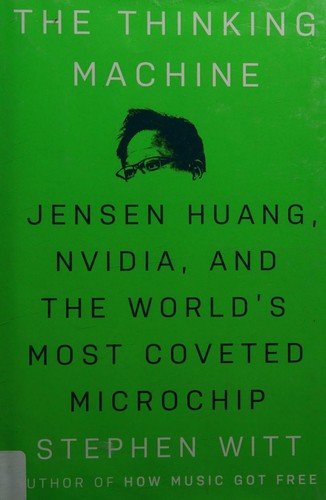
The story of NVIDIA and Jensen Huang: how a video-game card company ended up making the most coveted resource on the planet.

DeepMind co-founder on the dilemma of containing technologies that do not want to be contained.
As an Amazon Associate, Zendoric earns from qualifying purchases; the price does not change for you. · all our recommended books →
🔗 Related on Zendoric
- The US wants Asia to use its AI, but China dominates with cheaper models · 2026-08-31
- China puts the AI business in check: models almost as good as Claude or ChatGPT and far cheaper · 2026-07-31
- China puts the AI business in check: models almost as good as Claude or ChatGPT and far cheaper · 2026-08-31