Reliance Jio opens JioPC to every internet user in India to turn old PCs into 'AI-ready' machines
🕒 Published on Zendoric: September 4, 2026 · 09:12
✨ AI-generated · how it's made
Reliance Jio, the company of Mukesh Ambani, India's richest man, has extended its JioPC service — originally launched in July 2025 for its own broadband subscribers — to any internet user in the country, regardless of their telecom provider.
📚 Go deeper

The story of NVIDIA and Jensen Huang: how a video-game card company ended up making the most coveted resource on the planet.
As an Amazon Associate, Zendoric earns from qualifying purchases; the price does not change for you. · all our recommended books →
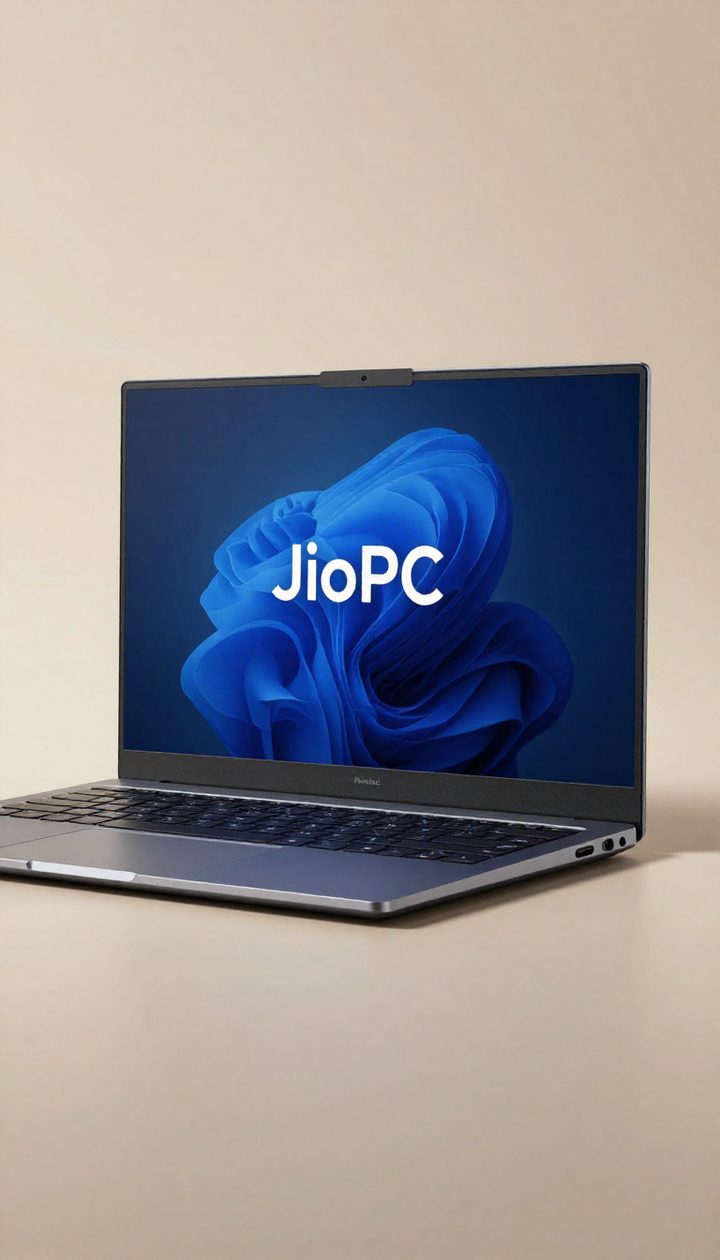
Reliance Jio, the company owned by Mukesh Ambani, India's richest man, has extended its JioPC service — originally launched in July 2025 for its own broadband subscribers — to any internet user in the country, regardless of their telecom provider. The proposition is simple: instead of the user buying a new AI-capable computer, Jio streams a virtual PC from its cloud to the machine they already have, with plans offering up to eight virtual CPUs, 16 GB of RAM and 1 TB of storage. According to the company, this allows even computers up to eight years old to access the computing power required for modern AI applications, without having to replace the machine or install additional hardware.
The pricing is aggressive for the Indian market: plans start at 1,000 rupees (about $11) for two months, while a twelve-month subscription costs 4,000 rupees (about $42) for the 8 GB RAM and 500 GB storage configuration, or 5,000 rupees (about $53) for the 16 GB and 1 TB tier. The move fits Jio's profile as an operator that has built much of its growth on low prices to bring digital access to the masses in India.
The market context helps explain the bet. According to IDC estimates cited in the article, India had more than 65 million PCs in use in 2025 (roughly 34 million consumer devices and 31 million commercial ones), a figure expected to reach around 69 million by the end of 2026. Replacement cycles are also lengthening: Indian consumers and small businesses now change PCs every five to six years, up from four to five years in 2022, according to Bharath Shenoy, senior market analyst at IDC. Companies are likewise stretching the working life of their equipment, with refresh cycles of about four years compared with three previously. Jio is betting that cloud computing can extend those cycles even further by shifting processing and storage from the device to its data centers, allowing it to keep adding computing capacity without users having to change machines.
Prabhu Ram, vice president of the research group at market analysis firm CyberMedia Research, based in Gurugram, explained that JioPC could create a market where consumers pay for computing capacity instead of repeatedly spending on hardware upgrades. In his words, Jio is broadening its value proposition by opening JioPC to users outside the company, while challenging the traditional hardware refresh cycle. Ram does not expect this model to replace conventional PCs, however; he believes JioPC could create a parallel, price-sensitive segment aimed at households, students and other groups for whom buying a new AI-capable PC was never really a viable option.
The article also points to cultural and practical obstacles. Indians have traditionally preferred to own their hardware rather than pay for PC-as-a-service, Shenoy notes, so Jio will have to convince consumers that a recurring subscription is worth giving up the advantages of a conventional computer, such as being able to keep working without an internet connection. That dependence on connectivity could weigh especially heavily in smaller cities and towns, which is precisely where there is the most room to grow in affordable computing: JioPC requires a stable connection, and any outage affects the user experience, something that does not happen with a traditional computer. Added to this is competition from refurbished PCs in the low-end segment, which let consumers own cheap hardware without relying on connectivity.
Another relevant nuance is that the 'AI-ready' label Jio uses for JioPC challenges the conventional idea of what an AI PC is. The company has not disclosed much detail about the hardware underpinning the cloud service, and the specifications offered so far make no mention of dedicated AI accelerators for generative AI workloads on the device itself, a key feature of the new generation of AI PCs. According to Ram, the real test for Jio will be whether people come to see cloud computing as a 'daily utility' rather than an 'opportunistic solution', and whether they are willing to pay for computing power instead of buying new hardware.
📚 Go deeper

Semiconductors as the oil of the 21st century: history, espionage, and why an island of 23 million people underpins the entire AI economy.

The best starting book if you're not technical: a Wharton professor explains how to work WITH AI — when to delegate, when to supervise, when to keep i
As an Amazon Associate, Zendoric earns from qualifying purchases; the price does not change for you. · all our recommended books →
🔗 Related on Zendoric
- Agentic AI in customer service: the edge is no longer the model, it's the data architecture · 2026-07-02
- ASML and its lithography machines costing up to $400 million: the key piece of the AI chip boom · 2026-07-30
- How to protect yourself when your AI provider changes the rules of the game · 2026-09-03