ASML and its lithography machines costing up to $400 million: the key piece of the AI chip boom
🕒 Published on Zendoric: July 30, 2026 · 00:20
✨ AI-generated · how it's made
This article is a Reuters explainer (originally published in January 2026 and updated on July 28, 2026) about ASML, the Dutch company that has become Europe's most valuable business thanks to its absolute dominance in manufacturing lithography systems: the giant 'printers…
📚 Go deeper
Semiconductors as the oil of the 21st century: history, espionage, and why an island of 23 million people underpins the entire AI economy.
As an Amazon Associate, Zendoric earns from qualifying purchases; the price does not change for you. · all our recommended books →
This article is a Reuters explainer (originally published in January 2026 and updated on July 28, 2026) about ASML, the Dutch company that has become Europe's most valuable business thanks to its absolute dominance in lithography systems: the giant 'chip printers' that can cost up to $400 million apiece and are indispensable to the companies driving the artificial intelligence boom.
The underlying logic is simple: advances in AI and the global expansion of data centers have pushed chipmakers to ramp up production capacity at speed, and ASML is the key supplier of the machinery that makes that expansion possible. Its customers include TSMC (which manufactures the chips used by Nvidia), as well as memory chip producers such as SK Hynix, Samsung and Micron. In other words, practically the entire cutting-edge semiconductor supply chain depends, directly or indirectly, on ASML's technology.
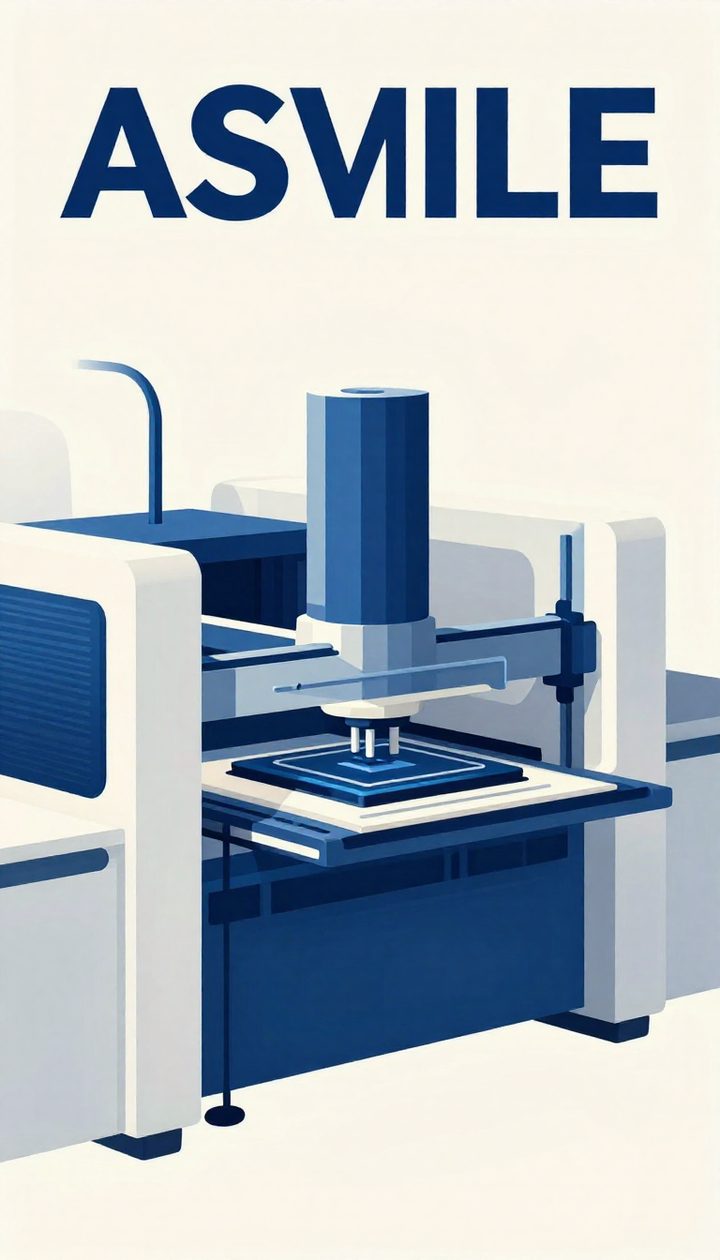
The article distinguishes three categories of machine according to the wavelength of light they use to etch microscopic circuits onto silicon wafers: DUV (deep ultraviolet), EUV (extreme ultraviolet) and the most recent, 'High NA' EUV. DUV machines, costing roughly $60 million each, are used for chips in industrial and consumer electronics; in this segment ASML holds a market share of more than 80%, ahead of Japan's Nikon and Canon. In the EUV segment, by contrast, ASML has a total monopoly: standard machines cost around $200 million and are the ones that today produce most AI chips and the most advanced memory chips. Companies such as Intel are already testing the newest generation, the 'High NA' EUV tools, which will be used over the next five years to make AI chips with even smaller circuitry; only a handful of these have been built so far, at an estimated price of between $350 million and $400 million each.
As for the technology itself, a standard EUV machine is the size of a school bus, weighs 150 tonnes and combines lasers, mirrors and magnets to trace microscopic circuits onto silicon wafers, each of which can hold around a hundred AI chips. The EUV light it uses has a wavelength of 13.5 nanometers — to give a sense of scale, a human hair is between 80,000 and 100,000 nanometers thick. To generate that light, droplets of tin are struck 50,000 times per second by some of the most powerful lasers ever built, made by the German industrial firm Trumpf. A system of mirrors built by fellow German company Zeiss — with surfaces smoother than those used in space telescopes and kept under vacuum — then guides that light into the machine. The wafers, meanwhile, travel on magnetic levitation stages at more than 3 meters per second, accelerating and decelerating at more than 15 times the force of gravity.
The delivery logistics are a striking detail in themselves: the machines are assembled in the Netherlands, packed into some 40 shipping containers and flown on cargo planes to customers' chip fabrication plants. According to figures cited in the article, ASML shipped 48 of these systems in 2025, and expects to sell 65 this year (2026) and 85 in 2027, a progression that reflects the pace at which AI-linked demand is expanding.
The piece also points to the risks the company faces despite its dominant position. On one hand, new Chinese competitors are emerging in the mid-range of its product line. On the other, ASML is under pressure from the United States over exports of some of its tools to China, an issue that sits within the broader geopolitical dispute over Beijing's access to cutting-edge semiconductor technology.
Taken together, the article offers a useful X-ray of why ASML has become such a critical — and such a highly valued — player in the AI supply chain: it does not make the chips itself, but without its lithography machines neither TSMC nor any other manufacturer could produce the processors powering the current artificial intelligence boom. At the same time, its reliance on specialized suppliers such as Trumpf and Zeiss, and its exposure to trade tensions between Washington and Beijing, show how fragile and concentrated this supply chain remains, with a handful of European and Asian firms controlling technological chokepoints on which the entire global AI industry depends.
📚 Go deeper
The story of NVIDIA and Jensen Huang: how a video-game card company ended up making the most coveted resource on the planet.
China vs.
As an Amazon Associate, Zendoric earns from qualifying purchases; the price does not change for you. · all our recommended books →
🔗 Related on Zendoric
- Apple seeks permission to buy memory chips from a blacklisted Chinese company · 2026-06-30
- AI versus elephants: early-warning systems aim to prevent deadly clashes between humans and wildlife in India · 2026-06-30
- Agentic AI in customer service: the edge is no longer the model, it's the data architecture · 2026-07-02