ChatGPT, Claude and Grok go down on the same day: the clue nobody will confirm is the shared compute provider
🕒 Published on Zendoric: September 4, 2026 · 09:12
✨ AI-generated · how it's made
On September 3, Claude, ChatGPT and Grok suffered near-simultaneous outages lasting several hours. None of the three companies has confirmed a common cause, but a remark from SpaceX — a compute partner of both Anthropic and xAI — points to something more than coincidence.
📚 Go deeper
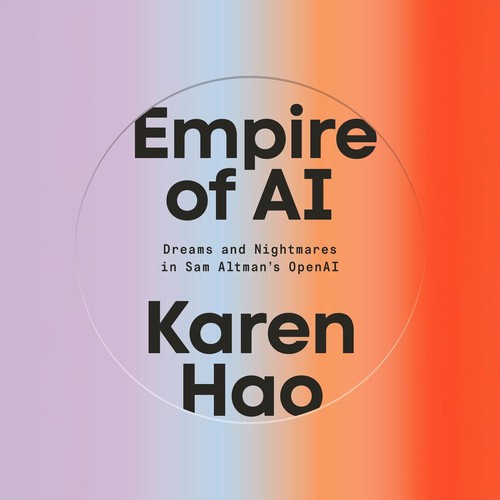
The definitive piece of investigative journalism on OpenAI: 260+ interviews, the clash between safety and speed, and the attempted firing of Sam Altma
As an Amazon Associate, Zendoric earns from qualifying purchases; the price does not change for you. · all our recommended books →
By Zendoric · September 3, 2026.
On Thursday morning, three of the world's most widely used AI chatbots went down almost simultaneously. Claude (Anthropic) began returning "elevated errors" at 6:23 am Pacific time. Grok (xAI) went down across all its platforms at 6:30 am. OpenAI's ChatGPT and Codex joined them at 7:43 am with what the company described as "a routing error." None of the three companies has clearly explained why the outages coincided.
Recovery times overlapped as well: OpenAI declared the problem resolved at 8:17 am, Anthropic at 9:16 am (although Claude Sonnet 5 showed similar symptoms shortly after 9:00 am), and xAI did not close the incident until 10:05 am, according to WIRED, drawing on each company's status pages and statements. There were also scattered reports of a possible Gemini outage that Google neither confirmed nor denied.
The most revealing clue came not from Anthropic or OpenAI, which declined to point to a shared cause, but from SpaceX. xAI's parent company attributed Grok's failure to "an outage at our Memphis compute center" and added, in its public statement: "we would also like to apologize to our affected compute partners." That phrase matters because Anthropic and xAI announced a "compute partnership" with SpaceX in May: if Elon Musk's own company refers to affected "partners" in the plural, the obvious reading is that the Memphis center — or infrastructure connected to it — does not serve Grok alone.
This is a hypothesis, not a confirmation: OpenAI is not among the companies that announced that agreement with SpaceX, so its "routing error" failure would have to be a coincidence in timing, or point to a different problem in its own stack. And the usual pattern for three simultaneous outages — a failure at Cloudflare, AWS or Azure that drags several customers down at once — does not fit either: none of those major infrastructure providers reported incidents that day.
The figure that measures the real damage came from another source: on Hacker News, a claim circulated that GitHub activity fell 7% while the two big AI labs were down — a signal, albeit of informal origin and with no published methodology, of how much day-to-day programming work now runs through assistants like Codex or Claude Code. If it is roughly accurate, it says more about the software industry than any press release.
Our reading: what stands out about this episode is not the outage itself — digital services fail, including the cloud that has spent years boasting about "five nines" of availability — but the opacity with which Anthropic and OpenAI handled it. Neither published a technical post-mortem with a root cause, as AWS routinely does after its major incidents. When the product was a chatbot you consulted, that opacity was tolerable. When the product is the tool thousands of engineering teams use to write and review code every day — as the slowdown on GitHub suggests — it no longer is: it demands the same culture of accountability and transparency we demand of the cloud.
There is also a structural risk that this episode hints at: the major AI labs, which compete with one another for market share, increasingly share the physical base they run on — chips, data centers, energy, and now, apparently, compute with SpaceX. That concentration cuts costs and speeds deployment, but it also correlates failures: if the same compute provider underpins several "competitors," a single outage stops being one company's problem and becomes the sector's.
In the short term, this is exactly the kind of friction to be expected from an industry that has grown faster than its engineering discipline: the same blackouts and silences the cloud experienced in its early years of mass expansion, before observability, multiple data centers and public post-mortems became standard. It is no cause for alarm, but it is cause for demands: the sooner the AI industry treats its infrastructure with the rigor of critical infrastructure — rather than with the secrecy of a product launch — the sooner it will stop being the fragile link in an economy that already depends on it to code, write and decide. That hardening of the base is precisely the kind of unglamorous work that makes it possible for the underlying promise — reliable, cheap, ubiquitous AI — to stop being an aspiration and become infrastructure taken for granted, as electricity or the internet are today.
📚 Go deeper

The story of NVIDIA and Jensen Huang: how a video-game card company ended up making the most coveted resource on the planet.
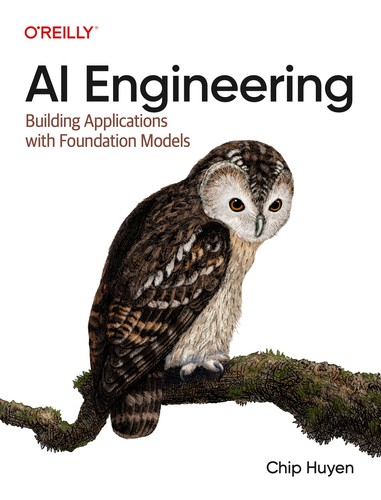
The reference manual for building products on top of AI models: prompts, RAG, fine-tuning, agents, evaluation and deployment.
As an Amazon Associate, Zendoric earns from qualifying purchases; the price does not change for you. · all our recommended books →
🔗 Related on Zendoric
- ChatGPT, Claude, Gemini and Grok Went Dark at Once: AI Now Has Infrastructure Status Without Infrastructure Rules · 2026-09-03
- Anthropic will pay Musk $40 billion for compute — and reportedly wrote its own safety pledge into the lease · 2026-07-29
- Anthropic's $40B compute deal with Musk: the safety lab now rents its future from a rival · 2026-07-31