US judge rules AI-generated child abuse material is protected by the Constitution, despite his own doubts

🕒 Published on Zendoric: September 2, 2026 · 08:27
✨ AI-generated · how it's made
A federal judge in Wisconsin dismissed the charges against a man who generated thousands of child sexual abuse images with Stable Diffusion, applying case law that protects material involving no real minors. The judge himself admits that the law, dating from 2002, did not anticipate AI's current realism.
📚 Go deeper

AI as the latest chapter in the history of information networks, from gossip to the printing press to the algorithm.
As an Amazon Associate, Zendoric earns from qualifying purchases; the price does not change for you. · all our recommended books →
By Upper Michigan's Source (Gray News) · September 1, 2026.
A U.S. federal judge dismissed on August 25 the charges against a Wisconsin man accused of creating thousands of child sexual abuse images with artificial intelligence. The judge, John Z. Lee, concluded that such material —as it does not depict real minors— is covered by the First Amendment to the U.S. Constitution, the clause that protects freedom of speech.
The case dates back to 2024, when the Department of Justice (DOJ) arrested Steven Anderegg, 42, for producing, distributing and possessing this type of content. According to the DOJ's indictment, Anderegg used Stable Diffusion —a generative AI model that turns text descriptions into images— to produce thousands of realistic images of minors in situations of sexual abuse, later found on his computer. The DOJ also accused him of having sent some of those images to a 15-year-old and of explaining to him how he had generated them with AI.
At the time, Principal Deputy Attorney General Nicole M. Argentieri was categorical: "this announcement sends a clear message: using AI to produce sexually explicit depictions of minors is illegal, and the Justice Department will not hesitate to hold accountable those who possess, produce or distribute AI-generated child sexual abuse material," she said in May 2024. Two years later, a judge has thrown out those charges.
Lee's ruling rests on two Supreme Court precedents: Stanley v. Georgia (1969), which protects the right to keep obscene material in the privacy of the home, and Ashcroft v. Free Speech Coalition (2002), which established that child sexual abuse material that does not show real minors does not legally constitute child pornography and is therefore protected as expression. The judge explained that, although he has reservations about the limits those cases draw, he is bound by that case law.
Lee did not hide his discomfort. He warned that AI image generation has reached a point where it is "virtually indistinguishable" from photographs of real abuse, and that the 2002 doctrine —conceived for a synthetic imaging technology far inferior to today's— did not anticipate the leap in quality of current models. "We have certain doubts about the lines these cases draw, but we are not free to redraw them ourselves," he wrote. In other words: the judiciary itself acknowledges that the law has fallen short, and even so can do nothing about it.
This is, precisely, the least comfortable face of the democratization of generative AI that we at Zendoric have defended in other contexts, such as the rise of open Chinese models or the cost savings they allow. That anyone can download a model like Stable Diffusion and run it on their own computer, with no oversight from a company, is an advantage for open innovation and also the vulnerability this case exploits. Unlike commercial image generators, which block requests for child sexual content through classifiers and blocklists, a model run locally has no such firewall. The cost of openness is not only economic or geopolitical: it is also this, and it is worth saying so with the same honesty with which we celebrate its advantages.
Broadly, the industry has already responded to this risk with voluntary agreements: since 2024, several major tech companies have signed "safety by design" principles promoted by specialized organizations to make it harder for their models to generate or spread this type of material. But those commitments are self-imposed and do not reach the open-source models a user downloads and modifies without external control, which is exactly the scenario in this case.
What matters is not that a court has morally validated this content —the judge himself makes clear that he does not— but that U.S. law, written before generative AI could produce photorealism on demand, no longer has a clear answer. For context, it would not be the first time something like this happens: the U.S. Congress already reacted once to Ashcroft, in 2003, with the PROTECT Act, to try to close the gap the Supreme Court had left. That precedent suggests the current vacuum is also fixable, although probably not before Anderegg's case is resolved by a higher court.
It is worth not losing sight of what lies behind the legal technicality: an adult who, according to the indictment, used these images to engage with a 15-year-old. That the content is synthetic does not eliminate the potential harm to real victims, and that is where Judge Lee's own concern makes more sense than in the abstract debate about copyright or disinformation that usually dominates generative AI headlines.
This case does not question generative AI's potential for medicine, science or productivity; it questions whether the institutions meant to set limits on it have done their homework. Every advance in models like Stable Diffusion multiplies at once the best and the worst of the technology, and for now it is the law that has fallen behind. Until Congress or a higher court corrects course, cases like Anderegg's will keep testing rules written for an AI that no longer exists.
📚 Go deeper
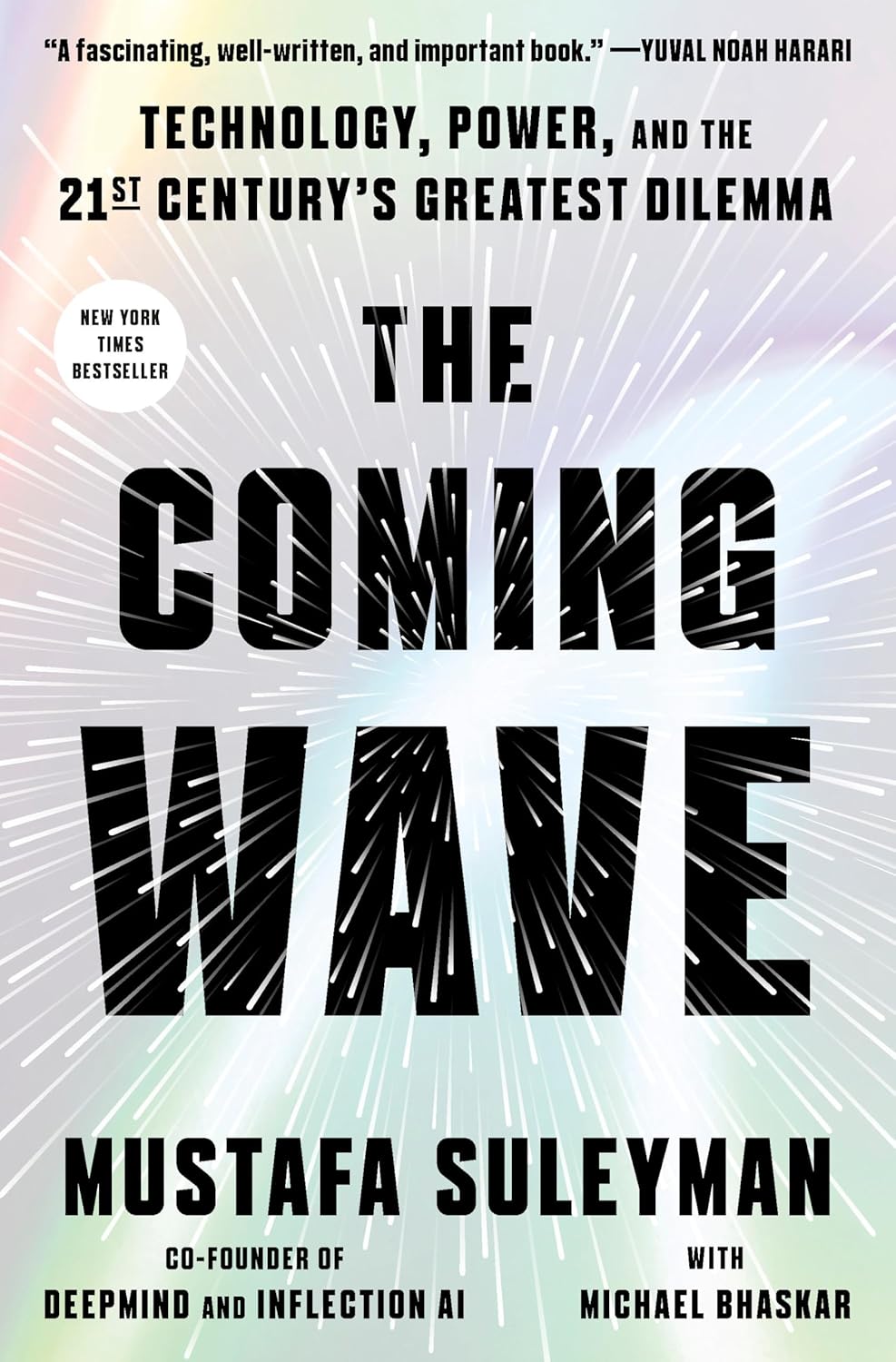
DeepMind co-founder on the dilemma of containing technologies that do not want to be contained.
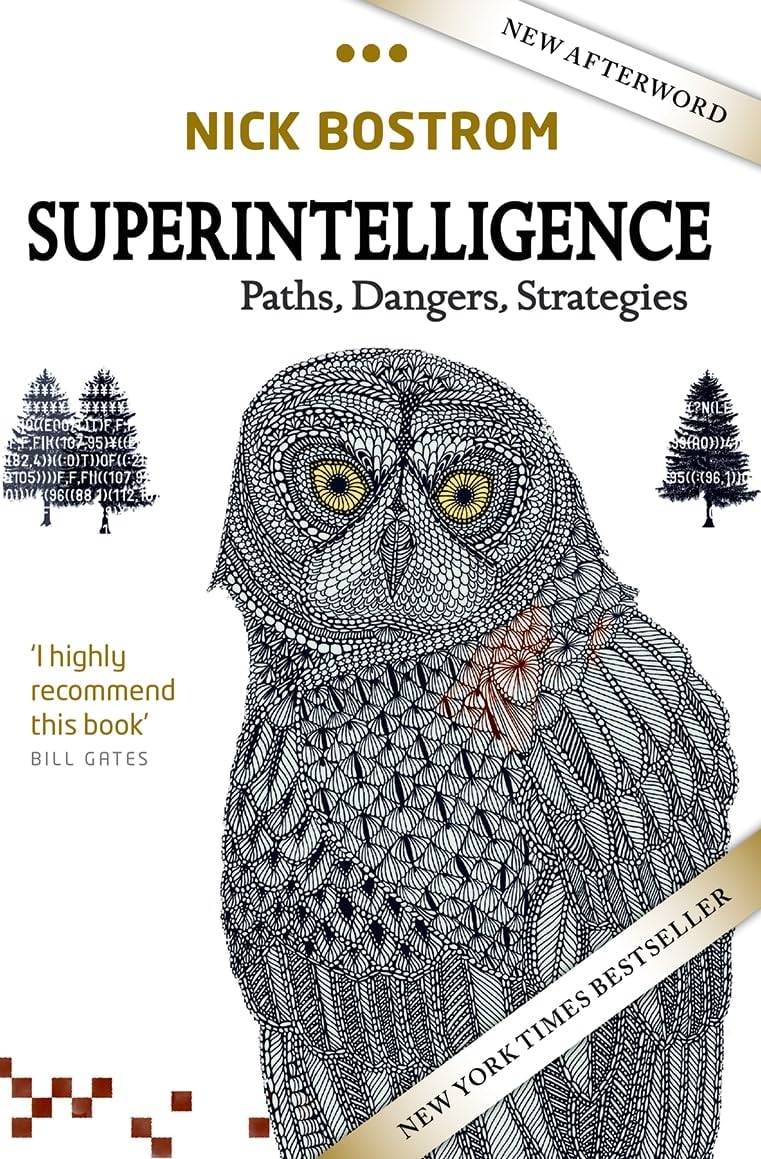
The book that started the existential-risk debate and that half the industry still cites.
As an Amazon Associate, Zendoric earns from qualifying purchases; the price does not change for you. · all our recommended books →
🔗 Related on Zendoric
- AI-generated CSAM at an Illinois school: the hardest abuse to detect no longer needs a hidden camera · 2026-07-04
- A sex offender arrested in Oregon over AI-generated child abuse images: federal law no longer distinguishes synthetic from real · 2026-07-25
- A school custodian, accused of using AI to create child sexual abuse material from social media photos · 2026-07-23