A sex offender arrested in Oregon over AI-generated child abuse images: federal law no longer distinguishes synthetic from real

🕒 Published on Zendoric: July 25, 2026 · 00:23
✨ AI-generated · how it's made
A federal grand jury charged Daniel Bostwick, 69 and with a record for sexual abuse, with possessing dozens of child abuse images that, according to prosecutors, appear to be AI-generated. The case confirms that U.S. law already punishes synthetic material like real material.
📚 Go deeper

The definitive piece of investigative journalism on OpenAI: 260+ interviews, the clash between safety and speed, and the attempted firing of Sam Altma
As an Amazon Associate, Zendoric earns from qualifying purchases; the price does not change for you. · all our recommended books →
By Zendoric · July 25, 2026.
A federal grand jury in Oregon indicted Daniel Bostwick, 69, a resident of Hillsboro, for possession of obscene visual depictions of child sexual abuse, according to the U.S. Attorney's Office for the District of Oregon. Bostwick was on probation for a prior first-degree sexual abuse conviction, a condition that included the monitoring of his electronic devices. That monitoring, according to court documents, detected in April two sexualized images of minors on his phone; a subsequent search of the phone itself and of a USB drive revealed, again according to the U.S. Attorney's Office, "dozens of images depicting child sexual abuse, apparently generated by artificial intelligence."
Bostwick pleaded not guilty at his hearing on Thursday and will remain in custody pending trial, scheduled for September 22. If convicted, he faces a mandatory minimum sentence of ten years in prison and a maximum of twenty, plus supervised release of five years to life and a fine of up to $250,000. The FBI is investigating the case together with the Washington County Sheriff's Office. It bears emphasizing: this is an indictment, not a conviction, and all the facts described here come from the U.S. Attorney's Office itself.
The relevant technical-legal point, beyond the individual case, is that U.S. federal law (which criminalizes "obscene visual depictions of child sexual abuse") does not require that a real victim have been photographed in order to prosecute the offense: AI-generated material, with no real children involved, is prosecuted as harshly as traditional CSAM (child sexual abuse material). It is a matter that U.S. courts have been resolving case by case ever since image generators became capable of producing photorealistic content, and this filing joins a growing list of similar prosecutions across various states.
Broadly, this is the most uncomfortable flip side of the democratization of generative AI: the same tools that make it possible to create audiovisual content with unprecedented ease also drastically lower the technical barrier to producing synthetic child-exploitation material, which platforms and law enforcement have to learn to detect without always being able to rely on the databases of already-known images they use for conventional CSAM. Our reading is that cases like this one —ultimately resolved thanks to the device monitoring already imposed by a prior conviction, not by automatic detection of the generated content— show that the capacity for technological tracking still lags behind the capacity for generation. It is exactly the kind of asymmetry that underpins our core thesis: the progress of AI brings with it real and immediate harms that demand governance and law enforcement with the same urgency as capturing its long-term promise; the two are not contradictory, they are the same task.
📚 Go deeper

AI as the latest chapter in the history of information networks, from gossip to the printing press to the algorithm.
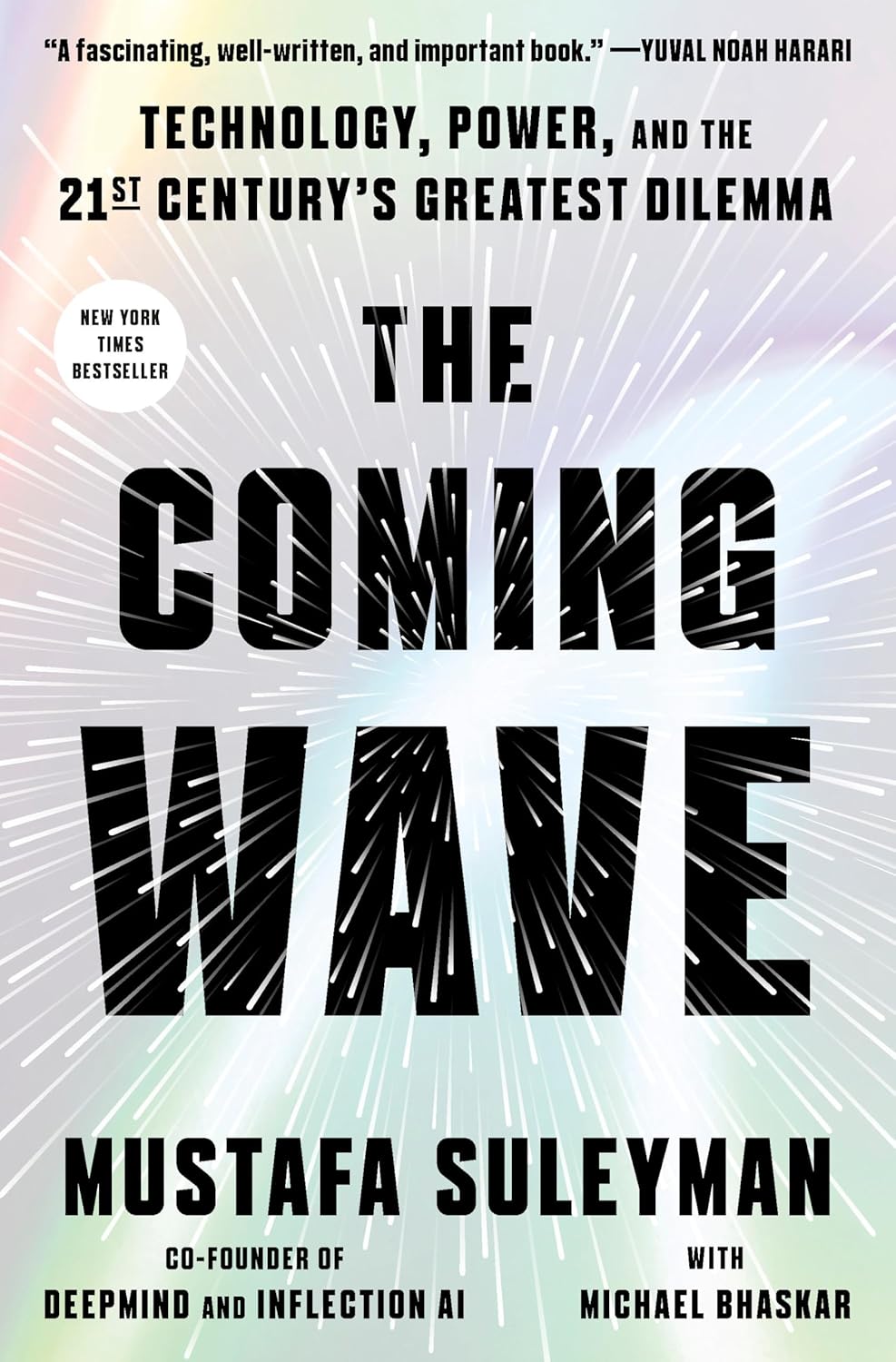
DeepMind co-founder on the dilemma of containing technologies that do not want to be contained.
As an Amazon Associate, Zendoric earns from qualifying purchases; the price does not change for you. · all our recommended books →
🔗 Related on Zendoric
- AI-generated CSAM at an Illinois school: the hardest abuse to detect no longer needs a hidden camera · 2026-07-04
- An arrest in Louisiana over AI and child abuse exposes the legal void around synthetic imagery · 2026-07-10
- A Tennessee janitor's case shows how generative AI has become a tool for creating child abuse · 2026-07-24