A Tennessee janitor's case shows how generative AI has become a tool for creating child abuse

🕒 Published on Zendoric: July 24, 2026 · 00:29
✨ AI-generated · how it's made
A janitor at an elementary school in Chattanooga was arrested after thousands of AI-altered images were found, more than 100 of them turned into child sexual abuse material. The case, with all parents already notified, exposes the gap that generative AI opens between an innocent photo and a crime.
📚 Go deeper

The definitive piece of investigative journalism on OpenAI: 260+ interviews, the clash between safety and speed, and the attempted firing of Sam Altma
As an Amazon Associate, Zendoric earns from qualifying purchases; the price does not change for you. · all our recommended books →
By Zendoric · July 24, 2026.
The Hamilton County Sheriff's Office in Tennessee confirmed on July 23 that it has finished notifying all the parents and guardians of the students at Daisy Elementary School whose images were altered with artificial intelligence to turn them into child sexual abuse material. The man arrested, Zackary Nelson, 28, worked as a janitor at the school through ABM, the company that subcontracts the cleaning service for the school district; he was not a direct employee of the school.
According to the police affidavit, it all began with a tip from the National Center for Missing & Exploited Children (NCMEC) received on April 21 about an account linked to Nelson. Two days later, investigators obtained a search warrant and located 3,750 photos and videos; more than 100, according to authorities, had been manipulated to show minors in explicit sexual poses or acts. Among the material was, according to the prosecution, an image combining two children and an adult employee of the school. Nelson was arrested on July 21 and faces one count of sexual exploitation of a minor; he has already been released on bail. Tennessee law treats computer-generated material as equivalent to real material for criminal purposes, and imposes between 8 and 30 years in prison and up to $25,000 in fines for possession of more than 100 prohibited images.
What is striking, and what makes this incident more than a crime brief, is the three-month gap between the NCMEC tip and the actual arrest, a delay that neither the sheriff nor ABM has publicly explained. The company has only said that Nelson passed the required background checks and that he was removed from the school "immediately" once the case became known, already amid the judicial process. That time gap matters: while the investigation advanced, the suspect continued to have physical access to a school with minors.
In general, this type of case has multiplied over the past two years as the tools capable of digitally "undressing" or sexualizing any photograph have become cheaper—a single image pulled from social media or the school yearbook is enough. Technical skill and access to distribution networks are no longer needed: the barrier to entry for producing synthetic child abuse material has been reduced to owning a phone and an app. Tennessee, along with a growing number of states, has responded by extending its legal definition of child exploitation to explicitly cover "computer-generated" material, closing the loophole that for years allowed some defenders to argue that a synthetic image did not depict a real person. Criminal defense attorney Robin Flores, consulted by Local 3 News and unconnected to the case, noted that these proceedings increasingly rely on technical experts able to explain to a jury how the image was generated and whether it depicts a real, identifiable person; expert evidence has become as central as a forensic examiner's testimony in a conventional case.
Our take: this is exactly the kind of short-term harm that cannot be minimized or dissolved into the general discourse about AI's future benefits. The accessibility of generative models has far outpaced the ability of institutions—schools, police, and legislators—to detect and curb their most harmful uses. The right response is not to halt the technology in the abstract, but to govern its specific applications: tightening the liability of those who distribute digital "undressing" tools, requiring stricter access controls in settings with minors—the case itself shows that a background check does not detect a crime that has not yet been committed—and equipping prosecutors and judges with the technical capacity to litigate a crime that no longer leaves a physical trace. The abundance and well-being that AI may bring in the long term do not excuse this outstanding debt: every month a jurisdiction takes to adapt its legal framework and its surveillance protocols is a month in which the technology is used to harm, not to free, the most vulnerable.
📚 Go deeper

AI as the latest chapter in the history of information networks, from gossip to the printing press to the algorithm.
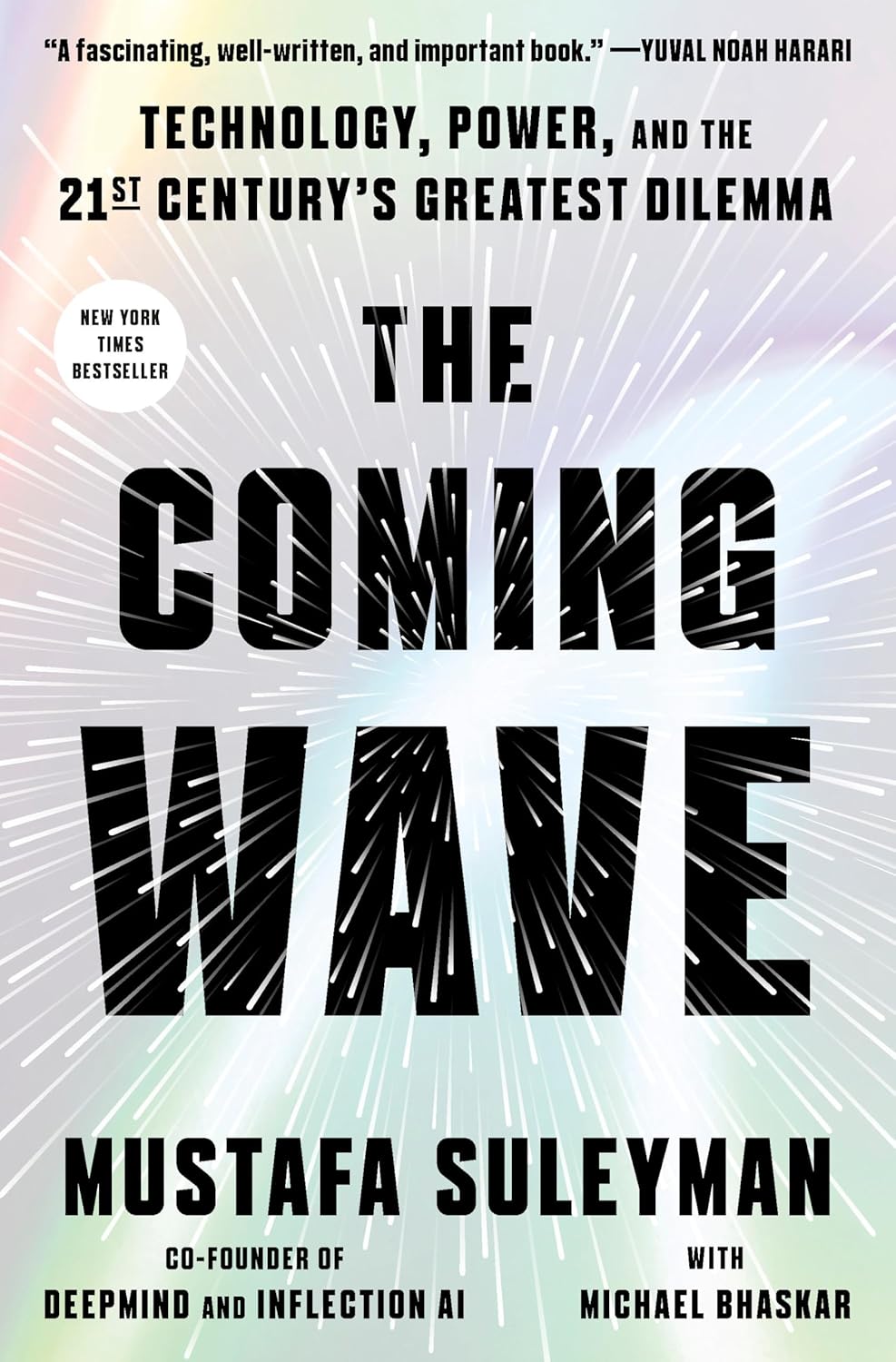
DeepMind co-founder on the dilemma of containing technologies that do not want to be contained.
As an Amazon Associate, Zendoric earns from qualifying purchases; the price does not change for you. · all our recommended books →
🔗 Related on Zendoric
- A school custodian, accused of using AI to create child sexual abuse material from social media photos · 2026-07-23
- AI-generated CSAM at an Illinois school: the hardest abuse to detect no longer needs a hidden camera · 2026-07-04
- A sex offender arrested in Oregon over AI-generated child abuse images: federal law no longer distinguishes synthetic from real · 2026-07-25
Sources & references
- Local 3 News — A Tennessee janitor's case shows how generative AI has become a tool for creating child abuse
- ABC News (Australian Broadcasting Corporation) — Five years of AI sexual posters against eight women: the Australian case that measures the gap between creating and detecting
- Tema EN · jóvenes y niños — Utah AI company executive arrested for allegedly generating child sexual abuse images