US universities swap 'learn to code' for 'learn to verify AI'

🕒 Published on Zendoric: September 1, 2026 · 00:48
✨ AI-generated · how it's made
The University of Tampa has replaced its introductory programming course with a required class on generative AI: it does not teach students to use chatbots, but to verify their answers and negotiate with each professor what is allowed. Saint Leo is following the same path.
📚 Go deeper
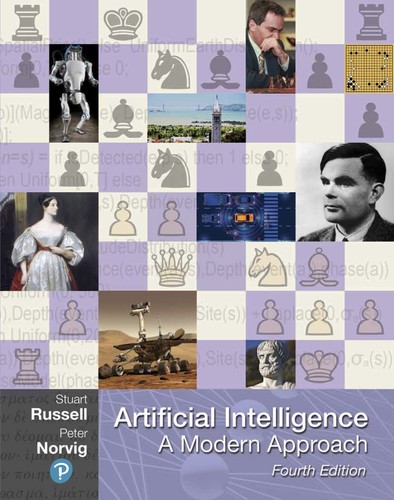
THE AI textbook: used by 1,500+ universities.
As an Amazon Associate, Zendoric earns from qualifying purchases; the price does not change for you. · all our recommended books →
By Zendoric · August 31, 2026.
The University of Tampa (UTampa) began the academic year on Monday with a quiet but significant curriculum change: the introductory programming course that until now was required for all students has been replaced by a class focused on generative artificial intelligence. As Jessica O'Brien, the university's coordinator of online learning and digital literacy, explained to FOX 13, the course — one credit, taught online through the Codio platform and normally taken in sophomore year — does not teach students how to use AI tools. It teaches them to doubt those tools.
The stated goal is to develop critical judgment: verifying the accuracy of what a model generates and using it as a reasoning partner, not as an automatic source of truth. Because UTampa has no campus-wide AI policy, much of the content is devoted to something more mundane and necessary: teaching students to negotiate directly with each professor about which uses are permitted in each class, and to understand the limits of privacy. O'Brien sums it up with a concrete example: you cannot upload a professor's notes to a chatbot without permission, nor a roommate's already-submitted assignment.
UTampa is not an isolated case. Saint Leo University, also in Florida, is launching mandatory AI training modules for all its students this same season, with certifications developed alongside IBM as a graduation requirement. On both campuses, academic leaders cite the same reason: preparing students for a job market that already takes the use of these tools for granted.
What is revealing is not that a university teaches AI — that is now almost universal — but what it has stopped teaching to make room. For two decades, programming has been the course that any "modern" curriculum included as a gesture toward basic digital literacy. That UTampa is dropping it to put in its place a class on how to audit a machine's judgment says a great deal about where the bar for minimum technical competence has moved: it is no longer writing code, it is knowing when not to trust what someone else — human or model — has written for you.
That reading connects with something we have been pointing out in our analysis of AI and employment by sector: routine, basic production work — including much of entry-level programming — is precisely what is most exposed to automation, while judgment, verification and human relationships hold up. That a general-purpose university treats spotting AI errors as more urgent than writing a for loop is an early symptom, not an isolated anecdote.
That said, the case itself exposes the uncomfortable part of the transition: UTampa admits it has no unified AI policy, so it delegates to each student the task of negotiating different rules with each professor. It is a reasonable short-term solution — flexible, pragmatic — but also a patch that shifts institutional responsibility onto the individual student, with the risk that whoever is best at "reading" each professor comes out ahead while those who are not get penalized by a rule that was never made clear. Training in critical judgment about AI is necessary, but it is no substitute for institutions equipping themselves with coherent rules.
In the medium term, courses like this one — as happened with computer literacy in the 1990s — will probably stop being a separate subject and become a cross-cutting skill, taken for granted in any degree program. If that process takes hold, it is good news within our underlying thesis: the more people who know how to use AI with judgment rather than blind faith, the faster the technology translates into a real productivity tool instead of a source of amplified errors. The problem, as almost always in this transition, is not the technology itself, but the speed at which institutions manage to set clear rules for it.
📚 Go deeper
The academic "bible" of deep learning, with a Turing Award winner among its authors, and legally free on the web.
AI as an extractive industry: the lithium, the energy, the underpaid data-labeling work and the bodies behind the cloud.
As an Amazon Associate, Zendoric earns from qualifying purchases; the price does not change for you. · all our recommended books →
🔗 Related on Zendoric
- ANU, accused of being 'hysterical' over its anti-AI rules: Australian universities revive the oral exam · 2026-07-19
- Utah State receives 600,000 dollars from the NSF to find out whether AI is undoing the engineers it trains · 2026-07-23
- A hidden phrase caught 32 students using AI — but the real story is an exam design that never adapted · 2026-07-29