Visa cuts 2,600 jobs from product and tech — and the efficiency story now points upmarket, not at the back office
🕒 Published on Zendoric: July 31, 2026 · 15:01
✨ AI-generated · how it's made
Visa is laying off about 2,600 people, roughly 7% of its 34,000-strong workforce, with the cuts falling mainly on product and technology teams. The CEO memo Visa confirmed to Fast Company talks about efficiency and reinvestment — including stablecoins — not explicitly about AI. That distinction matters, and so does the fact that the axe landed on engineers rather than administrators.
📚 Go deeper

The best starting book if you're not technical: a Wharton professor explains how to work WITH AI — when to delegate, when to supervise, when to keep i
As an Amazon Associate, Zendoric earns from qualifying purchases; the price does not change for you. · all our recommended books →
Visa is preparing to cut about 2,600 roles — roughly 7% of a workforce of some 34,000 — the company confirmed to Fast Company. The cuts were disclosed internally in a memo from CEO Ryan McInerney and, per that memo, fall primarily on product and technology teams. Our thesis: the notable thing here is not the headcount, it is the location of the wound. When a payments giant trims engineers and product managers rather than administrative staff, the "AI eats routine work first" story needs updating.
Start with what is actually attributed. McInerney's memo, as excerpted and confirmed to Fast Company, cites a "deep conviction that we are doing what is right for Visa, our clients and our partners as we continue to focus on driving efficiency across the company in order to reinvest in our highest potential opportunities." Bloomberg reports the savings will be redirected into commercial and money-movement solutions, consumer payments, and value-added services including stablecoins. Fast Company frames the move against a payments landscape disrupted by smaller, nimbler fintech startups and a growing focus on AI-driven efficiency gains. Note the seam: the quoted memo language is about efficiency and capital reallocation. The AI attribution is contextual framing, not a stated cause. We flag that because "AI did it" has become the most convenient available explanation for a decision that may be as much about competitive pressure and portfolio rebalancing.
Even so, the reinvestment list is the tell. Money moving out of general product and technology and into money-movement rails and stablecoins is a company betting that the next decade of payments is won on programmable settlement infrastructure, not on more feature teams. Cutting 7% of staff while explicitly redeploying the savings is not retrenchment; it is a portfolio trade. That is a healthier signal for the business than a pure cost cut — and a colder one for the 2,600 people inside the trade, who are being repriced rather than made redundant by any measurable productivity gain the company has published.
This complicates a position we have held in our sector-by-sector work on AI and employment. Our read has been that back-office and administrative work is the most exposed, while judgment, client relationships and in-person work hold up. Visa's cut points somewhere else: mid-tier product and engineering work inside a large incumbent is exposed too, because much of it is coordination overhead — specs, integration glue, internal tooling — precisely the layer AI assistants compress fastest. The banking and payments thesis still holds in shape (fewer hands, more data, risk and compliance depth) but the boundary has moved upmarket. Seniority is not armor; being close to a strategic bet is.
Our reading: treat this as a transition cost, and be honest that it is a real one. 2,600 well-paid technical jobs disappearing from a profitable company is not a rounding error, and the people affected did not get a vote on the reallocation. At the same time, this is what a company doing the right long-term thing often looks like from the inside — Visa is funding the infrastructure fight it has to win rather than protecting an org chart. The lesson for anyone reading this from a large incumbent's product org: proximity to the revenue thesis is now the job security variable. Learn the rails, the risk models, the AI tooling — the work that survives is the work that is hard to specify and expensive to get wrong. The abundance argument for AI stays intact over the long run. It just does not arrive evenly, and July 2026 is one of the months where the unevenness has 2,600 names attached.
📚 Go deeper
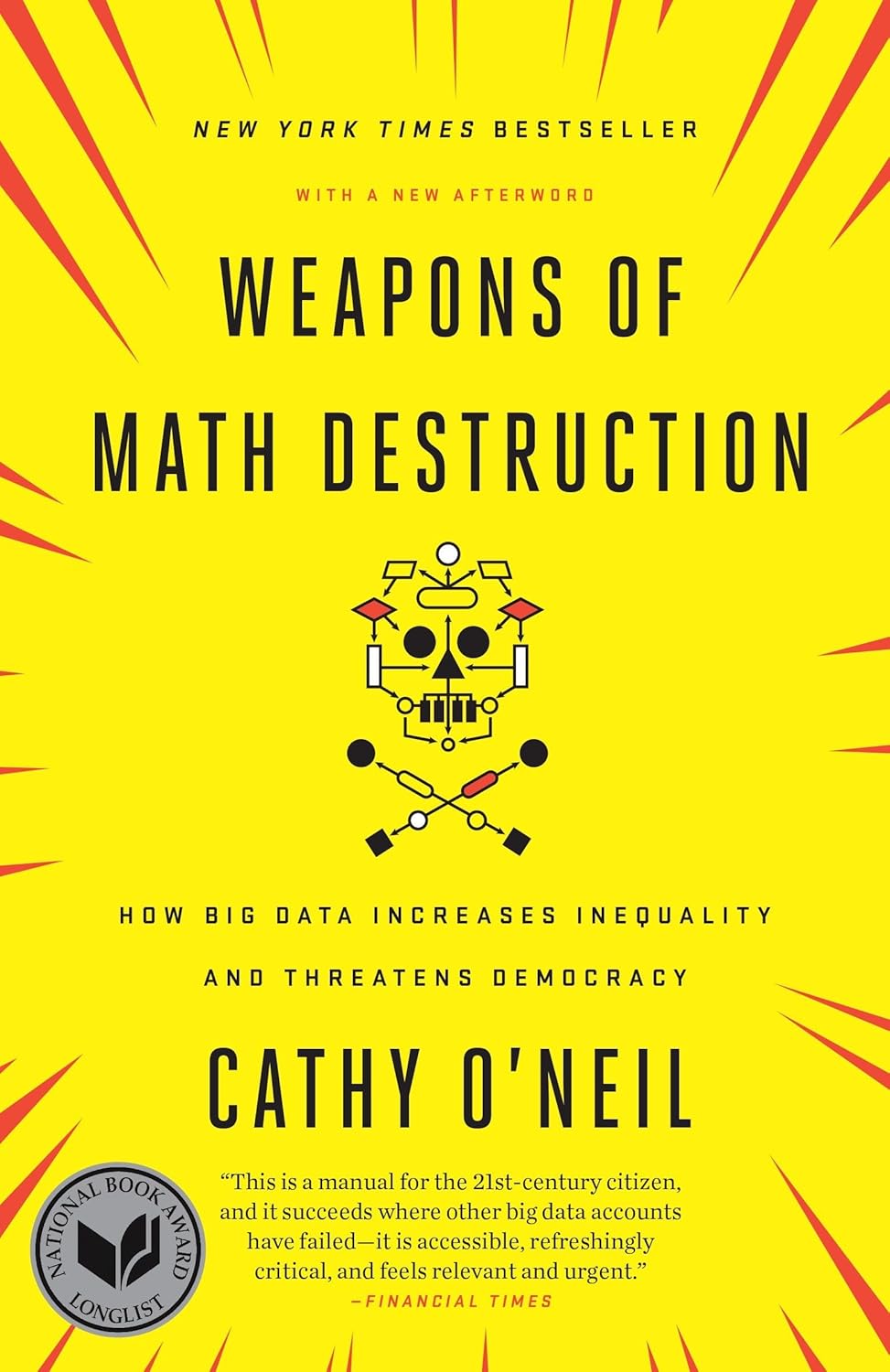
How opaque algorithms decide who gets credit, a job or parole — and why they tend to punish the same people.

The reference manual for building products on top of AI models: prompts, RAG, fine-tuning, agents, evaluation and deployment.
As an Amazon Associate, Zendoric earns from qualifying purchases; the price does not change for you. · all our recommended books →
🔗 Related on Zendoric
- Visa cuts 2,600 jobs to fund stablecoins — the AI layoff story is reallocation, not simple replacement · 2026-09-02
- Visa cuts 2,600 jobs in product and tech — and the memo says the money is being redeployed, not saved · 2026-09-04
- Visa cuts 2,600 jobs — and it is product and engineering teams, not the back office, taking the hit · 2026-07-30