Visa cuts 2,600 jobs in product and tech — and the memo says the money is being redeployed, not saved

🕒 Published on Zendoric: September 4, 2026 · 09:12
✨ AI-generated · how it's made
Visa is laying off about 2,600 people, roughly 7% of its 34,000-strong workforce, with the cuts landing mainly on product and technology teams. CEO Ryan McInerney's memo frames it as efficiency to fund reinvestment — in stablecoins, money movement and value-added services. Our thesis: this is capital reallocation wearing an AI headline, and the fact that it hits engineers rather than back-office staff is the part worth arguing about.
📚 Go deeper

The best starting book if you're not technical: a Wharton professor explains how to work WITH AI — when to delegate, when to supervise, when to keep i
As an Amazon Associate, Zendoric earns from qualifying purchases; the price does not change for you. · all our recommended books →
Visa confirmed to Fast Company that it is preparing to cut about 2,600 workers, roughly 7% of its approximately 34,000 employees. The cuts were first reported by outlets including Bloomberg and were disclosed internally through a memo from CEO Ryan McInerney, whose excerpts Visa confirmed as accurate. Notably, the memo says the reductions will primarily affect product and technology teams.
McInerney's own words are about efficiency and redeployment, not about machines replacing people: he cites a "deep conviction that we are doing what is right for Visa, our clients and our partners as we continue to focus on driving efficiency across the company in order to reinvest in our highest potential opportunities." Per Bloomberg, some of the savings will go into commercial and money-movement solutions, consumer payments and value-added services, including stablecoins. Fast Company frames the backdrop as a payments landscape increasingly disrupted by smaller, nimbler fintech startups, and a company leaning harder on AI-driven efficiency gains.
That distinction matters, and we would rather be precise than dramatic about it. The memo excerpt made public does not say AI eliminated 2,600 roles. It says money is being moved from lower-priority work to higher-priority work. AI is plainly part of the efficiency story — it is why leadership believes the same output can come from fewer product and engineering hands — but the clearest reading is capital reallocation, with AI supplying both the productivity assumption and the narrative cover. For 2,600 households the distinction is academic. For anyone trying to forecast where employment goes next, it is everything.
The detail that complicates our own thesis is who got cut. We have argued repeatedly that the most exposed roles in banking and payments are administrative and back-office — fewer branches, fewer processing hands, more data, risk and compliance profiles. Here the axe fell on product and technology. That is a useful correction, not a refutation: within technology organizations, routine implementation work is exposed too. What survives and gains value is architecture, security governance, and the ability to integrate AI systems into a regulated payments network where a wrong answer costs real money. What shrinks is the layer of headcount that existed to translate decisions into code at scale, precisely the work coding agents now absorb fastest.
There is a second reading of the reinvestment list that deserves attention. Stablecoins and money movement are not cost-center bets; they are defensive bets against the possibility that the rails Visa owns get routed around. A company cutting 7% of staff to fund work on programmable settlement is telling you it thinks the threat to its business is structural, not cyclical. AI efficiency is what pays for that pivot. That is the pattern we expect to see repeated across incumbent finance: the savings do not go to shareholders, they go into buying time against disruption.
Our read: this is what the hard part of the transition looks like — profitable, dominant companies shedding skilled technical staff not because the work vanished but because the ratio of output to headcount moved. We do not think the right response is to pretend it is not happening, and we do not think it is the end of technical employment either. The demand for people who can design, secure and govern automated financial systems is going up, not down; the demand for people executing well-specified tasks inside them is going down. The gap between those two facts is where the pain sits, and it is measured in months and mortgages, not in decades.
The long-term case still holds. Payments getting cheaper and more programmable is a genuine gain that compounds across every business and every household that moves money. But that gain is not automatically shared, and "efficiency to reinvest in our highest potential opportunities" is a sentence written for shareholders, not for the 2,600. Companies that want the transition to be survivable will have to spend some of these savings on retraining and internal mobility rather than treating displacement as an externality. Very few will do it unless asked.
📚 Go deeper

The reference manual for building products on top of AI models: prompts, RAG, fine-tuning, agents, evaluation and deployment.
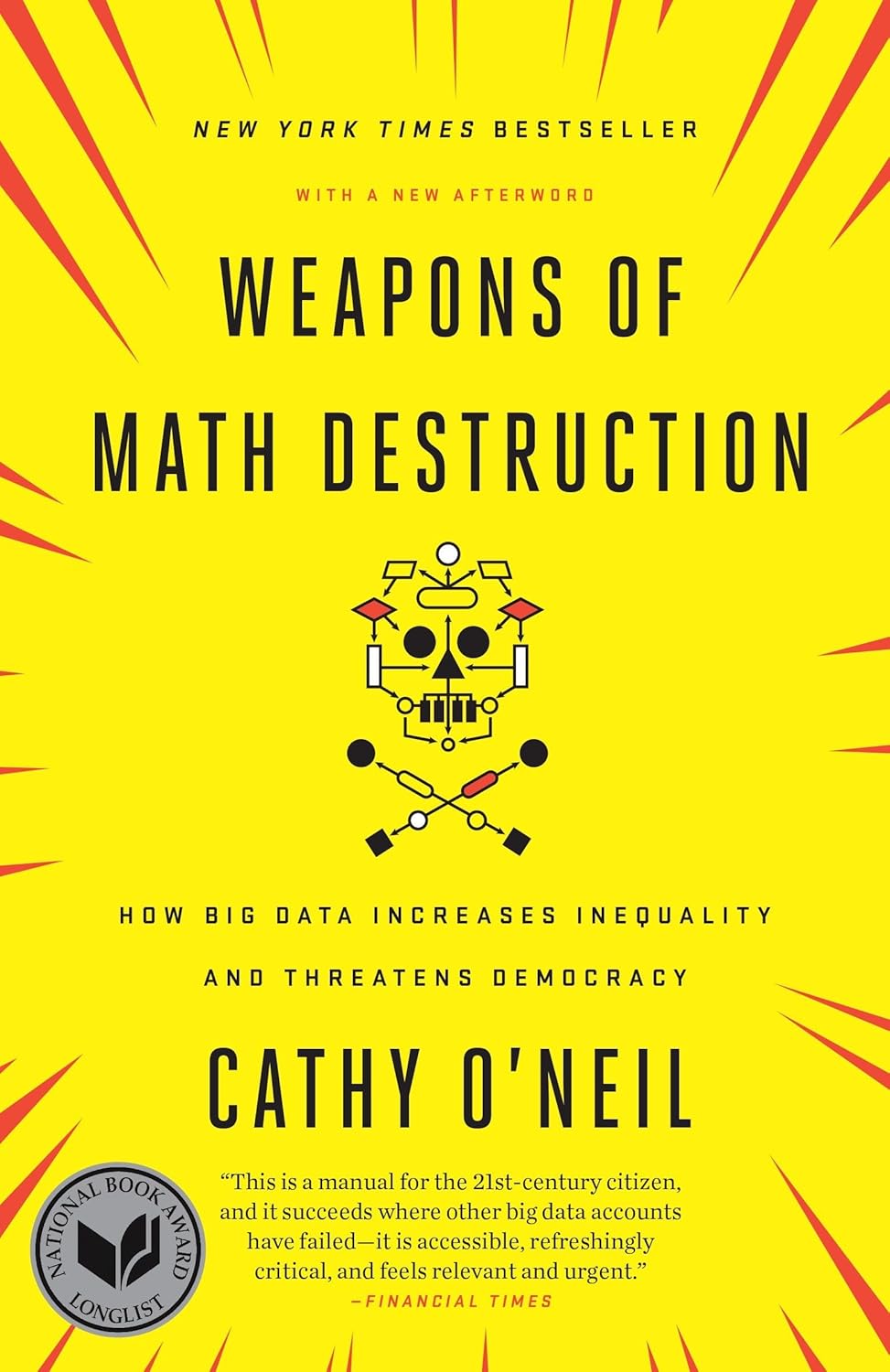
How opaque algorithms decide who gets credit, a job or parole — and why they tend to punish the same people.
As an Amazon Associate, Zendoric earns from qualifying purchases; the price does not change for you. · all our recommended books →
🔗 Related on Zendoric
- Visa cuts 2,600 jobs to fund stablecoins — the AI layoff story is reallocation, not simple replacement · 2026-09-02
- Visa cuts 2,600 jobs from product and tech — the tell isn't the AI framing, it's where the money is going · 2026-09-01
- Visa cuts 2,600 jobs from product and tech — and the efficiency story now points upmarket, not at the back office · 2026-07-31