Visa cuts 2,600 jobs — and it is product and engineering teams, not the back office, taking the hit
🕒 Published on Zendoric: July 30, 2026 · 00:20
✨ AI-generated · how it's made
Visa confirmed layoffs of about 2,600 people, roughly 7% of its 34,000-strong workforce, concentrated in product and technology. The CEO memo talks about efficiency and reinvesting in stablecoins and money movement — a reallocation story with an AI frame. The detail that matters: this time the cuts are hitting the builders.
📚 Go deeper

The best starting book if you're not technical: a Wharton professor explains how to work WITH AI — when to delegate, when to supervise, when to keep i
As an Amazon Associate, Zendoric earns from qualifying purchases; the price does not change for you. · all our recommended books →
Visa is cutting about 2,600 jobs — roughly 7% of its approximately 34,000 employees, or nearly one in fourteen. The company confirmed both the layoffs and the accuracy of the quoted memo to Fast Company after Bloomberg and others reported the plan. The cuts were disclosed internally in a memo from CEO Ryan McInerney, and according to that memo they will primarily affect the company's product and technology teams.
McInerney's stated rationale is reinvestment, not retrenchment: he described a "deep conviction that we are doing what is right for Visa, our clients and our partners as we continue to focus on driving efficiency across the company in order to reinvest in our highest potential opportunities." Per Bloomberg, the savings are earmarked for commercial and money-movement solutions, consumer payments, and value-added services including stablecoins. Fast Company's framing is that this is less about cost-cutting than about freeing capital, against a payments landscape increasingly disrupted by smaller, nimbler fintech startups and a growing internal focus on AI-driven efficiency gains.
Attribution discipline matters here, because the headline and the memo are not the same document. The memo, as quoted, talks about efficiency and reinvestment; the AI acceleration reading comes from the reporting and the broader context, not from a stated claim that software is replacing 2,600 specific people. That distinction is worth defending, because "AI did it" has become the most convenient available explanation for any restructuring — it sounds like strategy rather than a missed forecast, and it plays better with investors than admitting a product bet did not pay off.
But the composition of these cuts is genuinely new information, and it complicates a thesis we have argued in our own sector series. We have consistently said the most exposed roles in banking and payments are administrative and back-office — the branch, the processing queue, the manual reconciliation. Visa is cutting product and technology. If that pattern holds elsewhere, the exposure map is not simply shortening from the bottom; it is being redrawn. Coding assistants and agentic tooling compress the cost of building and maintaining software, which means a large product organization is no longer automatically a strategic asset. Fewer people can now ship the same roadmap — and the roadmap itself is being narrowed to what Visa considers defensible.
Watch where the money goes, because that is the honest signal. Stablecoins and money movement are exactly where Visa's moat is thinnest: its rails compete with settlement layers that do not need Visa's network to clear a payment. Reallocating capital toward that fight is a rational, arguably overdue defensive move. It also means the jobs are not vanishing from the economy so much as relocating within it — toward payment infrastructure, risk, compliance and the specific engineering that new rails require.
Our reading: this is capital reallocation with an AI rationale layered on top, and both halves are real. The long-term direction remains the one we have argued for — AI raises what a given number of people can build, and that surplus eventually funds work that could not previously be afforded, including the health and scientific applications that justify all this spending. The transition, though, is being paid for by identifiable individuals, and 2,600 of them just found out that being on the technology side of a technology company is no longer shelter. Two obligations follow. Companies should say plainly which cuts are automation and which are strategy misfires, because conflating them lets management dodge accountability while workers absorb the cost. And professionals should stop reading "engineering" as a safe category and start reading for what actually holds value: judgment, systems architecture, regulatory and risk expertise, and ownership of the rails themselves. Those are what Visa is buying with the money it just freed up.
📚 Go deeper
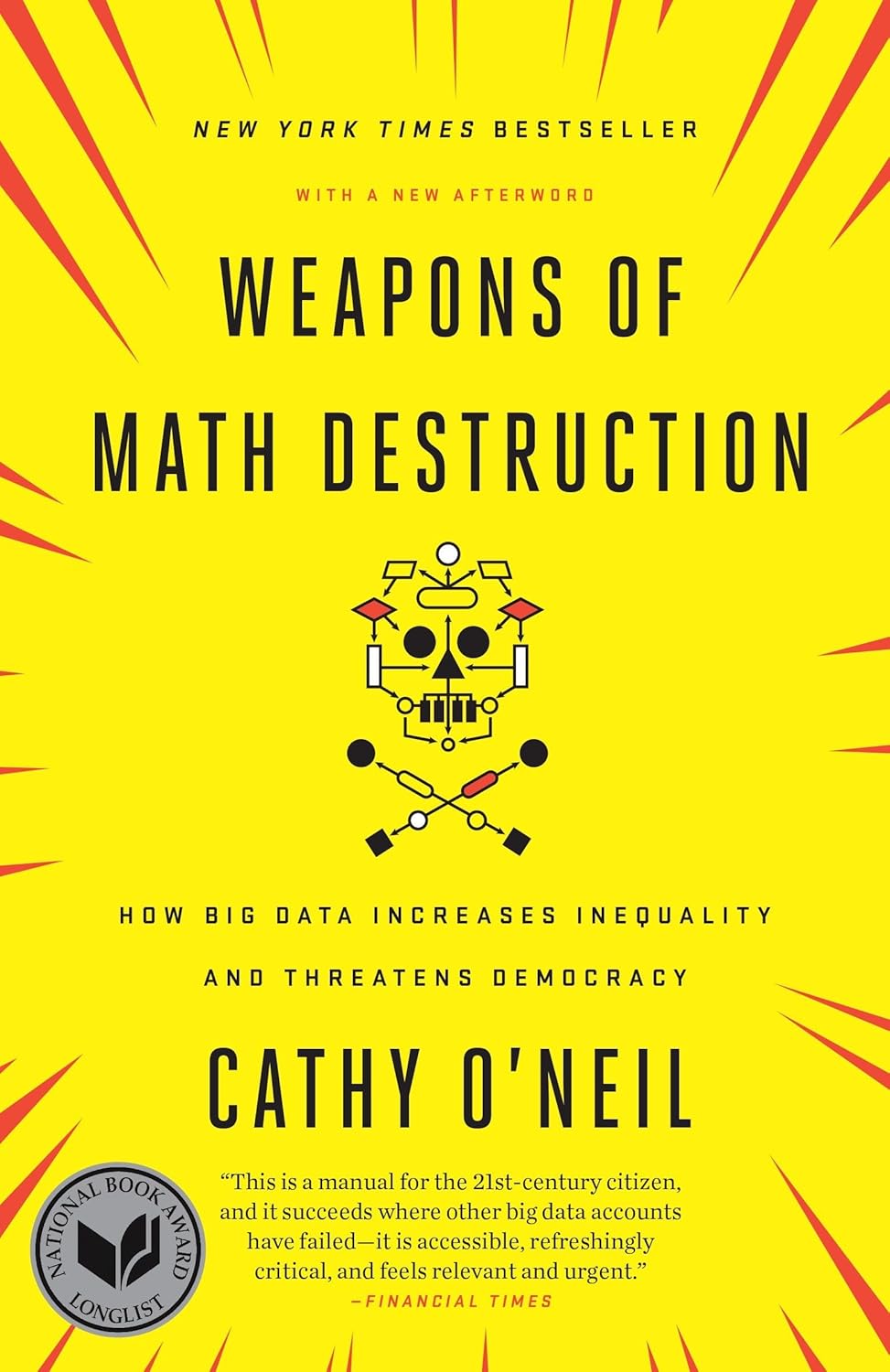
How opaque algorithms decide who gets credit, a job or parole — and why they tend to punish the same people.

The reference manual for building products on top of AI models: prompts, RAG, fine-tuning, agents, evaluation and deployment.
As an Amazon Associate, Zendoric earns from qualifying purchases; the price does not change for you. · all our recommended books →
🔗 Related on Zendoric
- Visa is cutting 2,600 jobs, and the twist is that product and engineering take the hit · 2026-07-29
- Visa cuts 2,600 jobs from product and tech — and the efficiency story now points upmarket, not at the back office · 2026-07-31
- Visa cuts 2,600 jobs to fund stablecoins — the AI layoff story is reallocation, not simple replacement · 2026-09-02