Imperial College creates the first British master's in AI, economics and regulation: the profession of governing technology is born

🕒 Published on Zendoric: July 29, 2026 · 00:34
✨ AI-generated · how it's made
Imperial Business School will launch in 2027 the UK's first master's degree combining technical AI with economics, law and public policy. It is an institutional bet on a hybrid profile —neither pure engineer nor pure lawyer— that the market is already demanding.
📚 Go deeper
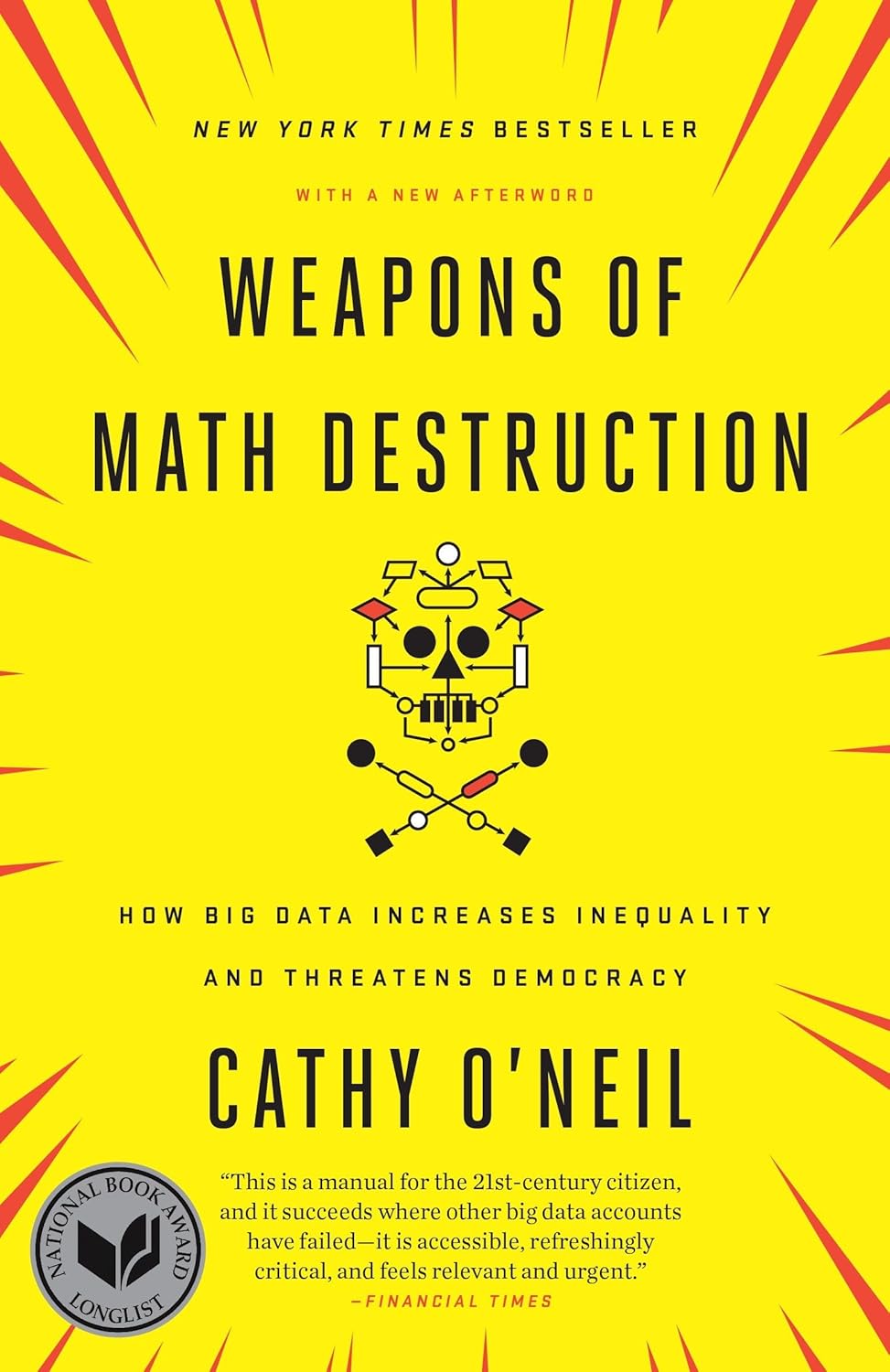
How opaque algorithms decide who gets credit, a job or parole — and why they tend to punish the same people.
As an Amazon Associate, Zendoric earns from qualifying purchases; the price does not change for you. · all our recommended books →
By Zendoric · July 29, 2026.
Imperial Business School, together with Imperial College London's Department of Computing, has announced the MSc AI, Economics and Policy, according to the institution itself: the UK's first master's degree to combine technical training in artificial intelligence (AI) with economics, law and governance in a single curriculum. Applications open in August 2026 and the first cohort will begin in September 2027.
The programme is aimed at recent graduates and early-career professionals, and prepares them for positions such as AI governance analyst, regulation specialist or responsible AI lead (roles the university itself cites verbatim: AI Governance Analyst, Regulation Specialist, Responsible AI Specialist), as well as careers in risk consulting, competition economics and legal technology. It also offers a pathway to a PhD in AI governance and digital markets, Imperial notes.
What matters is not just the syllabus, but who helped design it. Imperial says the programme is "closely informed" by its links with the Information Commissioner's Office (the UK data protection regulator), the Competition and Markets Authority (the competition watchdog), the Financial Conduct Authority (the financial supervisor), Ofcom (the telecoms and media regulator) and the European Commission. In other words: this is not an AI master's with an ethics module bolted on, but an attempt to train the people these bodies will need to hire. The academic director, Professor Tommaso Valletti, sums it up: "AI does not operate in isolation; it shapes markets, challenges existing regulation and raises fundamental policy questions."
Overall, the emergence of programmes like this confirms something we have been observing for months in our sector-by-sector analysis of AI's impact on employment: disruption does not eliminate entire professional categories, it recomposes them. In law, we noted that the base of the law-firm pyramid is narrowing while the value of expert judgement rises; in business administration, that purely administrative profiles are shrinking while demand grows for analysts able to use AI with judgement. Imperial's master's is the exact academic translation of that thesis: it deliberately creates the caste of professionals — neither purely technical nor purely legal — who audit, regulate and translate AI for the rest of society. It is a vacancy almost nobody today knows how to fill well, and one that will probably multiply as more government agencies and companies need staff able to read a language model and a regulation with equal ease.
There is, however, a tension worth flagging, one the announcement's own timeline makes plain: more than a year separates the announcement (July 2026) from the actual start of classes (September 2027), and the source does not specify the degree's total length. In a sector where reference models change generation every few months, any technical curriculum risks being out of date before its first cohort graduates. This does not invalidate the initiative — economics, competition law and regulatory frameworks change far more slowly than models, and that is precisely where this master's places the emphasis — but it is a reminder that the university, as an institution, moves at a structurally different pace from the technology it aims to govern. The reasonable answer is not for universities to run faster, but to train the kind of judgement that does not expire with every new version of a model: understanding incentives, markets and power, not just architectures.
Our underlying reading connects with the thesis we hold at Zendoric: the transition to an economy transformed by AI will generate short-term strain — here, literally, in the form of curricula that arrive late relative to the technology they study — but it is also creating, visibly and measurably, new professions that did not exist before. That a top-tier business school is betting on training AI "governors" rather than merely more engineers is a sign that the labour market is not limited to destroying administrative jobs: it is also generating, at the same speed, demand for people who know how to set reasonable limits on the technology. That, in miniature, is the abundance of new trades we defend as the horizon: not everyone will be a programmer, but many will be indispensable interpreters between the machine and the rules society decides to impose on it.
📚 Go deeper
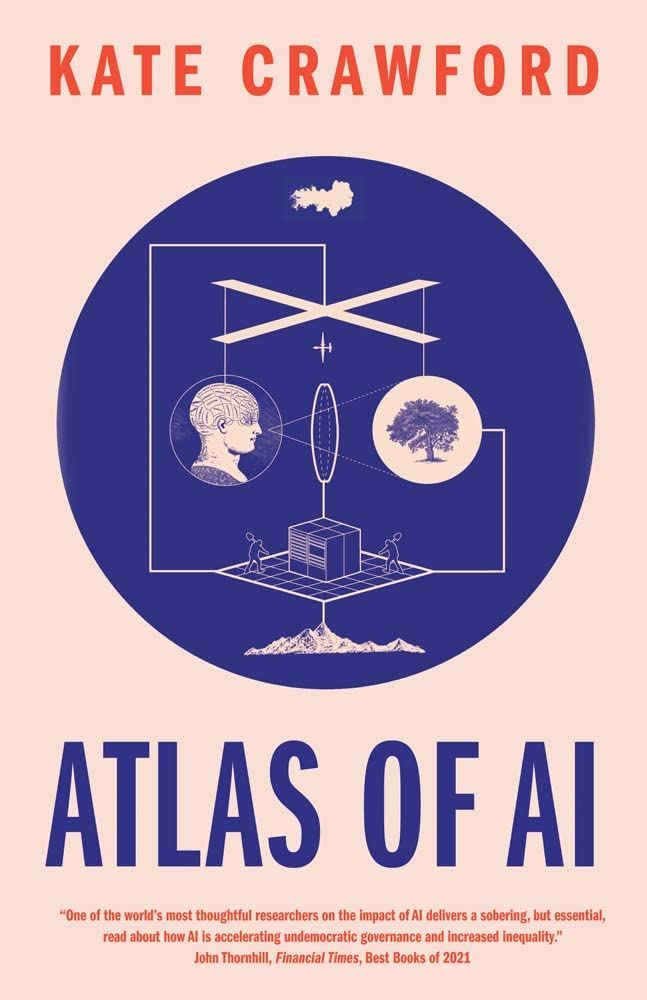
AI as an extractive industry: the lithium, the energy, the underpaid data-labeling work and the bodies behind the cloud.
The best starting book if you're not technical: a Wharton professor explains how to work WITH AI — when to delegate, when to supervise, when to keep i
As an Amazon Associate, Zendoric earns from qualifying purchases; the price does not change for you. · all our recommended books →
🔗 Related on Zendoric
- Texas fills up with AI degrees just as the youth job market tightens: the degree is no longer the merit, it's the entry ticket · 2026-07-09
- International students read the market before anyone else: they choose AI over the MBA · 2026-07-23
- Biobío creates Latin America's first AI doctorate and puts AI to work diagnosing cancer at a public hospital · 2026-09-02