Biobío creates Latin America's first AI doctorate and puts AI to work diagnosing cancer at a public hospital

🕒 Published on Zendoric: September 2, 2026 · 08:27
✨ AI-generated · how it's made
Four Chilean universities are wrapping up four years of a regional AI program funded with 2.5 billion pesos: they leave behind Latin America's first AI doctorate and a public hospital already using the technology to prioritize breast and childhood cancer diagnoses. Little money, but a revealing case of how AI comes down from the lab into real life.
📚 Go deeper

The only novel on the list, by a Nobel laureate: an artificial friend observes humans with a blend of lucidity and innocence no essay achieves.
As an Amazon Associate, Zendoric earns from qualifying purchases; the price does not change for you. · all our recommended books →
By Universidad de Concepción · September 1, 2026.
In the Biobío Region of southern Chile, four universities have just wrapped up a training and research program in Artificial Intelligence that had been running for four years. The project, called "Capital Humano Avanzando en Inteligencia Artificial para el Biobío", was awarded in 2021 and funded with 2.5 billion Chilean pesos by the Biobío Regional Government through the Innovation for Competitiveness Fund (FIC), the instrument Chilean regions use to pay for applied innovation projects.
It was run by CRUCH Biobío-Ñuble, the association that brings together Universidad de Concepción, Universidad Católica de la Santísima Concepción (UCSC), Universidad del Bío-Bío and Universidad Técnica Federico Santa María. According to figures released by the university itself, the program directly benefited 1,661 people, with a focus on five areas: manufacturing and industrial processes, health, education, smart agriculture and sustainability.
The most cited outcome is the creation of Latin America's first Doctorate in Artificial Intelligence, already accredited for three years and highlighted by UCSC rector and CRUCH Biobío-Ñuble president Cristhian Mellado. Added to that were specialized technological equipment and a portfolio of applied projects with companies and public services in the region.
The case with the longest track record is that of the Hospital Regional Guillermo Grant Benavente in Concepción. According to Jaime Tapia, head of its Innovation Unit, the work with the program's academics made it possible to secure anatomical pathology diagnosis -the tissue analysis that confirms whether a tumor is malignant- in breast cancer and childhood cancer, and to anticipate the hospital's bed occupancy two weeks in advance with 90% accuracy. These are figures provided by the hospital itself, not by an independent study, but they describe a narrow and judicious use of AI: not replacing the pathologist, but helping the clinical team prioritize cases and plan resources. In the private sector, the company Mundo Telecomunicaciones applied AI to its home installation processes; its R&D deputy manager, Iván Viveros, says the company's productivity increased "enormously" thanks to the knowledge contributed by the university.
Our take: while the global conversation about AI revolves around the hundreds of billions of dollars frontier labs are investing in data centers and ever larger models, programs like this one show the other half of the story, far less glamorous but just as necessary: the half that trains PhDs, adapts hospital processes and improves the productivity of a company in the region, outside AI's usual hubs. 2.5 billion pesos is a minor figure next to any frontier lab's budget, but the result -a public hospital better prioritizing the diagnosis of two cancers- is exactly the kind of cumulative progress that underpins our core thesis: AI applied with judgment can bring us, step by step, closer to earlier and more systematic disease detection.
It is also worth being honest about the short-term risk: this was public start-up funding, designed for four years, and the doctorate begins accredited for only three. The hardest moment for any public innovation program is not its launch but its continuity, when the special fund runs out and institutions must decide whether to institutionalize what has been built -chairs, enrollment, partnerships with hospitals and companies- with their own budgets. That Biobío has managed to build an ecosystem with research, talent and real applications in public health is good news; whether that ecosystem survives without the FIC umbrella is the question that really matters from 2027 onward.
📚 Go deeper

An MIT computer scientist connects AI, quantum physics and video games to take an uncomfortable question seriously: what if we live in a simulation? M
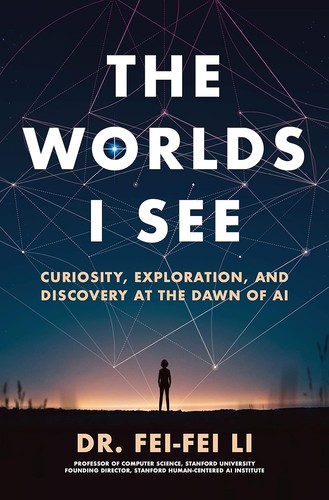
The memoir of the creator of ImageNet, the scientist who made the deep learning revolution in vision possible.
As an Amazon Associate, Zendoric earns from qualifying purchases; the price does not change for you. · all our recommended books →
🔗 Related on Zendoric
- PRECISION-AI: Chile's 5 billion-peso bet on AI oncology, and why the real challenge is clinical adoption · 2026-07-09
- Breast cancer leaves traces six years earlier: AI can already see them, and that forces a rethink of the entire screening process · 2026-06-28
- AI fraud will grow 153% in five years: the arms race companies cannot afford to lose · 2026-06-30