Why complex multi-step tasks are humanoid robotics' biggest challenge
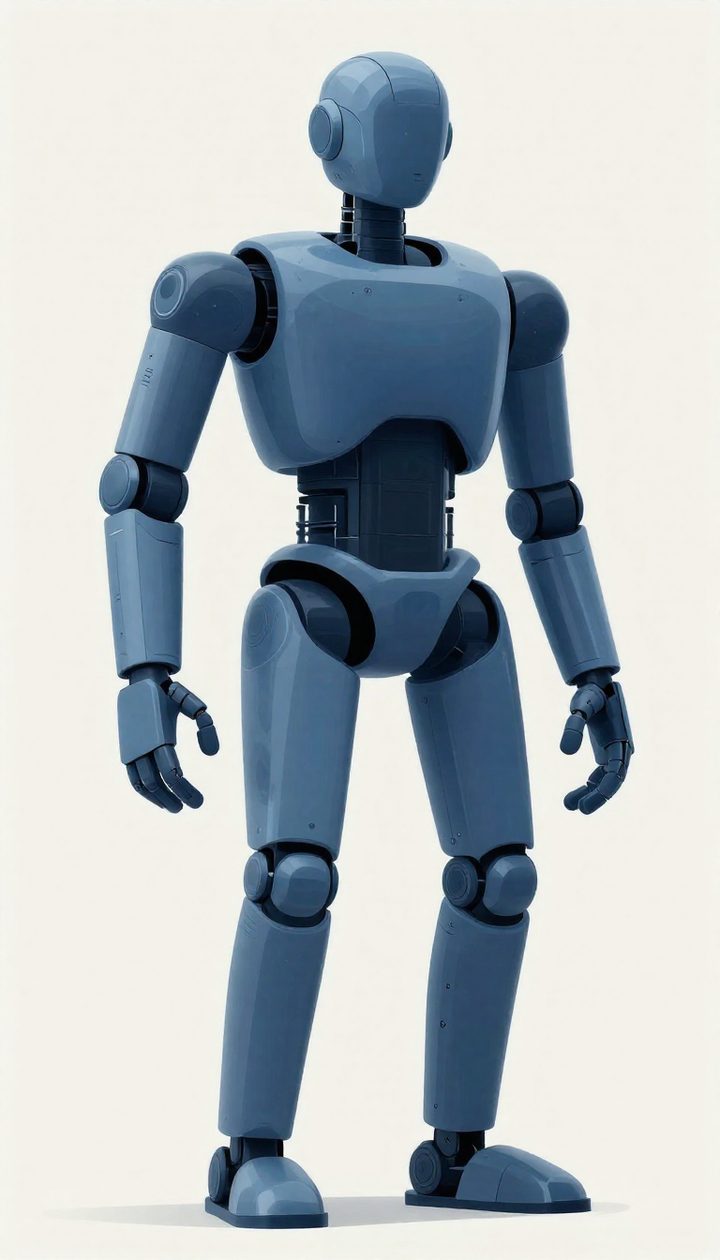
🕒 Published on Zendoric: July 28, 2026 · 00:38
✨ AI-generated · how it's made
This opinion piece, by Nikita Rudin —co-founder and CEO of Flexion, previously at NVIDIA and ETH Zurich— argues that the real bottleneck in humanoid robotics is no longer mastering individual skills, but chaining them autonomously across long tasks with multiple…
📚 Go deeper

The story of NVIDIA and Jensen Huang: how a video-game card company ended up making the most coveted resource on the planet.
As an Amazon Associate, Zendoric earns from qualifying purchases; the price does not change for you. · all our recommended books →
This opinion piece, signed by Nikita Rudin —co-founder and CEO of Flexion, previously at NVIDIA and ETH Zurich—, argues that the real bottleneck in humanoid robotics no longer lies in mastering isolated skills, but in chaining them together autonomously across long, multi-step tasks, what the author calls "long-horizon autonomy".
The text opens by describing a specific demonstration: a humanoid robot was given a natural-language instruction to pick up a package of snacks delivered for Flexion using the stairs and come back up in the elevator, unpack the box and place the products in an empty drawer of the shelf in the snack area. With no teleoperation, no pre-programmed sequences and no human corrections off camera, the robot navigated a real multi-storey building, opened doors, called the elevator, unpacked the box and restocked the shelf, adapting when things did not go exactly as expected. The full task was completed in four minutes.
According to Rudin, what is notable is not that the robot could climb stairs or open doors —capabilities that already existed— but the integration of language understanding, navigation, object manipulation, planning and error recovery into a single continuous task, inside a building designed for people rather than machines. That combination, he argues, is far more representative of the kind of work robots will have to carry out in factories, warehouses, hospitals, hotels and commercial buildings, environments where the challenge is usually not executing one isolated movement well, but sustaining a sequence of decisions in a setting that changes over time. The author also underlines a practical point: a robot that needs human intervention every thirty seconds does not save any real time, because someone still has to keep an eye on it.
To support this thesis, the article presents data from an internal 16-step evaluation carried out with Flexion's own system, called Reflect, which combines language understanding, perception, motion planning, whole-body control and reinforcement learning in a single autonomous stack, optimized not to improve each capability separately but to complete the entire task. The results cited are telling: generic vision-language models (VLMs), even with careful prompting and in-context examples, failed almost immediately, completing the task 0% of the time. A mission controller trained with supervised fine-tuning alone reached a 38% success rate, and adding reinforcement learning pushed that figure to 90%. Rudin reads this improvement not as the result of perfecting a single skill, but as a gain in reliability across the whole sequence of decisions.
The article also takes up the debate over how to train these systems. Much of the industry today relies on teleoperation to collect demonstrations, a valuable method for teaching new behaviors but expensive to scale to every possible task, environment and hardware platform. As an alternative, Rudin makes the case for reinforcement learning in simulation: instead of collecting every example by hand, robots can accumulate millions of experiences in virtual environments before moving to the physical world. He clarifies that simulation does not replace real-world data, but it does vastly expand the range of situations a robot can experience, including recovery from errors that would be impractical to demonstrate manually.
The author does not hide the current limitations: Flexion's system operates within a defined set of tasks rather than arbitrary real-world situations, certain objects remain hard to manipulate reliably, and failure-recovery behaviors still need to improve. Far from detracting from the demonstration, Rudin uses these shortcomings to reinforce his central argument: long-horizon autonomy remains an unsolved engineering problem, and every failure points to where the next advances should go.
The article closes with an idea that reads like a manifesto for the sector: the real test of a humanoid robot's usefulness will be increasingly simple to state — can you give it a goal, leave it to work on its own and trust that it will finish? Hardware will keep improving across the industry, as it should, but, according to the author, it will be the systems capable of completing long, complex tasks without human intervention that define the next generation of genuinely useful humanoid robots.
📚 Go deeper

Semiconductors as the oil of the 21st century: history, espionage, and why an island of 23 million people underpins the entire AI economy.
The reference manual for building products on top of AI models: prompts, RAG, fine-tuning, agents, evaluation and deployment.
As an Amazon Associate, Zendoric earns from qualifying purchases; the price does not change for you. · all our recommended books →
🔗 Related on Zendoric
- NVIDIA lets an agent deploy 3D camera networks with a prompt: DeepStream 9.1 ends manual calibration · 2026-07-19
- The uncomfortable question about AI is not whether it works, but who pays the bill · 2026-06-27
- Open Engine and the handoff thesis: AI's bottleneck is no longer the model, it is what happens between models · 2026-06-27