Everyone is lying to you about AI creativity: a CEO argues creative friction is the point
🕒 Published on Zendoric: October 15, 2026 · 00:13
✨ AI-generated · how it's made
The article, published on October 14, 2026 in Forward Future as a guest contribution, is an opinion piece by Shane Hegde, co-founder and CEO of Air, a company developing an agent for creative tasks.
📚 Go deeper
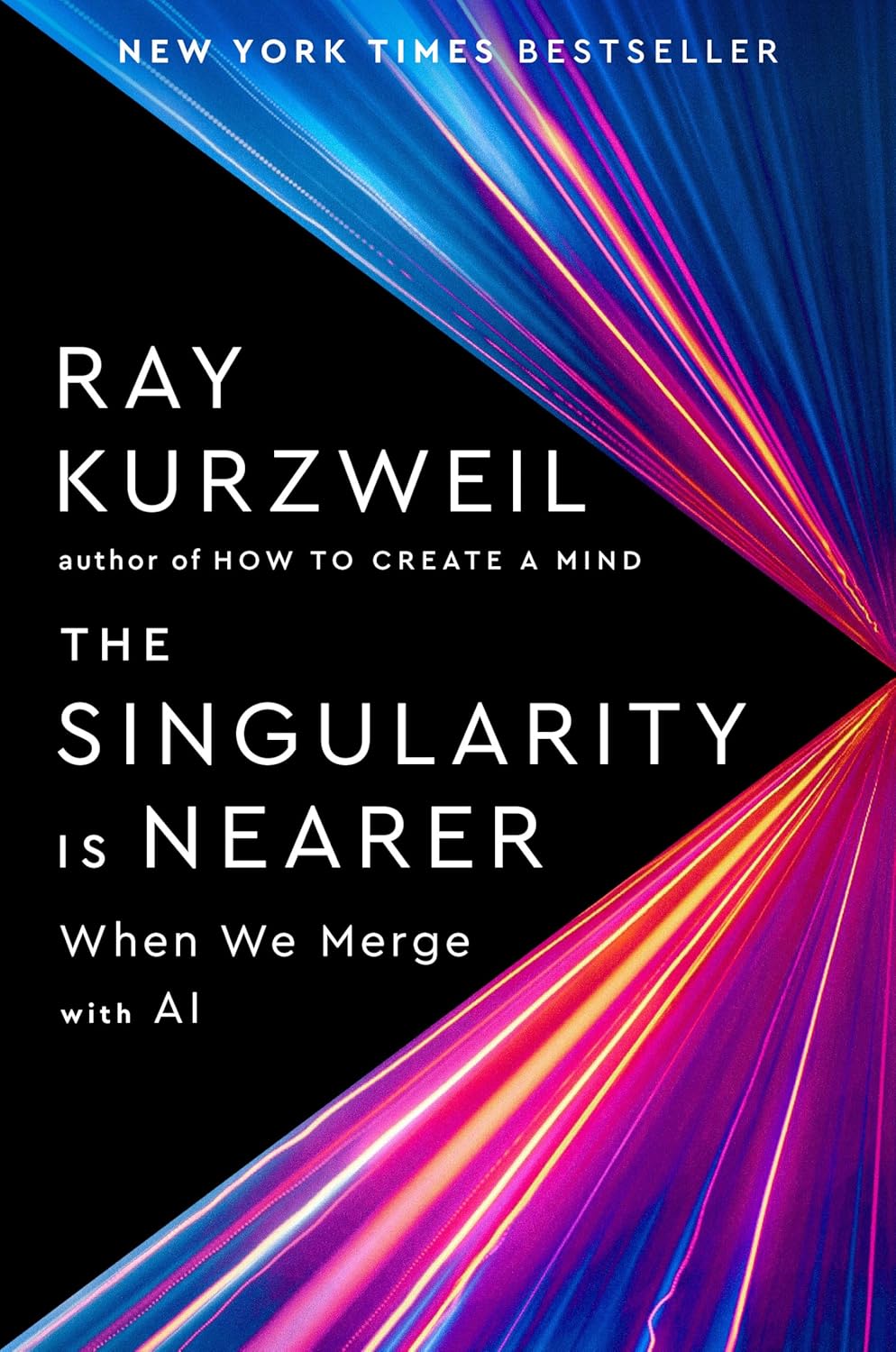
Twenty years after "The Singularity Is Near", Kurzweil revisits his predictions and keeps the date: human-AI merger around 2045.
As an Amazon Associate, Zendoric earns from qualifying purchases; the price does not change for you. · all our recommended books →
The article, published on October 14, 2026 in Forward Future as a guest contribution, is an opinion piece by Shane Hegde, co-founder and CEO of Air, a company developing an agent for creative tasks. It is worth bearing in mind from the outset that the author runs a company in the very sector he is writing about, and that his closing argument leads to his own company's product pitch.
The starting thesis is that we are living through a period in which a future of infinite, self-optimizing content, one-shot brand campaigns and fully automated taste is being sold. According to Hegde, a new class of founders is pushing the idea that writing prompts is enough to build a world-class brand. His conclusion is blunt: "everyone is lying to you."
To illustrate this, the author draws on three examples in a clearly ironic tone. On Weber Wong's Flora, he quips that it presents itself as a guarantee that the creative work of the future will be node-based, but that to be part of it one would have to become a kind of "Forward Deployed Creative." On Kennan Davison's Icon, he notes that it promised a future of infinite, self-optimizing ads with a single click, and months later launched a paid marketing agency to create ads. On Alex Mashrabov's Higgsfield, he acknowledges that it has had a remarkable acceleration story in the venture capital world, but criticizes it for convincing the market that you have to "play" with its tool or be replaced. These are the author's opinions, not verified findings.
Against that narrative, Hegde offers what he considers a more interesting reading: the craft of creativity will not be replaced by a template prompt, by an agent, or by any of the founders mentioned, himself included. He clarifies that he is not calling for these products to be ignored: he acknowledges that they work, that the models are powerful and that creative work is changing profoundly. But he insists that creativity is an art form in which there is no single right answer, and that friction has always been, is and always will be the point. In his view, AI should make it possible to live within that friction.
The practical core of the argument is that once the barrier to creating content disappears, the problem becomes everything that happens around it. Hegde lists that peripheral work: thousands of assets to organize, endless versions, formats, languages and channels, hours spent searching for the right material, resizing images and making sure the right people have access to the right resources. None of that, he argues, is creativity, but all of it gets in the way of being creative.
That is where he sees AI's most interesting opportunity: not replacing the people who make things, but building the systems that make their work possible at scale. This is what he says Air is pursuing and what he believes should occupy an entire generation of creative tools: giving creative teams the infrastructure to spend less time managing their work and more time producing it. He admits with some humility that they are still figuring out the path and that the technology is not finished, and perhaps never will be.
His closing argument is that as AI makes it easier to generate content, the ability to organize it, contextualize it and actually use it becomes more important, not less. He argues that, no matter how many #HiggsfieldPartners posts dominate feeds, the real work of creative teams does not look like a one-shot prompt that produces, say, a mustachioed French dandy deep in the uncanny valley. Authentic work is carried out by teams that make thousands of decisions, refine ideas, collaborate and turn creative ambition into something that ships. AI should make that easier, not pretend to replace it.
In short, this is a positioning piece rather than a data-driven analysis: it provides no figures, studies or evidence about the products it criticizes, and its claims about other companies are personal opinions. Its value lies in reflecting a real debate in the industry—whether generative AI should sell the total automation of creativity or focus on the infrastructure and management surrounding human creative work—and in showing how one of the interested parties frames the second position.
📚 Go deeper

AI as the latest chapter in the history of information networks, from gossip to the printing press to the algorithm.

DeepMind co-founder on the dilemma of containing technologies that do not want to be contained.
As an Amazon Associate, Zendoric earns from qualifying purchases; the price does not change for you. · all our recommended books →
🔗 Related on Zendoric