Claude's leaked share links are a plumbing failure, not a model failure — and that's the harder bug to fix

🕒 Published on Zendoric: July 26, 2026 · 00:23
✨ AI-generated · how it's made
Hundreds of Claude conversations — legal strategy, proprietary code, personal matters — reportedly turned up in Google results because share pages lacked a basic noindex tag. The models keep getting smarter; the sharing layer around them is still built like a 2010 web app. Trust, not capability, is what's rate-limiting AI adoption.
📚 Go deeper
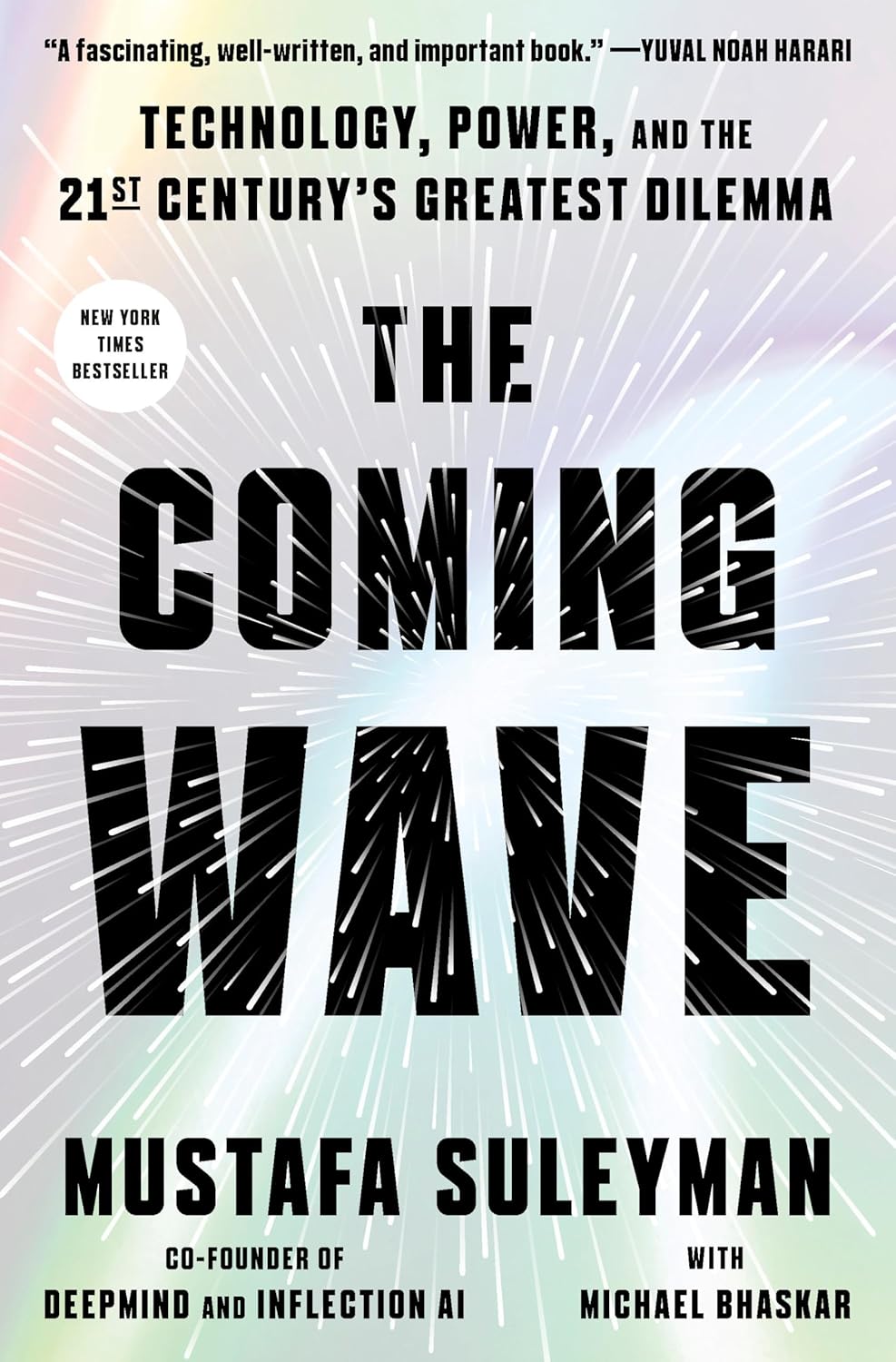
DeepMind co-founder on the dilemma of containing technologies that do not want to be contained.
As an Amazon Associate, Zendoric earns from qualifying purchases; the price does not change for you. · all our recommended books →
Hundreds of shared Claude conversations were publicly discoverable through Google over the weekend, according to a Reddit thread reported by CyberSecurityNews on 26 July. Searching `site:claude.ai/share` surfaced full chat transcripts — legal strategy discussions from lawyers, technical troubleshooting and code from engineers, and personal conversations — without anyone needing the original link from its owner. By Sunday the results had largely vanished, which the outlet reads as either rapid deindexing or a backend fix by Anthropic. The company had not issued a public statement at the time of reporting, and the underlying claim originates with users, not with a vendor disclosure.
The mechanism, as described, is almost banal. Claude's share feature mints a public URL so a conversation can be sent to someone else. Those pages reportedly shipped without a proper `noindex` tag — the one-line instruction that tells search crawlers "you may fetch this, but do not list it." Without it, a share link only has to leak once, into a forum post or a social thread, for Googlebot to follow it and publish the entire conversation to anyone who knows how to write a site: query. This is not a jailbreak, not a prompt injection, not an exotic agentic exploit. It is the oldest category of web mistake: a URL that was private by obscurity and public by architecture.
That is precisely why it should worry people more than a flashy model exploit would. The same failure hit ChatGPT's shared links earlier, as CyberSecurityNews notes — meaning the industry has now made the identical mistake twice, in the same feature, at two different frontier labs. And "fixed" is doing a lot of work here. Deindexing removes pages from search results; it does not revoke the links. Anyone who bookmarked or archived a share URL can likely still open it unless Anthropic kills access server-side. Search engines were the discovery mechanism, not the exposure itself.
The stakes scale with how good these tools have become. In our own quality index, Anthropic's frontier models sit at the top of the field — which is exactly why professionals paste contracts, proprietary code, client data and business analysis into them. Capability leadership pulls in higher-value, higher-sensitivity work; it does not automatically come with privacy engineering to match. A lawyer's exposed litigation strategy is a professional-duty problem. An engineer's exposed internal code is an IP problem. For a European firm handling client data, an indexed transcript is potentially a notifiable incident. The blast radius of a missing meta tag is set by who your users are.
Our reading: the binding constraint on AI adoption is shifting from what the models can do to what users can safely hand them. We have argued that energy is the physical bottleneck of this era; trust is the institutional one. The long-term case for this technology — AI that helps cure disease, extend healthy life and free people to work on what they love — requires giving systems your medical history, your legal exposure, your company's crown jewels. Every incident like this one raises the price of that bargain, and it does so through sloppiness rather than through anything hard.
The fix is unglamorous and entirely available today: `noindex` by default on every share surface, links that expire, optional authentication gates, a visible dashboard of everything you have ever shared, and genuine server-side revocation rather than search-result cleanup. Labs that ship agents capable of executing multi-step tasks can manage a robots directive. Until that becomes table stakes, the honest user posture is the one the report recommends — audit your active shares, delete what you no longer need, and treat any shared AI conversation as a document published to the open web. Short term, that is a real and avoidable cost. Long term, the labs that treat privacy plumbing as a product feature rather than an afterthought will be the ones people trust with the problems actually worth solving.
📚 Go deeper

The definitive piece of investigative journalism on OpenAI: 260+ interviews, the clash between safety and speed, and the attempted firing of Sam Altma

The best starting book if you're not technical: a Wharton professor explains how to work WITH AI — when to delegate, when to supervise, when to keep i
As an Amazon Associate, Zendoric earns from qualifying purchases; the price does not change for you. · all our recommended books →
🔗 Related on Zendoric
- Claude share links turned up in Google — the AI privacy bug that keeps shipping, product after product · 2026-07-27
- The week AI turned political, personal and strange: Chinese models, Google and digital companies · 2026-07-22
- An AI experiment finds no difference between Rust and C++: what matters is how you direct the agent · 2026-07-27