Hinge bans AI accounts without saying why: when automated moderation becomes a black box

🕒 Published on Zendoric: July 25, 2026 · 00:23
✨ AI-generated · how it's made
A journalist for The Spectator tried Hinge after reading Reddit complaints about unexplained bans and, despite near-impeccable use, was expelled within 24 hours. Match Group, owner of Hinge and Tinder, boasts that its AI removes 80% of harmful accounts before anyone reports them, but it does not explain its own verdicts.
📚 Go deeper
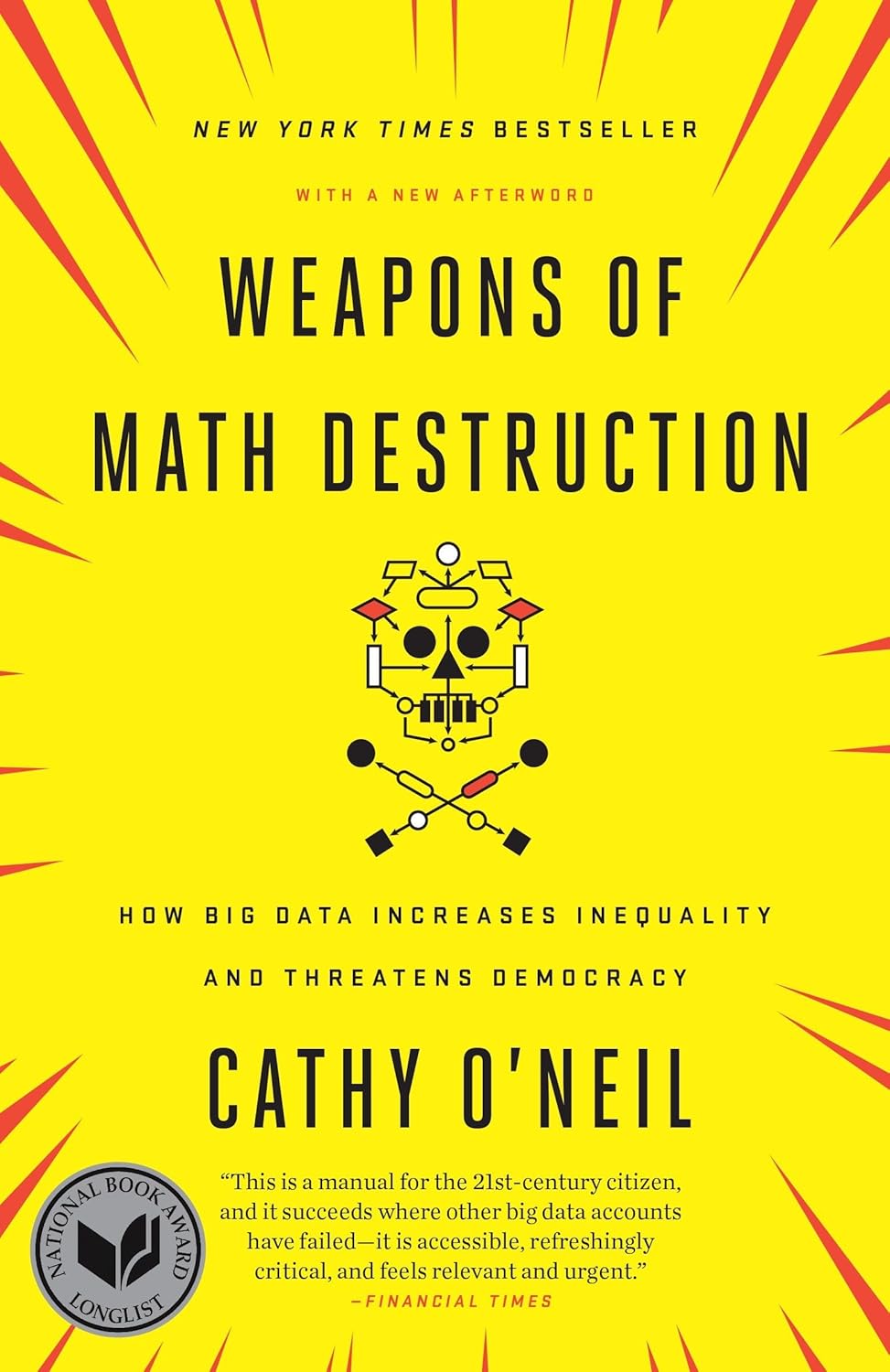
How opaque algorithms decide who gets credit, a job or parole — and why they tend to punish the same people.
As an Amazon Associate, Zendoric earns from qualifying purchases; the price does not change for you. · all our recommended books →
By Zendoric · July 25, 2026.
Melissa Kite, a columnist for The Spectator, signed up for Hinge —the most widely used dating app in the United States, with 30 million users and owned by Match Group, which also controls Tinder— to test whether the complaints she had seen piling up on Reddit were true: users banned without explanation, some describing themselves as on the verge of despair at not understanding what they had done wrong. By the author's own account, she behaved in a deliberately restrained way: a proper profile, professional photos, not a single message sent to other users. She wrote only one comment ("Nice tux!", on a wedding photo), which the system flagged as inappropriate before it was published; she deleted it. The next day, her account was removed with a generic email that pointed to the general terms and conditions, without specifying the violation.
The underlying figure, and the only one that can be verified precisely, comes from Match Group itself: the company claims that 80% of accounts deemed harmful are removed by AI before any user even reports them. It is an efficiency figure the company presents as a safety achievement, but which says nothing about its false-positive rate or about what happens when the system gets it wrong. When Kite contacted the company as a journalist, the official response was that, "for privacy reasons," they could not comment on how their rules had been applied in an individual case, and they referred her to an appeals process reviewed by a human "Trust and Safety" team that can escalate the case to a specialist. The author refused to appeal without first knowing the charge she was accused of, a dilemma with Kafkaesque overtones that she herself compares to Kafka's The Trial.
It is important here to separate fact from the author's own speculation. Kite raises, without being able to prove it, two hypotheses of her own about the reason for her expulsion: that Hinge purges free accounts that will not generate revenue, or that it filters profiles on demographic grounds to protect an inclusive brand image. Neither is backed by evidence in the article or by statements from the company; they are the theories of a user frustrated by an opaque system, and should be read that way, not as a proven accusation against Match Group.
What is established, and what is relevant from our editorial standpoint, is the pattern: an automated moderation system makes an irreversible decision about a person's digital identity, and not even the company itself is willing —or perhaps able— to explain the specific reason. This is exactly the kind of short-term friction we have repeatedly pointed to when discussing AI applied to security and content moderation: automated systems scale mass detection wonderfully, but fail at something that seems elementary to us humans, the explainability of a decision that affects a specific person. When the appellant cannot know the charge, the appeal ceases to be a real right and becomes a formality that shields the company rather than protecting the user.
This is not a problem exclusive to dating apps: it is the same pattern we have been observing in social media moderation, in automated credit-scoring systems, or in AI hiring filters. The declared efficiency —that 80% of accounts removed before being reported— becomes a security marketing argument that conceals the human cost of false positives, and companies have few incentives to make it public: admitting AI errors erodes the "safe platform" narrative they sell to regulators and users. The result is an asymmetry of power: the company decides, executes and judges without exposing its criteria, while the user is left with no recourse but to trust a process it cannot audit.
Our reading is that this kind of episode, though anecdotal and, in a single case, unverified beyond the journalist's own account, points to a real need for governance: requiring the platforms that use AI for moderation —especially when we are talking about decisions that affect people's reputation or social life— to meet minimum levels of explainability and external auditing of their error rates. In the short term, algorithmic opacity will keep generating friction, distrust and, in some cases, real harm to innocent users; it is a cost of the transition toward automated systems that we have not yet learned to supervise well. In the long run, however, the very maturity of AI should make possible exactly the opposite of what this article describes: systems capable of explaining their own reasoning in natural language and of distinguishing nuances —an innocent joke about a wedding suit should never be confused with harassment—, if companies decide to invest in it rather than simply maximizing the number of accounts removed. The underlying question is not whether AI can moderate better than a human —in terms of volume it probably already does—, but whether the companies deploying it are willing to be held accountable for their mistakes as quickly as they boast about their successes.
📚 Go deeper
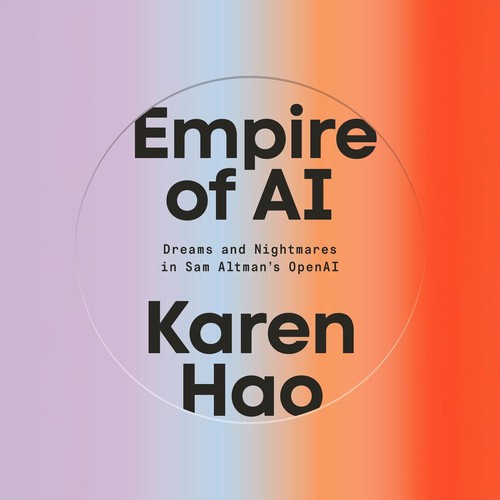
The definitive piece of investigative journalism on OpenAI: 260+ interviews, the clash between safety and speed, and the attempted firing of Sam Altma

AI as the latest chapter in the history of information networks, from gossip to the printing press to the algorithm.
As an Amazon Associate, Zendoric earns from qualifying purchases; the price does not change for you. · all our recommended books →
🔗 Related on Zendoric
- Hinge kicks you out without saying why: a journalist's case exposes the black box of AI moderation · 2026-07-24
- Match Group slows hiring to pay for the AI that already decides who you match with on Tinder and Hinge · 2026-07-17
- Anthropic removes its hidden code against Chinese distillation: protecting the model, at the cost of trust · 2026-07-02