Match Group slows hiring to pay for the AI that already decides who you match with on Tinder and Hinge

🕒 Published on Zendoric: July 17, 2026 · 00:24
✨ AI-generated · how it's made
Match Group CFO Steven Bailey explains how the company behind Tinder and Hinge is becoming 'AI-native': nearly two-thirds of Tinder's improvements this year are algorithmic, and it has had to set token limits and slow hiring to afford it. Dating, increasingly mediated by software, now also has a bill to balance.
📚 Go deeper
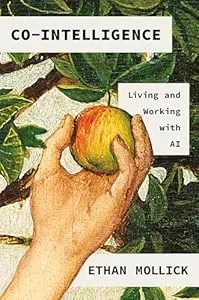
The best starting book if you're not technical: a Wharton professor explains how to work WITH AI — when to delegate, when to supervise, when to keep i
As an Amazon Associate, Zendoric earns from qualifying purchases; the price does not change for you. · all our recommended books →
By Observer · July 16, 2026.
Steven Bailey, CFO of Match Group (Tinder, Hinge, Match.com), has revealed in an interview the specific figures behind the company's bet on generative AI. Its 2,300 employees have access to tools such as Claude, the company organized an "AI day" with an internal prototype contest, and the stated goal of CEO Spencer Rascoff and his team is to become an "AI-native" company as soon as possible. The most revealing figure is not about the product, but about accounting: the average engineer spends about 600 dollars a month on AI tools (compared with 50 dollars for a non-technical employee), and the most intensive users reach 3,000 dollars a month. 100% of engineers already use AI to write code, most of it generated by the model and reviewed by humans, and Tinder's teams are shipping to production roughly twice as much code as just a few quarters ago.
That spending pace has forced Match to hit the brakes. Bailey describes it as moving from a phase of unrestricted adoption to an "ROI phase": the company has introduced "speed bumps," literally token caps, with one limit for technical staff and a lower one for everyone else; whoever exhausts it must ask their manager for more. It is the same phenomenon already seen at other tech companies —what the sector has dubbed "tokenmaxxing"— and which Bailey frames bluntly: Uber, as has been reported, burned through its AI budget in just four months, and Jensen Huang (Nvidia) himself has said he would not be surprised if a senior engineer spent the equivalent of half their salary on tokens. Match, for now, prefers to put up guardrails rather than suffer that loss of control.
On the product side, AI is no longer an experiment but the main engine of improvement: two thirds of Tinder's updates this year have been algorithm changes, and Hinge's matchmaking system, powered by AI and launched a few quarters ago, has raised matches by 15%. Hinge has also added "prompt feedback," a feature that does not write the profile's answers for the user but nudges them to expand them and make them more distinctive —Bailey notes that it is mostly men who most need it when answering questions like "your favorite beach." It is a small but significant detail: AI no longer just decides whom it shows you, but intervenes in how you present yourself so that you get chosen.
The cost of this transformation also falls on internal employment: Match has slowed hiring, in part to fund the AI bill and in part, Bailey admits, to rethink which profiles are needed. "The roles we're going to need are going to be different once we're AI-native from the ones we needed just six months ago," he sums up. It is a phrase any tech CFO could repeat in 2026, and it fits with what we have been observing sector by sector: work does not disappear all at once, but the yardstick used to measure which profile is worth hiring changes quietly and quickly, while the gap is filled, for now, by a pause in new hires.
Our read: the Match Group case is a good thermometer of where corporate AI adoption is heading in 2026, beyond the initial enthusiasm. First, token spending has ceased to be a technical curiosity and has become a line of business that must be governed like any other capex —hence serious companies are beginning to set limits, not out of distrust of the technology, but out of elementary financial discipline. Second, and more fundamental: when the business is literally helping two people meet, delegating to an algorithm which profile you see, what you say and who likes you raises a question that transcends the technical. In the short term, there is a real risk that authenticity gets diluted —if an assistant suggests how to sound more interesting, who is the other person really getting to know?—. But if the net result is reducing the fatigue of infinite swiping and generating more real human connections, as Hinge's 15% jump in matches suggests, the balance may tip in favor of the technology: less time wasted filtering noise, more time devoted to what really matters, which is getting to know someone. It is, on a small scale, the same pattern we expect to see in more areas of everyday life: AI absorbs the friction and the logistics so that people can concentrate on the human, unrepeatable part of the experience. The challenge, here as in any sector, is not to let algorithmic efficiency replace what it was supposed to make easier.
📚 Go deeper
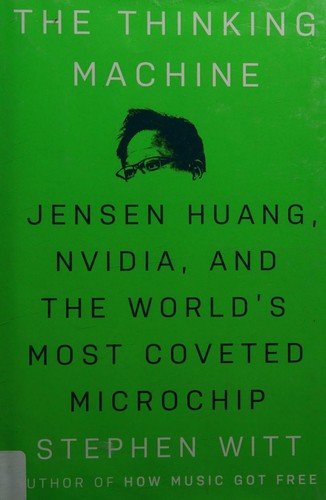
The story of NVIDIA and Jensen Huang: how a video-game card company ended up making the most coveted resource on the planet.
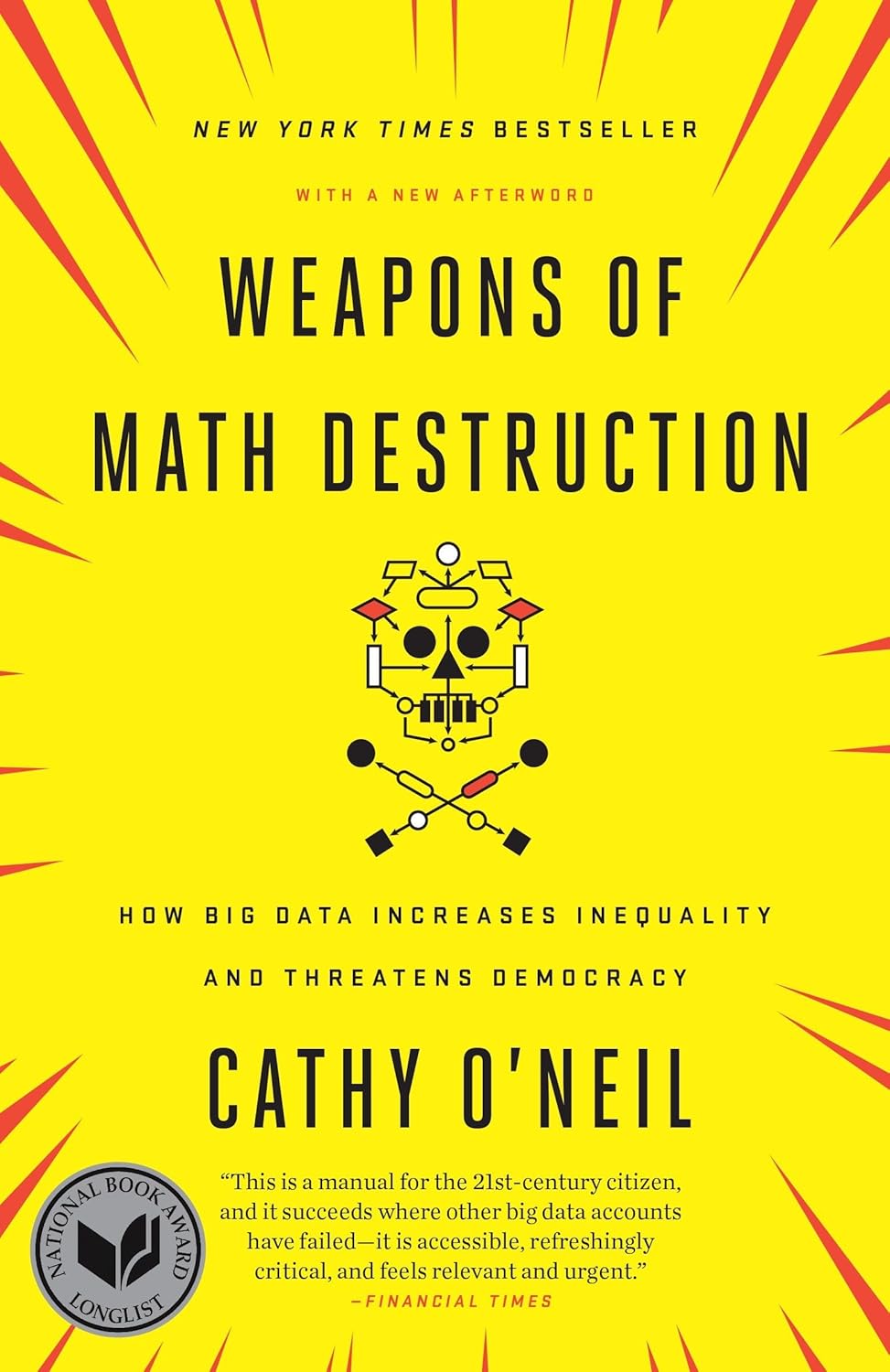
How opaque algorithms decide who gets credit, a job or parole — and why they tend to punish the same people.
As an Amazon Associate, Zendoric earns from qualifying purchases; the price does not change for you. · all our recommended books →
🔗 Related on Zendoric
- Dimon compares Mythos to 'ballistic missiles': when Wall Street calls for limits on AI that hunts vulnerabilities · 2026-07-16
- Hinge bans AI accounts without saying why: when automated moderation becomes a black box · 2026-07-25
- The CEO under pressure, according to McKinsey: an analysis almost no one will be able to access · 2026-06-28