A Greenwich school cuts classes to two hours a day with AI: the rest, life skills

🕒 Published on Zendoric: July 21, 2026 · 00:20
✨ AI-generated · how it's made
Alpha School, the private school network that replaces much of traditional teaching with adaptive software, opens its first Greenwich (Connecticut) campus this fall for up to 100 students from kindergarten to high school. It promises results in the top 1-2% of the US with just two daily hours of academics; the rest, workshops on finance, public speaking and business. The proposal divides parents and students in the district.
📚 Go deeper
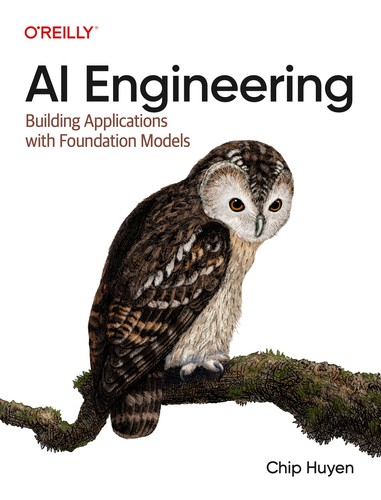
The reference manual for building products on top of AI models: prompts, RAG, fine-tuning, agents, evaluation and deployment.
As an Amazon Associate, Zendoric earns from qualifying purchases; the price does not change for you. · all our recommended books →
By Zendoric · July 20, 2026.
Alpha School, a national network of private schools in the U.S. that bases its teaching on artificial intelligence, is transforming a space at 20 East Elm Street, in the heart of downtown Greenwich (Connecticut), to open its next campus there this fall, the company itself confirmed to News 12 Connecticut. The center will admit up to 100 students from pre-kindergarten through eighth grade (equivalent to Spain's 2nd year of ESO), and spots are still available.
Alpha's model inverts the typical school day: only two hours a day are devoted to academic subjects, with the rest given over to what the company calls "life skills workshops" —financial education, public speaking, and business basics. Co-founder MacKenzie Price explains that AI software adjusts the pace and content of each lesson to each child's actual level: "you could see two 7-year-olds sitting side by side, one working on algebra while the other practices addition and subtraction," she illustrates. According to Price, that personalization is what allows students to complete in two hours what used to take a full day, preventing them from getting bored from excessive ease or blocked by excessive difficulty. Teachers, rebranded as "guides," no longer deliver content and instead focus on those practical skills dynamics.
Alpha claims its students score in the top 1-2% nationally on standardized tests. That's a relevant figure, but it's worth noting it comes from the company itself, not from an independent external audit; the available material contains no third-party verification of that number or of the comparability of the tests.
Local reception is mixed. Kristen Quick, mother of a Greenwich High School student, admits feeling "a little scared" of AI and doubts that two hours are enough to cover the curriculum. Alexandra Anton, a student at the same school, appreciates the idea because "AI is increasingly present in every school" and life skills matter, though she shares the doubt about whether the academic time is sufficient.
Our take: this case fits a thesis we've repeated about AI's impact on education —it's not that the teacher disappears, but that their role shifts from delivering content to orchestrating learning and providing support where the machine falls short. Alpha is, for now, the most radical experiment of that idea: nearly all content instruction is left to an adaptive system, and the human focuses on the social, practical, and relational side, precisely the terrain that best resists automation.
But we should be honest about the short-term caveats. First, the results data is self-reported by the network itself, not by an independent evaluator, and deserves the usual caution applied to any company figure about its own product. Second, this is a private school in one of the highest per-capita-income areas of Connecticut: if quality educational personalization starts by reaching those who can afford it first, the risk that AI widens —rather than narrows— the education gap is real, at least until the model becomes cheaper and reaches public schools. And third, the question remains open of what happens to the socialization and development of children aged 5 to 13 when much of their academic learning happens through a screen, something neither the article nor Alpha itself addresses in detail.
In the long run, however, the underlying promise —a tutor that adapts to each child's exact pace, freeing up human time for what truly requires judgment and relationship— is precisely the kind of abundance we advocate as the horizon for this technology: not less education, but education distributed in a radically more efficient way. The question that will determine whether Greenwich is an anecdote or a preview is whether this model manages to scale beyond a private school in the state's wealthiest city.
📚 Go deeper
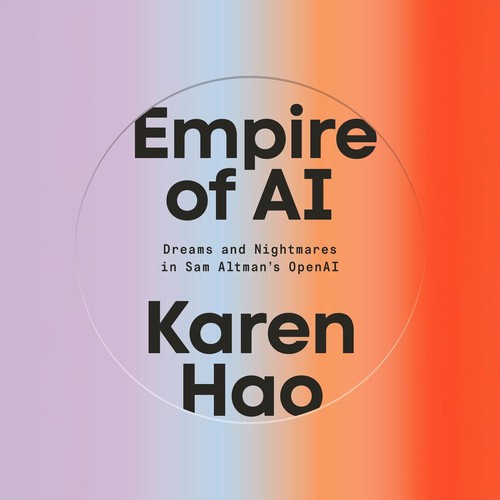
The definitive piece of investigative journalism on OpenAI: 260+ interviews, the clash between safety and speed, and the attempted firing of Sam Altma
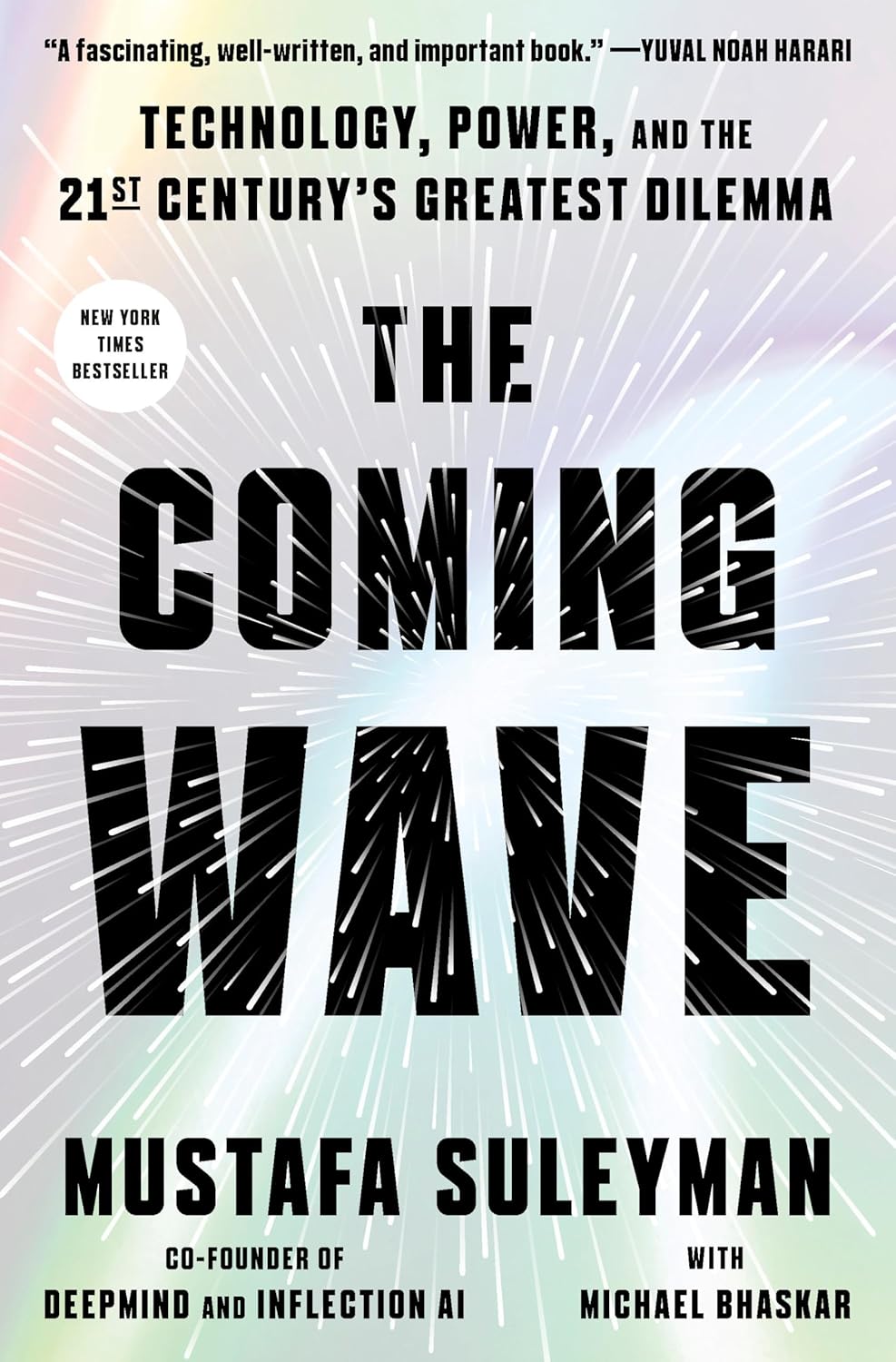
DeepMind co-founder on the dilemma of containing technologies that do not want to be contained.
As an Amazon Associate, Zendoric earns from qualifying purchases; the price does not change for you. · all our recommended books →
🔗 Related on Zendoric
- Tulsa opens a school with no teachers: AI two hours a day for $40,000 and no tax support · 2026-07-30
- Chicago switches off laptops in law school: betting on thinking without machines before thinking with them · 2026-07-13
- Palantir, from state surveillance to a governance layer for all regulated AI: the thesis holds, but at the usual price · 2026-07-16