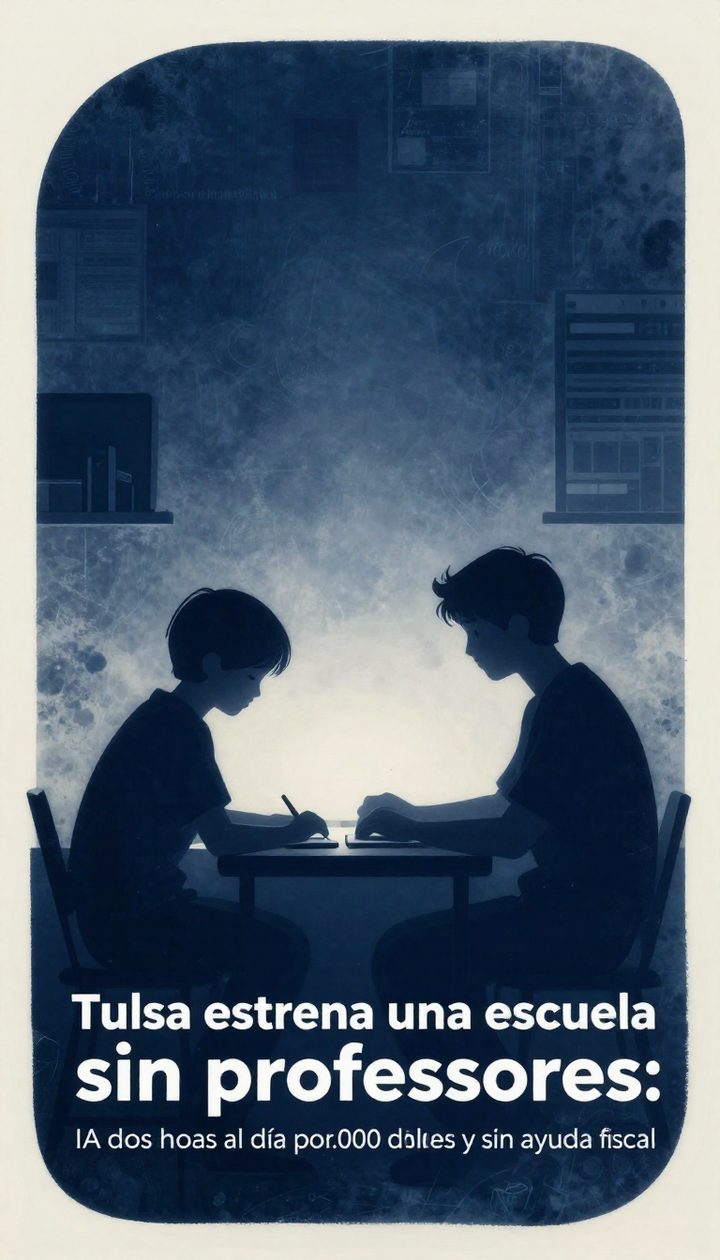
Tulsa opens a school with no teachers: AI two hours a day for $40,000 and no tax support
🕒 Published on Zendoric: July 30, 2026 · 00:20
✨ AI-generated · how it's made
Alpha School opens this autumn in Tulsa, a K-12 center with no traditional teachers: 'guides' supervise while an AI delivers two hours of personalized lessons a day. It costs $40,000 a year, twice the area's average private school, and does not qualify for state tax support.
📚 Go deeper
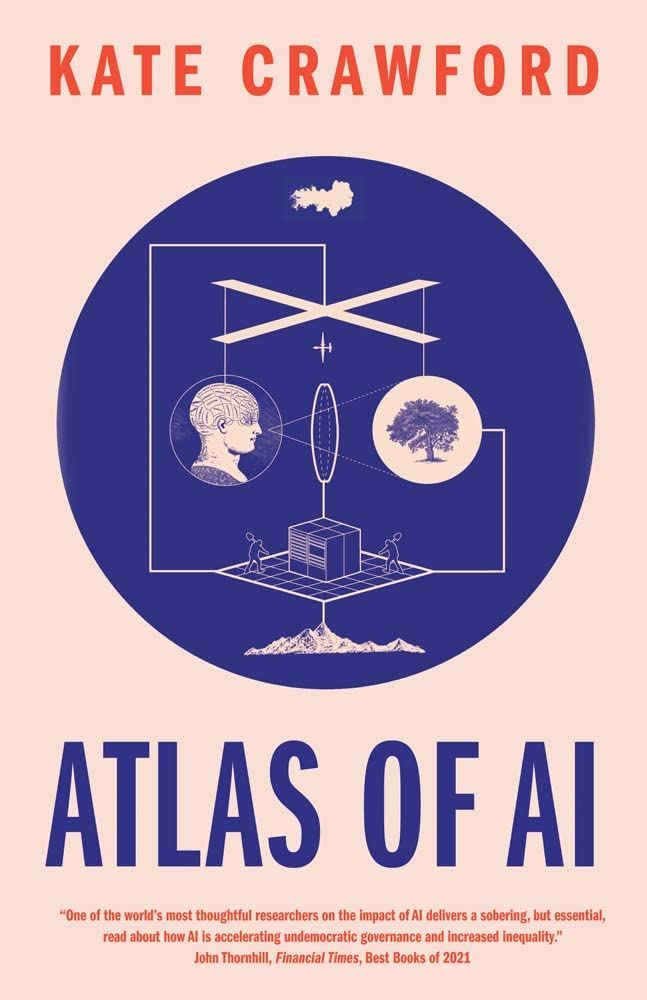
AI as an extractive industry: the lithium, the energy, the underpaid data-labeling work and the bodies behind the cloud.
As an Amazon Associate, Zendoric earns from qualifying purchases; the price does not change for you. · all our recommended books →
By 2 News Oklahoma (KJRH Tulsa) · July 29, 2026.
This fall Alpha School opens in Tulsa, Oklahoma, a K-8 school with no traditional teachers, as KJRH has reported. In their place there will be "guides" who supervise the class, expected to serve 25-30 families, while students take four core subjects in a two-hour block in front of the computer, on an AI-powered learning platform. Co-founder Mackenzie Price describes it as "mastery-based one-to-one tutoring": the system assesses what each student knows and does not know and builds a personalized study plan around the same curriculum as a conventional classroom, but at each student's own pace.
That time saved is, according to Price, what frees up the rest of the day for group workshops and projects: socialization, leadership, financial education, public speaking. The school also maintains that its students spend fewer hours in front of a screen than the average student in a traditional U.S. classroom.
The cost: $40,000 a year, more than double the average price of a private school in the Tulsa area. And according to Oklahoma Watch, Alpha is not eligible for Oklahoma's state private school tax credit program, a benefit that other families who choose conventional private schools can take advantage of.
Broadly speaking, the idea that personalized tutoring boosts performance is not a notion born in the AI era: it is the "two sigma problem" described by psychologist Benjamin Bloom in 1984, when he found that the average student with a one-on-one tutor performed better than 98% of peers in a conventional classroom. The underlying bet made by Alpha —and by other adaptive platforms before it— is that an AI system can approximate that result at scale. Tulsa is not an isolated case: it is a new location in a network that already operates under the same brand in other U.S. cities and that has claimed superior academic results, almost always based on data provided by the company itself.
And that is precisely where the first crack in this story lies. The promise of AI applied to services that until now were expensive —health care, education, legal advice— is to make them cheaper and widen access. In Tulsa exactly the opposite is happening: it costs more than double the benchmark private alternative. With room for barely 25-30 families and no access to the state tax credit, the model is for now reserved for those who can pay the tuition and also forgo the public support other families do receive. It is the short term of our underlying thesis applied to a classroom: technology that promises abundance usually starts out as the privilege of a few, and only becomes democratized if the cost falls over time.
It is also worth separating fact from sales pitch. That students "spend less time in front of a screen" or that the system "accurately assesses" each child's knowledge are claims made by Price, a co-founder and interested party; the report provides no independent data on academic results or children's well-being. Nor is replacing the teacher with a "guide" a neutral move: it fits with something we have already seen when analyzing other stages of education, where the human role shifts from transmitting content to orchestrating learning and holding up the emotional side of the classroom. That shift can be positive if it is done well; if it only serves to justify smaller staffs and higher tuition, it is something else, and the Tulsa case offers nothing to rule out either reading.
In the long run, if the cost of these platforms falls at the pace at which the cost of other AI infrastructure has fallen, permanent personalized tutoring could stop being a $40,000 luxury and become the way to bring the quality of a private tutor to any public classroom, with human guides devoted to what the machine does not do: support, motivate, provide judgment. That is the horizon that really interests us. But as it stands today, Alpha School in Tulsa is still a boutique experiment for very few families, one that will only have something to teach the rest of us when independent evaluations of its results arrive, not just the figures the school itself provides.
📚 Go deeper
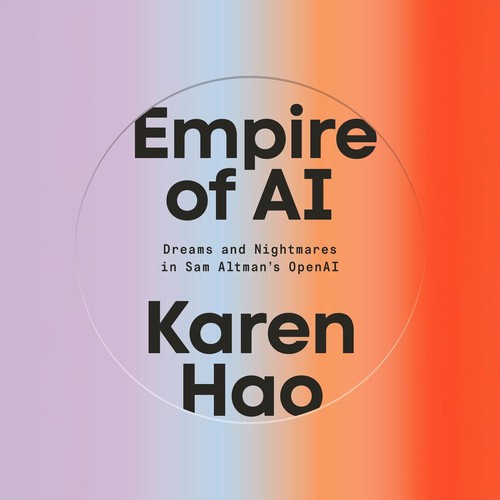
The definitive piece of investigative journalism on OpenAI: 260+ interviews, the clash between safety and speed, and the attempted firing of Sam Altma
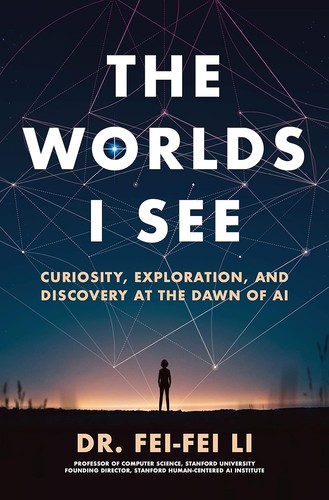
The memoir of the creator of ImageNet, the scientist who made the deep learning revolution in vision possible.
As an Amazon Associate, Zendoric earns from qualifying purchases; the price does not change for you. · all our recommended books →
🔗 Related on Zendoric