OpenAI and Anthropic have already filed the draft of their IPO near $1 trillion, after SpaceX's record

🕒 Published on Zendoric: July 20, 2026 · 00:19
✨ AI-generated · how it's made
OpenAI and Anthropic have filed confidential IPO drafts with the SEC, aiming at valuations of close to a trillion dollars each. The immediate precedent is SpaceX's record IPO ($1.77 trillion), and market analysts are already warning that the three together could drain liquidity and trigger a severe correction across the entire stock market.
📚 Go deeper
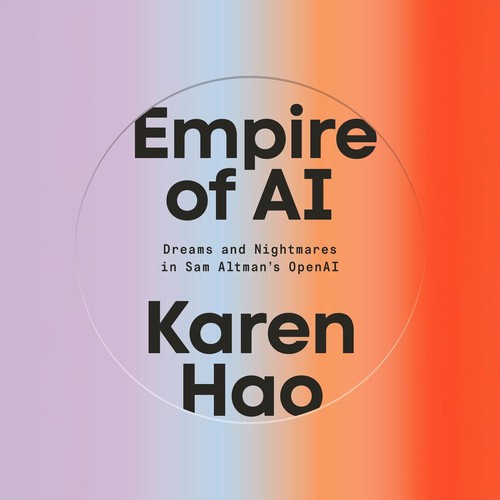
The definitive piece of investigative journalism on OpenAI: 260+ interviews, the clash between safety and speed, and the attempted firing of Sam Altma
As an Amazon Associate, Zendoric earns from qualifying purchases; the price does not change for you. · all our recommended books →
By Zendoric · July 20, 2026.
OpenAI and Anthropic have filed confidential draft registration statements with the SEC (the U.S. stock market regulator) to go public, according to Yahoo Finance Canada. It is a preparatory step, not a debut date, but it confirms that the world's two largest generative AI companies are formalizing their path to the public market. Anthropic closed its latest private round valued at $965 billion; OpenAI, at $852 billion. Both would aim for a listing valuation close to $1 trillion.
The context setting off the alarm is SpaceX's debut on June 12, 2026 on the Nasdaq (ticker SPCX): the largest IPO (initial public offering, the operation by which a private company begins trading) in history, raising $75 billion according to CNBC —a figure that rises to $85.7 billion in the words of economist Robert R. Johnson, cited in the same article— and a valuation of $1.77 trillion at $135 per share.
Analyst Mark Hulbert, in a June 22 column in MarketWatch, linked those three names —SpaceX, OpenAI and Anthropic— to lay out a scenario of a stock market drop of up to 40%. He draws on the 'inelastic markets hypothesis' by Xavier Gabaix (Harvard) and Ralph Koijen (University of Chicago), a 2021 NBER paper that estimates that every dollar entering or leaving the U.S. stock market moves total value by about five dollars. The logic: when a large asset manager buys shares in a multibillion-dollar IPO, that money does not appear out of nowhere—it comes from selling other positions. With combined fundraising estimated at $200 billion across the three companies, Hulbert's extrapolation reaches $1 trillion of market value at stake. It is worth clarifying: that final figure is a journalistic extrapolation on the paper, not a conclusion that Gabaix and Koijen endorse.
Not everyone shares the diagnosis. Johnson recalls that the total capitalization of the U.S. market was around $79.4 trillion at the start of 2026, so the SpaceX IPO represents barely 0.1% of that total. Morningstar, for its part, puts SpaceX's fair value at $63 per share, 53% below its listing price, and SpaceX itself admits in its prospectus a history of losses with no guarantee of future profitability. In other words: the risk Hulbert points to is one of liquidity and capital flow, while the one Morningstar points to is one of fundamentals. They are two distinct warnings that should not be conflated.
The matter is not solely American. Canadian pension funds such as Ontario Teachers' Pension Plan multiplied their initial SpaceX investment more than 50-fold (from $220 million to an estimated value of $11.6 billion), and Canada Pension Plan Investments, which manages CAD 793.3 billion for 22 million people, is already studying the impact of these mega-IPOs on its portfolio. In addition, the Nasdaq changed its admission rule for the Nasdaq 100 index in 2026 to allow large new companies in after just 15 trading sessions, so anyone holding a fund indexed to that benchmark is exposed to SpaceX —and, potentially, to OpenAI and Anthropic— without having chosen it.
Our reading: the most relevant thing about this piece is not the 40% forecast, which is a hypothesis disputed even by those citing it, but the underlying fact that almost goes unnoticed —that OpenAI and Anthropic are already processing paperwork to list on the stock market. It is confirmation that the era of giant, opaque private rounds to finance frontier AI is peaking, and that the sector needs capital on a scale that now only the public market can sustain: data centers, chips, energy. Going public also forces the publication of audited quarterly accounts, something that until now neither OpenAI nor Anthropic has had to do with the same level of detail. That is, paradoxically, good news for the sector's transparency, even if it discomforts those who prefer to present their figures only when it suits them.
That said, the episode also exposes the short-term problem we have been flagging in other analyses: the concentration of gains in those who entered early (funds like OTPP) versus the risk shifted, almost without their choosing, onto those who merely hold an index fund in their pension plan. Morningstar cutting SpaceX's fair value 53% below its listing price is exactly the kind of signal to watch when OpenAI and Anthropic make their filings public: if their accounts do not support valuations near $1 trillion, the adjustment of expectations could be abrupt, precisely when the most money from ordinary savers is exposed through indexes. The abundance that AI may bring in the long term does not depend on these stock market valuations holding up today; it depends on the technology continuing to deliver real capability. But the market, meanwhile, does not wait for that thesis to be proven: it prices expectations, and expectations can deflate far faster than they take to build.
📚 Go deeper

The only novel on the list, by a Nobel laureate: an artificial friend observes humans with a blend of lucidity and innocence no essay achieves.
An MIT computer scientist connects AI, quantum physics and video games to take an uncomfortable question seriously: what if we live in a simulation? M
As an Amazon Associate, Zendoric earns from qualifying purchases; the price does not change for you. · all our recommended books →
🔗 Related on Zendoric
- The Anthropic and OpenAI IPOs are not just money: they are proof that AI already outweighs half the crypto industry · 2026-07-12
- Anthropic and OpenAI go public: why buying before the IPO may be the worst bet of the AI frenzy · 2026-07-04
- The 2026 'IPO of everything': why the SpaceX, OpenAI and Anthropic figures call for scrutiny before enthusiasm · 2026-07-13