Emergent, India's second AI unicorn in just one month: is India's AI race finally taking off?

🕒 Published on Zendoric: July 18, 2026 · 01:58
✨ AI-generated · how it's made
India added its second artificial intelligence unicorn in just four weeks in July 2026. Emergent, a Bengaluru-based "vibe coding" startup, announced a $300 million Series C round that values the company at $1.5 billion.
📚 Go deeper

The story of NVIDIA and Jensen Huang: how a video-game card company ended up making the most coveted resource on the planet.
As an Amazon Associate, Zendoric earns from qualifying purchases; the price does not change for you. · all our recommended books →
In July 2026, India added its second artificial intelligence unicorn in just four weeks. Emergent, a Bengaluru-based "vibe coding" startup, announced a $300 million Series C round valuing the company at $1.5 billion. The round was led by Bengaluru-based investment firm Creaegis and included participation from Indian family office Claypond and California-based fund Sentinel Global, along with existing investors such as Khosla Ventures, SoftBank Vision Fund 2, Lightspeed and Y Combinator.
Emergent, launched barely a year ago, explicitly targets entrepreneurs without technical backgrounds: its co-founder and CEO, Mukund Jha, said that 70% of its users have no prior programming experience. The company claims that in its first year some 12 million applications were built on its platform, mainly by small business owners and solo entrepreneurs.
This milestone comes just a month after Sarvam, India's full-stack sovereign AI company, also closed a round that valued it at $1.5 billion after becoming a unicorn. The original article cites a funding figure for Sarvam of $234 billion, an amount that is clearly out of proportion with that $1.5 billion valuation and that likely corresponds to a typo in the source (it should probably read millions, not billions); we reproduce it with that caveat because it does not appear corrected in the available text.
For industry analysts, these two cases are not isolated events but part of a broader trend. Deepika Giri, head of research for AI, analytics and data at IDC Asia-Pacific, noted that nearly half of Indian companies are already testing agentic AI solutions, a pace of experimentation and workforce automation she described as unusually fast for a market of that size. IDC also forecasts that 45% of Indian organizations will use specialized cloud services by 2026 to access computing capacity, which would ease a key bottleneck for model training and inference. The firm also highlights that India has the widest variety in the Asia-Pacific region in its AI accelerator stack, combining NVIDIA chips, AMD chips and hyperscalers' own silicon, giving it a flexibility that other markets lack.
Mohammad Hassan, head of dividend forecasting for Asia-Pacific at S&P Global Market Intelligence, interpreted Sarvam's funding as a sign of confidence in India's ability to develop valuable intellectual property in indigenous, multilingual AI. On Emergent, he considered that its round highlights the strength of Indian tech talent, something that could become the country's "trump card" in the AI race over the long term. He nonetheless cautioned that these are "positive signals," not proof of a fundamental shift.
The backdrop to this news is the lagging role India has so far played in the global AI race: the country does not produce cutting-edge chips domestically, does not yet have a frontier-scale foundational model comparable to the U.S. or Chinese leaders, and its data center capacity remains far behind those countries. Even so, India has shown confidence in its ability to make a difference by building applications on top of foreign foundational models, drawing on its vast base of engineering and AI talent and its weight as an exporter of IT services. During the global AI summit held in February, Prime Minister Narendra Modi expressed his vision of India becoming one of the world's three AI superpowers, not just as a consumer but also as a creator of technology.
Significant risks nonetheless remain: unrestricted access to foreign foundational models is key to India's ambitions, at a time when more and more countries are attaching strategic importance to this technology and could limit such access. Neil Shah, vice president of research at Counterpoint Research, estimated that India's AI ecosystem will need at least three to four years to reach a point where a true "flywheel" of self-sustaining growth is generated. Overall, July's double unicorn is read as an encouraging sign of India's ability to build the application layer on top of global AI, rather than as evidence that the country has closed the gap with the leaders in infrastructure and foundational models.
📚 Go deeper
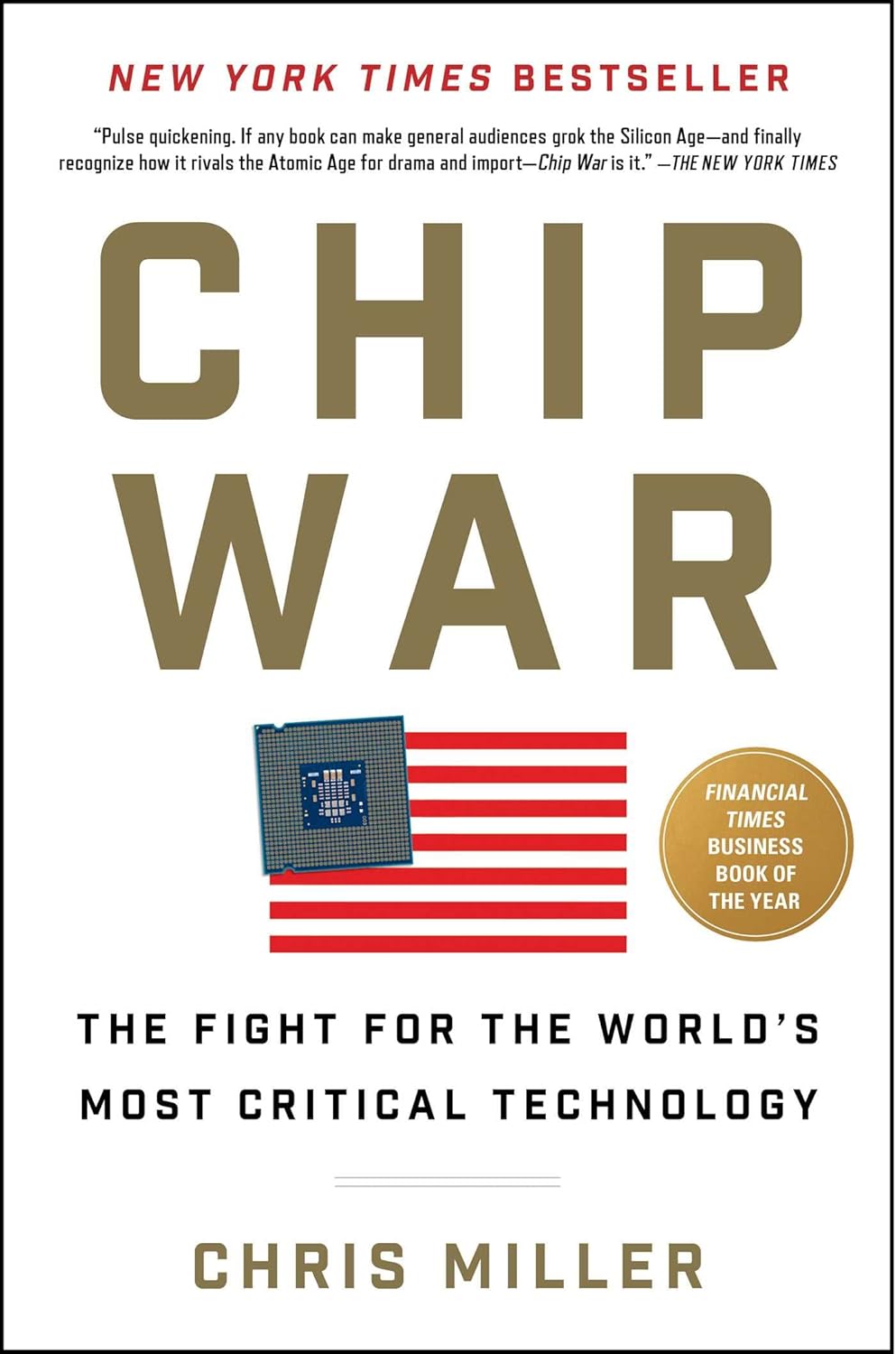
Semiconductors as the oil of the 21st century: history, espionage, and why an island of 23 million people underpins the entire AI economy.

The reference manual for building products on top of AI models: prompts, RAG, fine-tuning, agents, evaluation and deployment.
As an Amazon Associate, Zendoric earns from qualifying purchases; the price does not change for you. · all our recommended books →
🔗 Related on Zendoric