Anthropic seeks its own chip: the race to not depend on Nvidia reaches another major AI lab

🕒 Published on Zendoric: July 3, 2026 · 01:20
✨ AI-generated · how it's made
According to Yahoo Finance, Anthropic has reportedly reached a deal with Samsung for its own AI chips. The available detail is minimal, but the move fits a deeper trend: the big labs want to control compute, not just rent it.
📚 Go deeper

The story of NVIDIA and Jensen Huang: how a video-game card company ended up making the most coveted resource on the planet.
As an Amazon Associate, Zendoric earns from qualifying purchases; the price does not change for you. · all our recommended books →
By Yahoo Finance · July 2, 2026.
The information circulating is scant: as reported by Yahoo Finance, Anthropic would be joining the artificial intelligence chip race through a reported deal with Samsung. The available source gives no investment figures, production capacity, manufacturing node or timeline, and neither Anthropic nor Samsung appears to have publicly confirmed the terms in the material reviewed. On that basis, the honest thing is not to fill in the gaps with assumptions: the verifiable fact is the headline itself, a report of a deal, not a detailed official announcement.
That said, the move—if confirmed—fits a logic we already know well. Broadly, the major AI labs have spent a couple of years trying to reduce their dependence on Nvidia, which still controls the vast majority of cutting-edge training and inference compute. OpenAI has explored designing its own chips, Google has had its TPUs for years, Amazon its Trainium, and Microsoft its own accelerators. For Anthropic to seek to secure manufacturing capacity with Samsung, one of the few global players capable of producing latest-generation silicon alongside TSMC, would not be an anomaly but confirmation of a pattern: whoever depends on a single chip supplier also depends on its prices, its priorities and its production bottlenecks.
Our reading is that this news, even if it arrives with little detail, points to something we have already been noting: competition in AI is shifting from who has the smartest model to who controls the infrastructure that makes it possible. Securing one's own chips—or preferential manufacturing agreements—is a way to shore up access to compute over the long term, something critical when training demand keeps surging and the supply of advanced chips is limited. For Anthropic, which competes directly with OpenAI, Google and the Chinese labs on model quality, having its own silicon supply would reduce an enormous strategic risk: running out of compute capacity at the decisive moment of a race where each model generation demands more power than the last.
In the short term, this reinforces a less comfortable trend: the concentration of compute power in a handful of companies with enough capital to sign deals with manufacturers like Samsung or TSMC, leaving out smaller labs and academic research, which depend on renting others' infrastructure. In the long term, however, this race to diversify and scale up chip production is precisely what we need for compute to become cheaper and more democratized: the more players compete to manufacture AI silicon, the faster costs will fall and the closer we will be to that horizon of computational abundance that underpins much of AI's long-term promise, from accelerating medical research to putting powerful tools within anyone's reach. We will have to wait for the real details of the deal to be confirmed to assess its concrete scope, but the direction of the move is already revealing in itself.
📚 Go deeper

Semiconductors as the oil of the 21st century: history, espionage, and why an island of 23 million people underpins the entire AI economy.
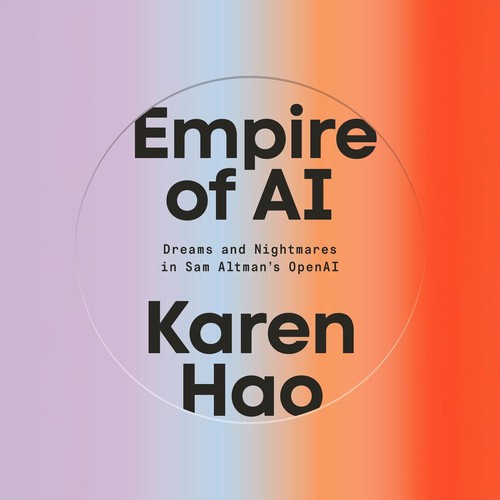
The definitive piece of investigative journalism on OpenAI: 260+ interviews, the clash between safety and speed, and the attempted firing of Sam Altma
As an Amazon Associate, Zendoric earns from qualifying purchases; the price does not change for you. · all our recommended books →
🔗 Related on Zendoric
- DeepSeek reportedly seeks to reduce its dependence on foreign chips (content unavailable) · 2026-07-09
- Anthropic's Refusal to Ease Autonomous-Weapons Limits Reportedly Cost It Pentagon Access · 2026-07-04
- Anthropic negotiates its own chip with Samsung: the end of total dependence on Nvidia · 2026-07-04