Celaya bets on an AI command center: predictive surveillance with accountability still pending

🕒 Published on Zendoric: June 26, 2026 · 09:00
✨ AI-generated · how it's made
The Guanajuato municipality announces the state's first C6, with facial recognition, license-plate reading, drones and a supercomputer to anticipate crime. The technology promises operational efficiency; the key question is what controls will come with it.
📚 Go deeper

The definitive piece of investigative journalism on OpenAI: 260+ interviews, the clash between safety and speed, and the attempted firing of Sam Altma
As an Amazon Associate, Zendoric earns from qualifying purchases; the price does not change for you. · all our recommended books →
The mayor of Celaya, Juan Miguel Ramírez Sánchez, announced the creation of a Center for Command, Control, Computing, Communications and Citizen Contact (C6) powered by artificial intelligence, presented by the authorities as the only one of its kind in Guanajuato and expected to begin operating in roughly a month. This is not a project starting from scratch: it modernizes the existing C4 with a supercomputer, more drones and cameras —both municipal and from private businesses— connected to a single command point.
The design is interesting from the standpoint of applied AI because it combines three functions that rarely coexist with this level of integration in the Latin American municipal sphere: perception (facial recognition and real-time license-plate reading), processing (cross-referencing of massive datasets on a supercomputer) and predictive analysis to anticipate criminal incidents. One nuance the account itself makes clear is worth underscoring: as described, the AI acts as an analytical assistant and it is human operators who make the operational decisions. That hybrid architecture —a machine that organizes the information, a person who decides— is today the most sensible model for sensitive environments, and it is good news that it is being maintained.
That said, the value of a system like this is not measured in the announcement but in its governance. So-called predictive policing has been questioned in various contexts for its tendency to concentrate surveillance on already over-policed communities when the underlying data carries biases. And facial recognition in public spaces is precisely the category that the European Union, via the AI Act, classifies as high-risk. The fact that regulatory frameworks in the region are still emerging does not exempt projects from setting their own standards: independent auditing, public protocols for data use and verifiable metrics.
The available information does not detail the technology provider, the total cost or the planned auditing mechanisms, nor does it provide figures on crime reduction attributable to the previous C4. These are the missing pieces needed to judge the project's real soundness. In a Bajío region under heavy pressure from organized crime, investment in technology is understandable and can provide genuine capabilities. The challenge —and Celaya's opportunity to become a useful reference for other municipalities— lies in demonstrating that algorithmic efficiency comes with transparency. If the C6 launches on schedule, its true test will not be how many drones fly, but how much public trust it is able to build.
📚 Go deeper
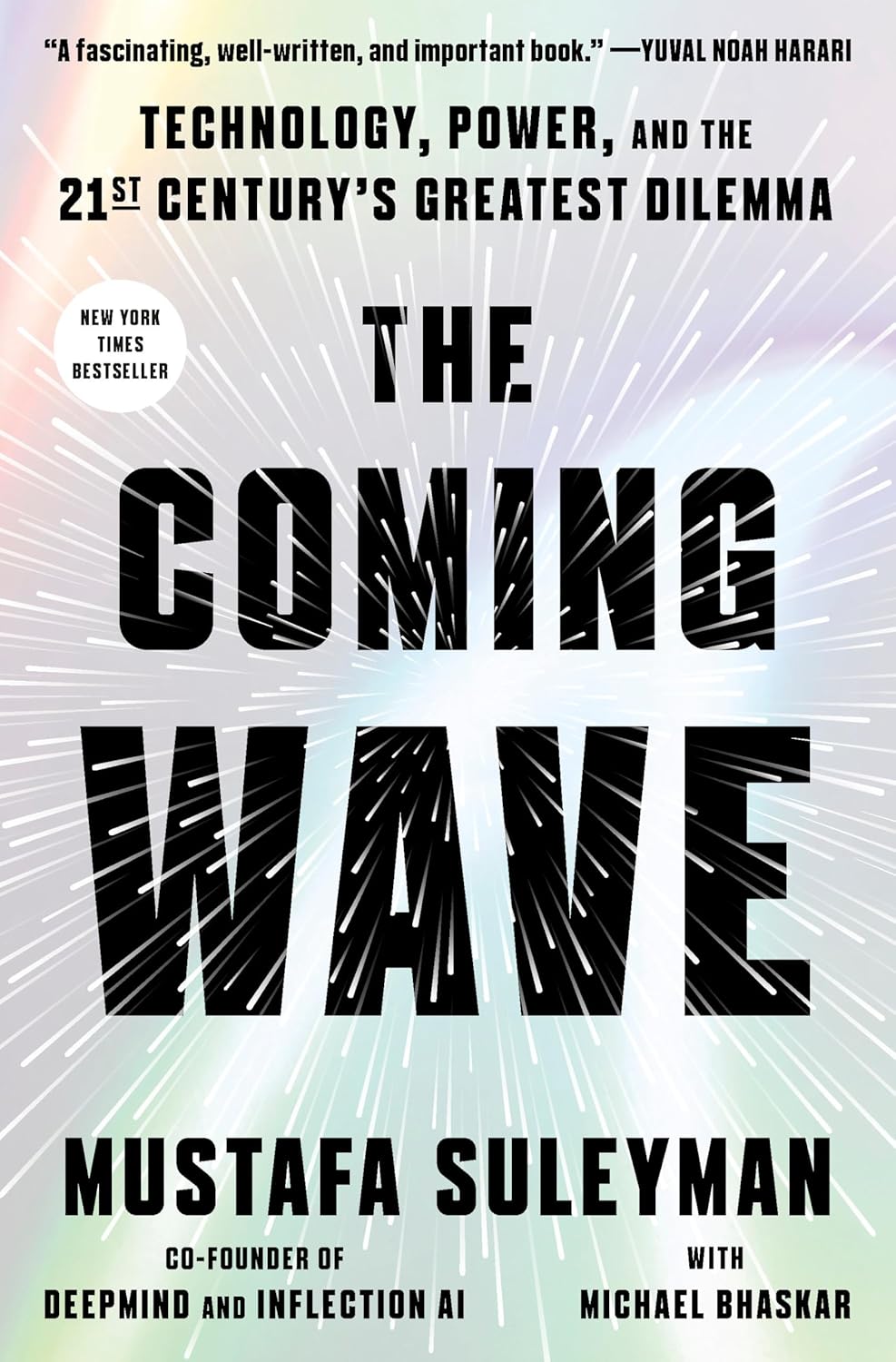
DeepMind co-founder on the dilemma of containing technologies that do not want to be contained.

The story of NVIDIA and Jensen Huang: how a video-game card company ended up making the most coveted resource on the planet.
As an Amazon Associate, Zendoric earns from qualifying purchases; the price does not change for you. · all our recommended books →
🔗 Related on Zendoric
- Florida and Texas rein in Flock: when AI surveillance becomes a Republican campaign issue · 2026-09-04
- Barrancabermeja adds AI drones to its urban surveillance, but the announcement doesn't say what that artificial intelligence does · 2026-07-31
- Barrancabermeja adds AI drones to its urban surveillance, but the announcement doesn't say what that artificial intelligence does · 2026-08-31