Barrancabermeja adds AI drones to its urban surveillance, but the announcement doesn't say what that artificial intelligence does

🕒 Published on Zendoric: July 31, 2026 · 15:01
✨ AI-generated · how it's made
The mayor of this Colombian oil town announced two artificial intelligence drones to reinforce the District Monitoring Center, on top of cameras and panic buttons already installed. The announcement, by the Mayor's Office's own account, does not specify what technology the devices carry or under what privacy rules they will operate.
📚 Go deeper

The definitive piece of investigative journalism on OpenAI: 260+ interviews, the clash between safety and speed, and the attempted firing of Sam Altma
As an Amazon Associate, Zendoric earns from qualifying purchases; the price does not change for you. · all our recommended books →
By Zendoric · July 31, 2026.
The mayor of Barrancabermeja, Jonathan Vásquez Gómez, announced the addition of two artificial intelligence (AI) drones to the security system of the Colombian oil district. As the mayor himself explained, the equipment was secured through the Colombian Federation of Municipalities and will reinforce the District Monitoring Center, currently supported by video surveillance cameras and panic buttons installed in various areas.
The Secretariat of Security and Coexistence is coordinating the initiative, which — according to local authorities — aims to optimize surveillance of public spaces, track risk situations and improve response capacity to incidents affecting public order. The announcement comes alongside a reinforcement of National Police patrols in the city's Comuna 3, as reported by the police force itself.
What is striking, and this is our own reading, is what the announcement does NOT say. It does not specify what exactly the AI on these drones does: whether it is facial recognition, automatic detection of objects or people, movement-pattern analytics, or simply video transmission with automatic tagging. Nor does it mention the technology provider, the cost of the operation or, above all, the legal framework that will govern the handling of data captured on citizens who have committed no crime.
That opacity is no minor detail: it is the pattern. Broadly speaking, the rollout of algorithmic surveillance in mid-sized Latin American cities is moving faster than the data protection rules that should accompany it. Political announcements tend to present drones and cameras as synonymous with modernization and security, but they rarely include independent audits, data retention limits or accountability mechanisms over how the recorded material is used.
This connects with a tension we have already flagged in other analyses: AI applied to public safety can be a legitimate tool — helping to detect fires, accidents or crimes in real time and saving lives — or it can become an infrastructure of control deployed without citizens knowing what is being watched, who accesses that data and for what purpose. The difference between the two scenarios is not set by the technology itself, but by the governance surrounding it, and in this case that governance appears nowhere in the announcement.
In the short term, cases like this are an honest reminder that AI adoption by local governments often advances without the necessary institutional checks: transparency about the algorithms, judicial oversight of the use of facial recognition, or clear limits on the storage of images of ordinary people. In the long term, tools of this kind — properly audited and with clear rules — can be part of safer, more efficient cities, consistent with the promise of an AI that frees up resources and human time instead of concentrating them in opaque hands. But that horizon only arrives if the discussion about the rules of the game advances at the same pace as the purchase of the drones, and today, in Barrancabermeja, there are no signs that this is happening.
📚 Go deeper

AI as the latest chapter in the history of information networks, from gossip to the printing press to the algorithm.
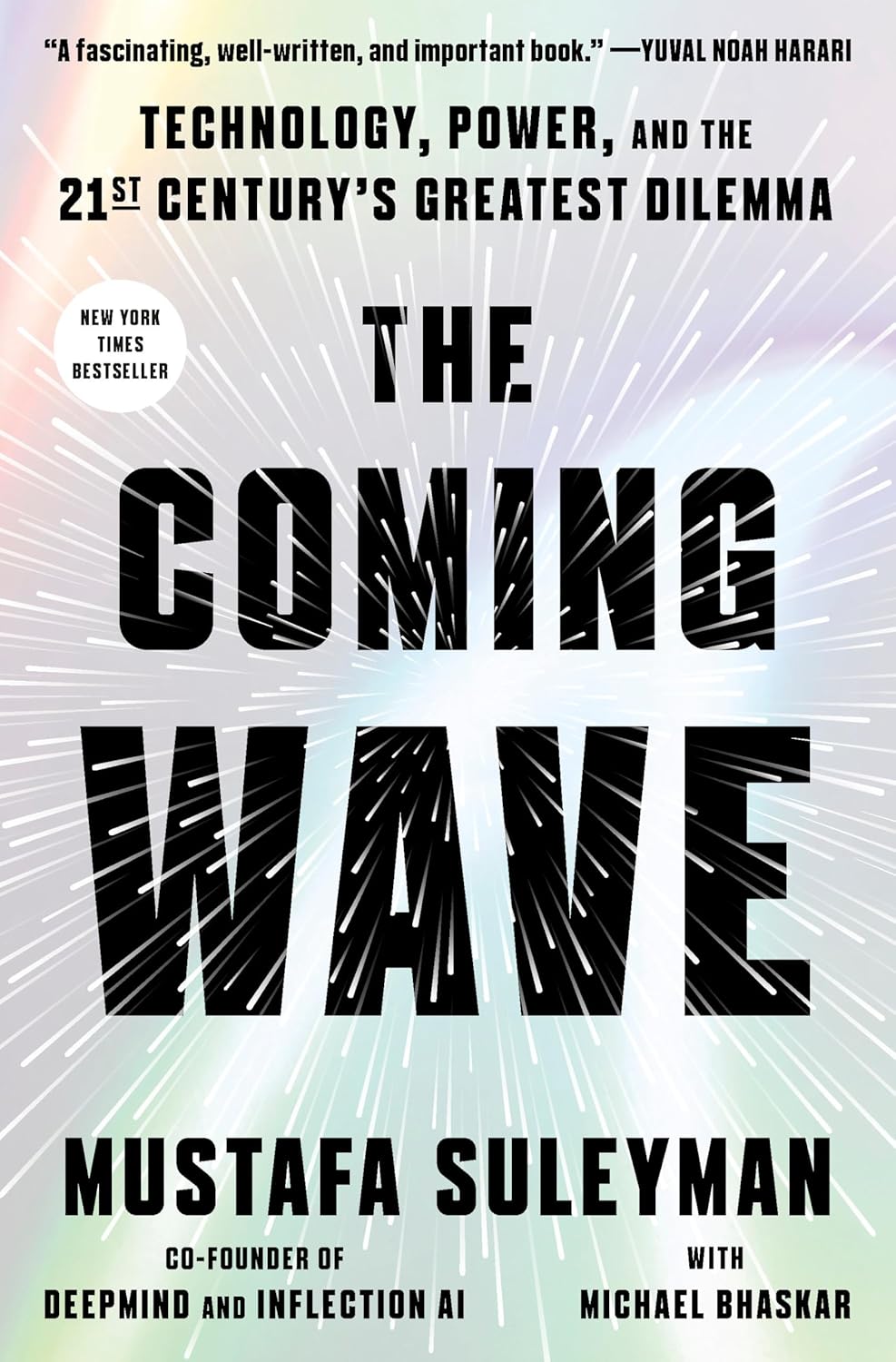
DeepMind co-founder on the dilemma of containing technologies that do not want to be contained.
As an Amazon Associate, Zendoric earns from qualifying purchases; the price does not change for you. · all our recommended books →
🔗 Related on Zendoric
- Barrancabermeja adds AI drones to its urban surveillance, but the announcement doesn't say what that artificial intelligence does · 2026-08-31
- AI cameras to detect weapons in schools: a useful patch that doesn't solve the underlying question · 2026-07-17
- «Get the Flock out of here»: the town council meeting as a thermometer of AI surveillance · 2026-06-27