Getting into the game: six starting points for making sense of difficult product situations

🕒 Published on Zendoric: November 11, 2026 · 00:19
✨ AI-generated · how it's made
The article, published on November 9, 2026 in Dave Hora's product strategy newsletter, proposes a condensed framework for tackling any complicated strategic product situation.
📚 Go deeper

The reference manual for building products on top of AI models: prompts, RAG, fine-tuning, agents, evaluation and deployment.
As an Amazon Associate, Zendoric earns from qualifying purchases; the price does not change for you. · all our recommended books →
The article, published on November 9, 2026 in Dave Hora's product strategy newsletter, proposes a condensed framework for tackling any complicated product strategy situation. The core idea is to treat each situation as a “game” of its own: in any organization many games are underway, intertwined and overlapping, and you learn to manage them by first working through concrete, specific examples. The author recommends reading the piece with the reader's own toughest current situation in mind, because the approach only pays off when applied to a real case.
The framework rests on six entry points: three types of structure and three relationships that connect them. “Entering the game” means taking hold of the situation you want to improve, and that starts with understanding the state of the existing structure. The author insists that there is always prior structure: moves have been made and are still being made, users are trying to make progress in one area or are prioritizing something else, the product favors certain patterns of action (for better or worse), and the people involved have preconceptions and competing incentives from the other games they play in.
The three types of structure are as follows. First, the Field: the set of elements and relationships, from inside the team to the outside world, that defines the core of a product situation. It evolves through internal and external play. The author stresses that the core of product work is the coupling between internal and external structure, that there is no blank slate, inside or out, and that what you cannot see is not available to play. Second, Gameplay: the set of moves played or considered and the sequence in which they unfold. It is how internal action advances the state of the field, move by move. Knowing how to execute legible, well-formed moves in sequence is, according to the piece, the precursor to strategy. Third, the Players: the people involved, defined by their position and responding reasonably to where they stand. Everyone plays on the same field, but no two see the same game. Understanding others' positions and motives creates new handholds for action; ignoring them prolongs frustration and incoherence.
When the existing structure is unclear, the first move is to build awareness, first for yourself and then, progressively, for the team. Sometimes this works like the diagnostic phase of a consulting engagement, a measured, sequential way of answering “what on earth is really going on here?” At other times only acting and intervening reveals the game. Either way, teams that make bad assumptions about the prevailing structure, or worse, ignore its existence, make mistakes, increase their “strategic debt” and reduce future optionality.
The second part deals with the three relationships linking those structures. In more experienced product organizations, the existing structure is usually reasonably well understood, although that knowledge is not always shared or updated as the game progresses. The most pernicious problems lie in the relationships between structures. The author says that, outside of pure user research (lack of visibility into the playing field), most of the work he encounters in consulting lives in these relationships, and that they break in predictable ways, usually through some form of “self-sealing” that prevents an honest accounting of the situation.
The first relationship is Operations (Field × Gameplay): the fit between what the field needs in order to advance and how gameplay is shaped and coordinated, within a game and across several. It affects delivery methods, rituals and operating cycles. Its typical failure is the Autoimmune Response: the context of the game changes, but gameplay keeps running as if it hadn't. Habitual means take less energy and, if the change in context goes unrecognized, new and better-suited methods are discouraged or even attacked. The recommendation is to coordinate gameplay across different timescales and shape work according to its domain.
The second is Orientation (Players × Field): the quality of shared focus and language for communicating about the field. Strategic direction is a function of collective orientation. Its typical failure is the Death-Grip of Success: as the game advances, new areas of the field open up, adjacent zones become critical and previously critical activities stabilize. If teams don't understand these shifts, they keep investing where it used to make sense, even when it has become counterproductive. Situational models and spaces for debate (“sparring”) provide the ground for productive conflict that generates directional alignment.
The third is Traction (Players × Gameplay): the ability to shape play that surfaces new information and optionality. It drives the intent behind each move and the interpretation of the field's response. Its typical failure is the Stagnation Treadmill: teams build and ship, but the situation never moves forward, especially when activity with certain methods or technologies is prioritized over directed progress in the game, and development becomes scattered, incoherent or poorly sequenced. The author proposes helping teams reshape good gameplay, with moves that are grounded, bounded, constructive and enabling, so that they return signals and learning that open up opportunities for progress.
The piece recalls that, as noted in the previous installment, strategic work consists of keeping all these structures and relationships in balance. Depending on whether one enters the situation as a leader, contributor or consultant, the approach will be very different and the sequence will depend on context, but the structure to be understood and the relationships to be shaped are the same.
The author adds two notes. The first is terminological: “Field” becomes the main term for the product elements in play and their relationships, while “Game” is reserved for the higher-level notion encompassing the three types of structure and the three relationships. The second is that the view is fractal: these three structures and three relationships exist in product work at any scale. Strategic sensitivity is built by improving different situations, in different areas and at different levels of scale, until you can see the critical threads that product planning processes, org charts and cascading OKRs tend to obscure or sever rather than illuminate.
Overall, it is a synthesis piece within the “Product Game” series: it offers no empirical data or concrete cases, but rather a conceptual model and vocabulary for diagnosing why product teams get stuck, with the advantage of providing six clear entry points and the limitation that, as the author himself admits, it only becomes valuable when applied to a specific situation.
📚 Go deeper
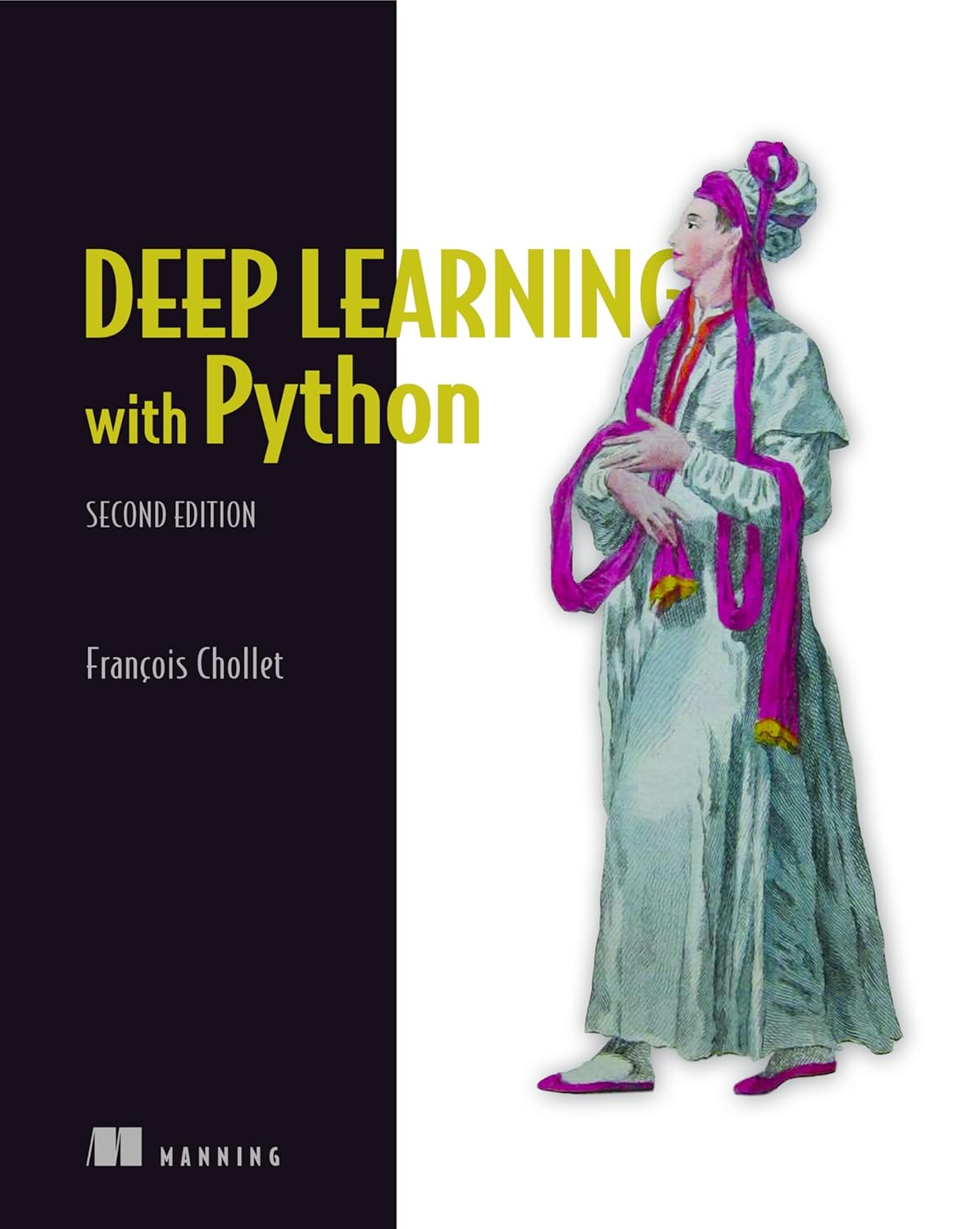
The creator of Keras teaching from scratch, with working code and zero pedantry.

THE AI textbook: used by 1,500+ universities.
As an Amazon Associate, Zendoric earns from qualifying purchases; the price does not change for you. · all our recommended books →
🔗 Related on Zendoric
- Prioritizing product feedback by revenue at risk: Bellwether cross-references tickets, reviews, calls and NPS with the CRM · 2026-11-11
- Making the internet better for AI agents could make it worse for everyone else · 2026-10-21
- Mental models for the agentic era: 15 frameworks to decide what to automate, how much autonomy to grant and what survives · 2026-10-21