Bloomington bans artificial superintelligence: a symbolic gesture that says more about the regulatory vacuum than about the technology

🕒 Published on Zendoric: November 11, 2026 · 00:19
✨ AI-generated · how it's made
The Bloomington (Indiana) Common Council unanimously voted to ban ASI within city limits, even though the technology does not yet exist. It is more a political signal in the absence of federal action than an enforceable rule, and should be read as such.
📚 Go deeper

AI as the latest chapter in the history of information networks, from gossip to the printing press to the algorithm.
As an Amazon Associate, Zendoric earns from qualifying purchases; the price does not change for you. · all our recommended books →
By Fox 59 · November 10, 2026.
The Bloomington Common Council in Indiana unanimously approved an ordinance banning the distribution and deployment of artificial superintelligence (ASI) within city limits. The measure is not yet in effect: it now goes to the mayor, who can accept or reject it.
According to local station Fox 59, ASI is defined as a technology that could act on its own and surpass humans in all cognitive functions, going beyond today's tools that answer questions or generate content. The outlet itself notes that ASI does not yet exist. City officials argue it is dangerous to wait until it exists to start regulating it.
The ordinance was championed by council member Dave Rollo, who says he consulted several experts in drafting it. It is presented as a stopgap measure amid a regulatory vacuum at the state and federal levels. It gives authorities grounds to impose civil penalties or turn to the Monroe County Prosecutor's Office if ASI is used in the city. It expands on a June resolution in which the council called on city officials to understand the "existential risks" of AI.
Rollo acknowledges the scale of the gesture: "It's a tiny thing for Bloomington to ban superintelligence, but if 100 or 300 cities do it, it can move the needle." His goal is to pressure elected officials to act. To justify it, he cites Nobel laureate Geoffrey Hinton, who holds that we cannot control anything smarter than ourselves, and speaks of a future of humanity's "disempowerment."
Our take: this is signaling policy, not effective regulation, and it should be judged as such. A mid-sized city cannot stop a model from being trained elsewhere or consumed over the internet. Nor is there an accepted technical definition of "superintelligence" a prosecutor could use to prove a violation. What the report doesn't explain is how it would be determined that something is ASI. A ban whose target cannot be measured is, in practice, a statement of principles.
Even so, the gesture has value as a symptom. When city councils legislate on technologies that don't exist, it is usually because higher levels of government have failed to respond. In general, the risk of initiatives like this is the one we have long pointed to in AI regulation: regulating panic rather than demonstrated capability. A patchwork of local ordinances, each with its own definition, would be a drag on legitimate research without providing more safety.
The underlying thesis is different: short-term risks are real and measurable, such as automated fraud, concentration of power or the misuse of agents, and that is where evidence-based governance adds the most. Banning a hypothetical future diverts attention from them. In the long run, well-governed AI is the path to curing diseases and generating abundance, and giving up on that conversation in advance would be a mistake.
The central issue, in any case, is not Bloomington but the pressure Rollo seeks to create. Having 100 cities legislate is no substitute for a state or federal law with clear definitions, independent audits and verifiable capability thresholds. If the gesture helps speed up that debate, it will have served its purpose; if it remains a symbolic ban, it will be a footnote.
📚 Go deeper

DeepMind co-founder on the dilemma of containing technologies that do not want to be contained.
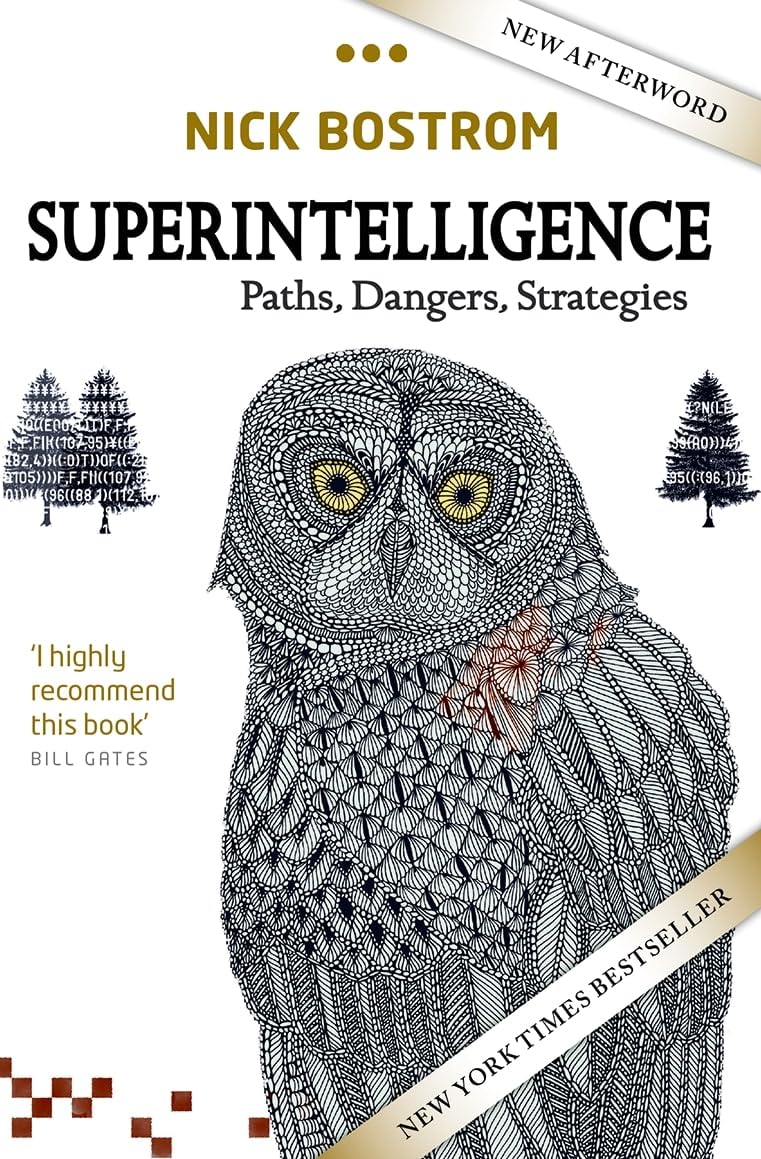
The book that started the existential-risk debate and that half the industry still cites.
As an Amazon Associate, Zendoric earns from qualifying purchases; the price does not change for you. · all our recommended books →
🔗 Related on Zendoric
- Anthropic hires the architect of the 2008 bailout to watch over the risks of its own AI · 2026-07-10
- Democratic congresswoman calls for halting advanced AI and banning superintelligence: more political gesture than viable law · 2026-11-06
- «Get the Flock out of here»: the town council meeting as a thermometer of AI surveillance · 2026-06-27