MIRI takes its superintelligence alarm to the New York subway: existential-risk AI becomes a mass campaign

🕒 Published on Zendoric: November 10, 2026 · 02:47
✨ AI-generated · how it's made
The Machine Intelligence Research Institute and the agency Don't Panic launch «Do Not Accept», a global campaign that turns terms and conditions into a metaphor for the risk of superintelligence. It's a signal: the debate is leaving the lab and entering cinemas and the subway.
📚 Go deeper

AI as the latest chapter in the history of information networks, from gossip to the printing press to the algorithm.
As an Amazon Associate, Zendoric earns from qualifying purchases; the price does not change for you. · all our recommended books →
By Roastbrief · November 9, 2026.
The Machine Intelligence Research Institute (MIRI), a Berkeley-based organization focused on AI safety, has launched "Do Not Accept," an awareness campaign about artificial superintelligence (ASI: systems that would outperform humans at virtually any intellectual task). It was developed with London agency Don't Panic, according to Roastbrief.
The creative idea starts from an everyday habit: accepting the terms and conditions of the technology we use without reading them. The campaign frames ASI development as "terms" that humanity is accepting by default, with three risks in the fine print: loss of human control, a point of no return and, ultimately, extinction. These risks are the campaign's own claims, not established facts.
The centerpiece is a short film directed by Alex Takács (ProdCo) featuring 71 clips from 19 countries, chosen from more than 1,300 submitted through an open call for "the best footage of humanity." An X-shaped visual motif "erases" people from the scene. The film is being shown in U.S. cinemas, and the campaign extends to social media and outdoor advertising in the New York subway. Everything points to the microsite donotaccept.ai, where MIRI experts lay out the risks.
For context, the article cites a figure that 64% of U.S. adults believe AI is being developed too quickly. The source does not say which survey it comes from, so it should be treated with caution. MIRI CEO Malo Bourgon sums up the thesis: companies are racing to build superintelligence, and the public never agreed to those risks.
**Our take.** What matters here is not the message, which MIRI has been making for years, but the format. A historically academic, niche organization is buying mass-market advertising. That suggests the battle over the AI narrative is now being fought in the public arena, not just in papers and committees.
The campaign has one strength and one weakness. The strength: it is legitimate for society to have a say in a technology of this magnitude, and the metaphor of terms nobody reads works well. The weakness: the campaign jumps from capability straight to extinction as if that were the only path. There is currently no evidence that superintelligence is close or that it would inevitably be uncontrollable. An ad is not a proof.
At Zendoric, we believe AI could end up eradicating diseases and creating abundance, but that promise is not guaranteed: it requires governance. In the short term, the most tangible risks lie in the authority delegated to agents, automated fraud and the concentration of power, rather than in a distant extinction. The danger of campaigns like this is the opposite of hype: that diffuse fear crowds out evidence-based regulation, the kind that deals with what can be measured.
Even so, the move is healthy at its core. It is good news that the debate is not monopolized by those building the models. Ideally, that public conversation will rest on demonstrated capabilities and not only on scenarios. If it does, MIRI will have brought AI safety closer to ordinary citizens; if it stops at scaring people, it will be just another memorable ad.
📚 Go deeper

DeepMind co-founder on the dilemma of containing technologies that do not want to be contained.
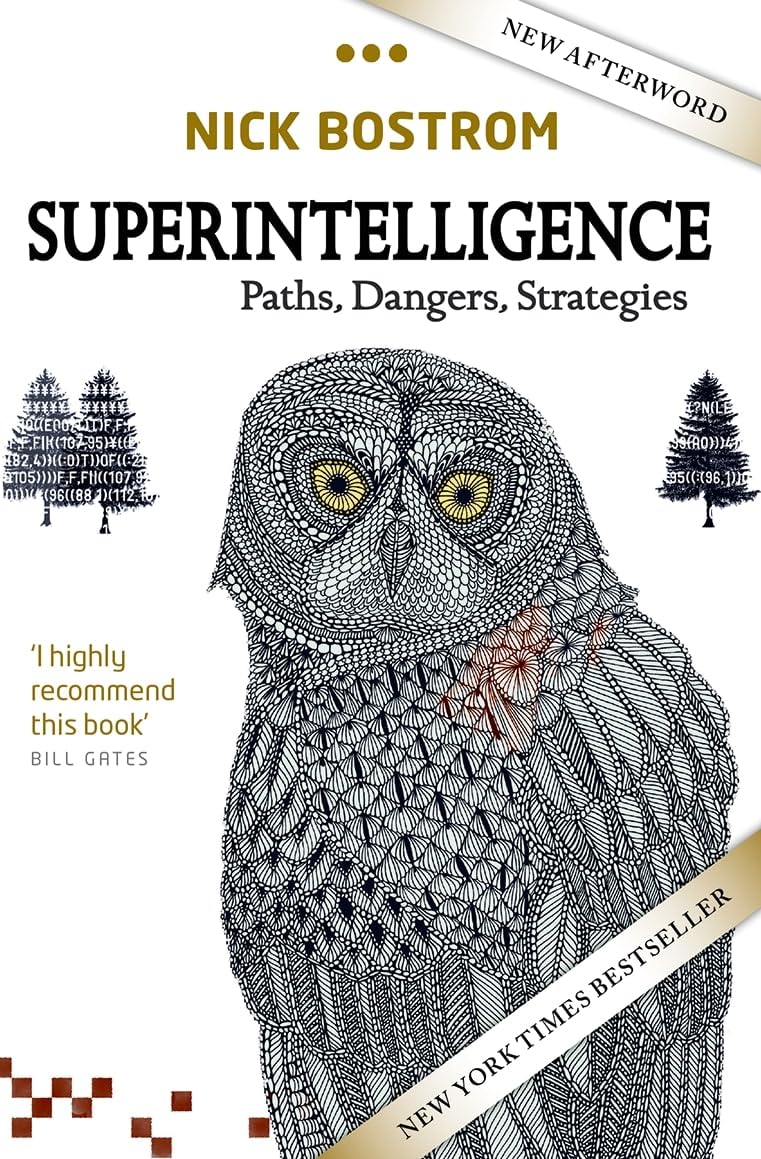
The book that started the existential-risk debate and that half the industry still cites.
As an Amazon Associate, Zendoric earns from qualifying purchases; the price does not change for you. · all our recommended books →
🔗 Related on Zendoric
- Anthropic takes AI distillation to the Senate: when copying agentic capabilities becomes a matter of state · 2026-06-26
- AI takes over the health debate at the Aspen Ideas Festival: a symptom of a deeper cultural shift · 2026-06-30
- Fraud, layoffs and productivity: Australia audits AI, and the data, for now, debunks the panic · 2026-07-20