A Uruguayan doctor sums it up well: AI calculates faithfully, but it also invents citations and frightens patients
🕒 Published on Zendoric: November 9, 2026 · 00:09
✨ AI-generated · how it's made
Clínica Select director Erik Nadruz sees AI as a 'secretary' that could free doctors from the screen, but warns that it invents references and can terrify or reassure without basis. A good portrait of real-world clinical AI.
📚 Go deeper
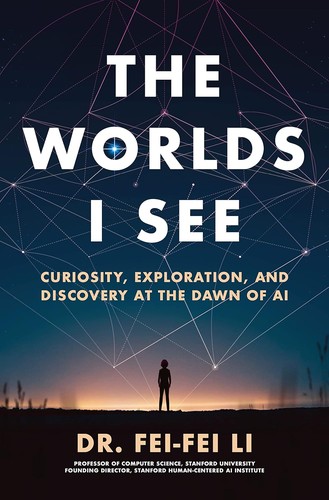
The memoir of the creator of ImageNet, the scientist who made the deep learning revolution in vision possible.
As an Amazon Associate, Zendoric earns from qualifying purchases; the price does not change for you. · all our recommended books →
By Cadena del Mar · November 8, 2026.
Erik Nadruz, an internal medicine specialist and director of Clínica Select (with locations in Punta del Este and Montevideo), explained in a radio interview how he uses AI in his practice and where he sees its limits. He spoke from his experience with patients, not from a study: these are a clinician's observations, not data from a trial.
The first use he cites is dose calculation. According to Nadruz, AI helps him calculate doses for IV solutions that have to be compounded because they are not available in Uruguay. He says he has checked the results against manual calculations and that "they are accurate." It is a narrow, verifiable task, exactly where these tools perform best.
The second use is administrative. Nadruz believes the next step will be for AI to summarize what was discussed with the patient and write up the medical record, "like having a secretary in the office." His argument is that today the screen gets in the way: he says patients tell him other doctors "just typed on the computer." He also describes appointments scheduled for 10 to 15 minutes, compared with cases that require 40.
The risks, in his view, arise when patients replace the doctor's visit with a chatbot. He says some arrive in a panic because the AI "practically told them they were going to die" when nothing of the sort was the case. He also recounts that when he asked it for references for a paper, the first results were real and the following ones were fake citations leading to empty pages. His conclusion: AI is "preliminary information" that requires clinical endorsement and accountability.
Our take. What makes this account valuable is that it draws a precise line around where AI is useful today. AI works well when its output can be checked (a dose, a summary the doctor reviews) and fails when it is asked to be a source of truth (remote diagnosis, scientific citations). "Hallucinations"—plausible but fabricated answers—are not a marginal flaw: they are a property of how these models generate text, which is why human verification is not optional.
There is also a nuance the interviewee points to without naming it: clinical AI's biggest contribution may not be diagnosis but giving time back. If the automated scribe frees doctors from the screen, the benefit is more human contact, not less. That does, however, require healthcare providers to turn the time saved into longer appointments rather than more patients per hour; the technology doesn't decide that, management does.
In the short term, the transition will be uneven: patients distressed by automated answers, doctors who have to learn to audit the machine, and systems with incentives to squeeze out efficiency. In the long term, the same technology, with better reliability and real clinical validation, could be the foundation of more preventive and accessible medicine, the path toward eradicating diseases that we advocate. But that promise is built with verified tools and doctors who retain their judgment, not with blind trust.
Overall, the practical rule for readers is simple: use AI to prepare for your appointment (organizing questions, understanding terms), not to replace it, and be wary of any citation you haven't opened yourself.
📚 Go deeper
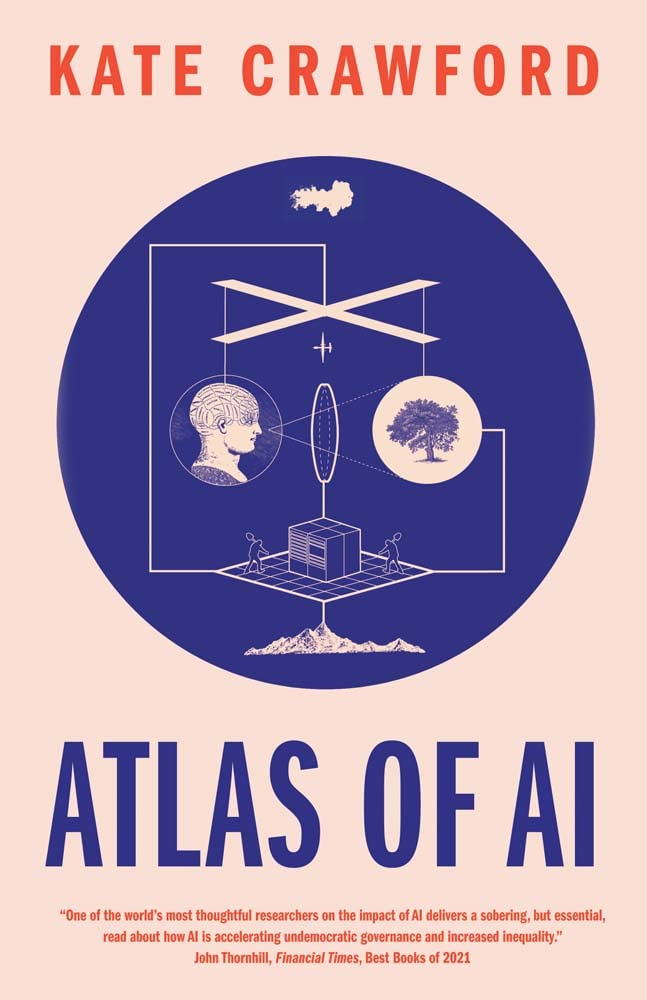
AI as an extractive industry: the lithium, the energy, the underpaid data-labeling work and the bodies behind the cloud.

The only novel on the list, by a Nobel laureate: an artificial friend observes humans with a blend of lucidity and innocence no essay achieves.
As an Amazon Associate, Zendoric earns from qualifying purchases; the price does not change for you. · all our recommended books →
🔗 Related on Zendoric
- AI in healthcare isn't bought, it's measured: Colombia has the data but has yet to prove it frees up clinical time · 2026-11-01
- When Dr. Google becomes Dr. ChatGPT: a family doctor's diagnosis of the 'symptom checker' · 2026-07-02
- The real breakthrough against rare diseases is not a smarter algorithm, but one that doesn't need to see your data · 2026-07-12