When Dr. Google becomes Dr. ChatGPT: a family doctor's diagnosis of the 'symptom checker'
🕒 Published on Zendoric: July 2, 2026 · 08:26
✨ AI-generated · how it's made
A Tampa physician warns that more and more patients arrive at the clinic with a diagnosis already made by an AI, laden with fear and requests for unnecessary tests. The case is anecdotal, but it points to a real friction we'll see grow as medical AI matures.
📚 Go deeper
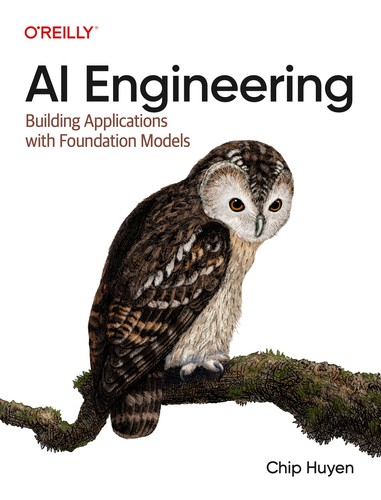
The reference manual for building products on top of AI models: prompts, RAG, fine-tuning, agents, evaluation and deployment.
As an Amazon Associate, Zendoric earns from qualifying purchases; the price does not change for you. · all our recommended books →
By Tampa Bay 28 (WFTS/Scripps) · July 1, 2026.
Dr. Michael Cromer, of MACMED Family Practice in Tampa, told a local outlet about a phenomenon that probably any primary care physician recognizes today: patients who walk into the office having first consulted an AI about their symptoms, and who arrive scared or convinced they need specific tests. According to Cromer, this triggers unnecessary anxiety and pushes patients to request studies that are not clinically indicated, driving up the cost of care. His diagnosis of the problem is simple: the software has no clinical judgment or years of experience, nor the relationship of trust built with a patient over time. As a more reliable alternative for self-information, he recommends sources like WebMD or Mayo Clinic over social media or generic chatbots.
It is a modest piece —a local testimony, not a study—, but it portrays well a short-term friction that is already structural in Western healthcare: the gap between a language model's ability to generate a plausible list of differential diagnoses and a clinician's ability to weigh that list against real probabilities, patient history and context that no prompt fully captures. A chatbot that lists every possible cause of a headache, from migraine to brain tumor, is not lying, but neither is it being useful if it does not rank them by real clinical probability. That is exactly the point Cromer makes, and it is a legitimate one, not a reflexive defense of the guild.
Our reading is that this kind of friction is the inevitable toll of a transition that, in the medium term, runs in the opposite direction to what the headline fears. The anxiety and overdiagnosis this doctor describes are not a permanent failing of AI applied to health, but a symptom of an early stage in which the user consults a generic model, with no access to their history, no capacity for physical examination and none of the training to calibrate uncertainty that a clinician does have. As these tools become seriously integrated into healthcare systems —with access to real medical records, calibrated triage and, above all, medical supervision in the loop— the problem should not be 'AI scares patients', but how that same AI frees up the doctor's time for what this very physician identifies as irreplaceable: clinical judgment and the human relationship.
This connects with the underlying thesis we hold at Zendoric: the path toward healthcare that eradicates diseases and prolongs healthy life does not run through replacing the family doctor with a chatbot, but through turning that doctor into someone who spends less time explaining why a CT scan is unnecessary and more time on the patient themselves. The real short-term risk is not that AI is too powerful, but that it is used crudely —without clinical integration, without calibration of uncertainty, as an oracle rather than a support tool— producing exactly the effect this doctor describes: more fear, more spending, less trust. That is the problem to solve, and the very companies deploying generic medical chatbots today are already working on versions designed to assist the clinician rather than replace them in the interaction with the patient. The distinction between these two models of use will, over time, be the line separating medical AI that works from AI that only generates noise.
📚 Go deeper
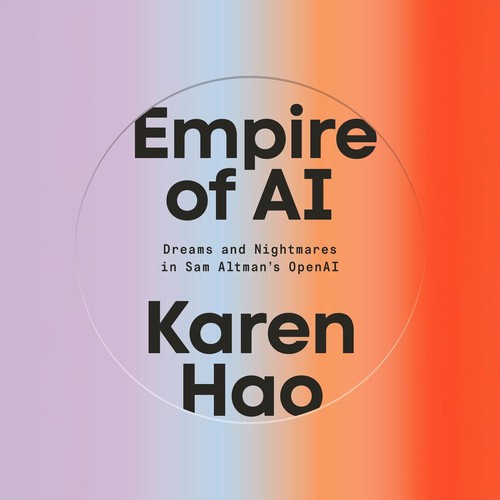
The definitive piece of investigative journalism on OpenAI: 260+ interviews, the clash between safety and speed, and the attempted firing of Sam Altma
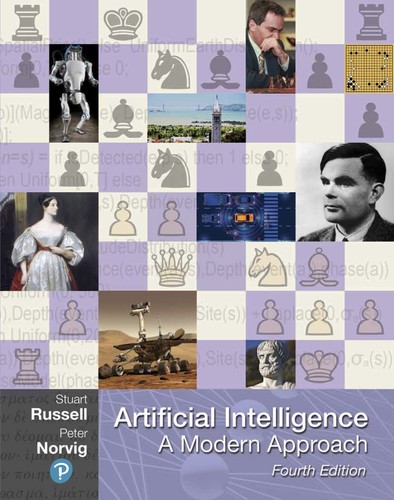
THE AI textbook: used by 1,500+ universities.
As an Amazon Associate, Zendoric earns from qualifying purchases; the price does not change for you. · all our recommended books →
🔗 Related on Zendoric
- Claude chats ended up on Google: Anthropic repeats the privacy mistake OpenAI already suffered · 2026-07-29
- Specialized mental health AI versus everyday ChatGPT: the battle no one can win by ignoring the user · 2026-06-28
- A student prototype in Bengaluru points to AI's next frontier: everyday nutrition · 2026-07-04