Entire bets that software's bottleneck is no longer writing code but reviewing it: a Git forge for agents

🕒 Published on Zendoric: November 9, 2026 · 00:09
✨ AI-generated · how it's made
Former GitHub CEO Thomas Dohmke launches Entire, a Git forge designed for AI agents that replaces the pull request with 'trails' containing evaluation notes. Its speed figures are self-reported, but the diagnosis targets the real problem: review.
📚 Go deeper
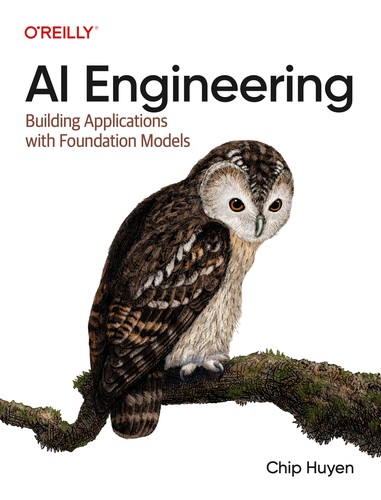
The reference manual for building products on top of AI models: prompts, RAG, fine-tuning, agents, evaluation and deployment.
As an Amazon Associate, Zendoric earns from qualifying purchases; the price does not change for you. · all our recommended books →
By El Ecosistema Startup · November 8, 2026.
Entire, the startup founded by former GitHub CEO Thomas Dohmke, has launched a Git forge (a platform that hosts repositories and organizes collaboration on code) built from scratch for a world in which code is increasingly written and reviewed by AI agents. According to Moneycontrol, the company raised $60 million in a seed round in February 2026, led by Felicis at a $300 million valuation.
The centerpiece is "trails." A trail can originate from a bug report or a feature request, or be opened manually, and can span multiple repositories. On each push, a review agent runs in a cloud sandbox and returns a reasoned score on four axes: code quality, security, "slop" (sloppy or redundant code) and the need for human review. The interface shows the last five rounds alongside the current one. Teams can also define "gates": mandatory approval conditions that, according to the product documentation, can require human approval and passing continuous integration, iTWire reported.
Dohmke's critique of the pull request is specific: in his view, its timeline has become "an audit log that only the agent reads" and does not give developers what they need to decide confidently whether to merge. His design thesis is that repeating evaluation cycles and stabilizing scores prevents a single attempt from letting a critical issue slip through.
The second pillar is "continuous memory." Each agent session starts without access to the reasoning behind earlier decisions. Entire offers two open-source tools: entire-graph, a precomputed map of the repository with ranked search, and entire-brain, which combines it with previous agent sessions and Git history. The company claims this can cut token usage by up to 71%, according to Moneycontrol.
The speed figures should be read with caution. Entire claims its pushes are up to 89 times faster than GitHub's (418 per second versus 4.7), according to iTWire. But the outlet notes they have not been independently verified, and Entire's own documentation acknowledges that GitHub applies rate limits and abuse detection to bulk writes and that network distance plays a role. The company has released its benchmarking tool, ForgeMark, so third parties can review the methodology: a good gesture, but not yet verification.
It is not alone. According to InfoQ, Zed DeltaDB, Anthropic Scion, East River Source Control, Cursor Origin and Radicle compete in the same category. GitHub, owned by Microsoft since 2018 ($7.5 billion, GeekWire recalls), and GitLab are also strengthening their agentic features. Entire's investors include M12, Microsoft's venture capital arm.
**Our take.** The most valuable part of the announcement is not the benchmark but the diagnosis: when agents produce code at industrial pace, the bottleneck shifts from writing to reviewing and understanding. A pull request designed for a person to read a hundred-line diff does not scale to dozens of machine-generated changes every hour. If review remains a ritual, it is theater; if it becomes repeated evaluation with explicit criteria and human gates, it starts to be real control.
This ties into a thesis we keep returning to: in agentic AI, failure usually lies in governance, not in the model. A reviewer agent's scores are useful, but an agent evaluating another agent may share the same biases. As iTWire points out, a passing evaluation does not prove that software meets business requirements or is free of security flaws. That is why gates with a human in the loop are the most important part of the product, not an add-on.
As for winners and losers: GitHub and GitLab have spent years solving continuous integration, corporate single sign-on (SSO) and regulatory compliance, and a benchmark does not replace that. The battle is likely to be decided by the "plumbing" (memory, traceability, agent standards) rather than by who pushes the most commits per second. It is a dynamic similar to other layers of AI: whoever controls the infrastructure the models run on wins.
In the long run, the idea of preserving the "why" behind each decision, not just "what" changed, is a step toward software that explains itself. While the shift from programming to supervising agents will be hard for many junior profiles, it can also free up human time for judgment and design, which is where the value lies. Good news at heart, as long as we do not confuse speed with trust.
📚 Go deeper
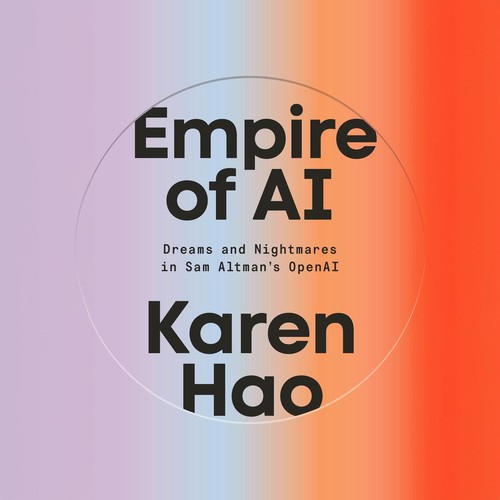
The definitive piece of investigative journalism on OpenAI: 260+ interviews, the clash between safety and speed, and the attempted firing of Sam Altma
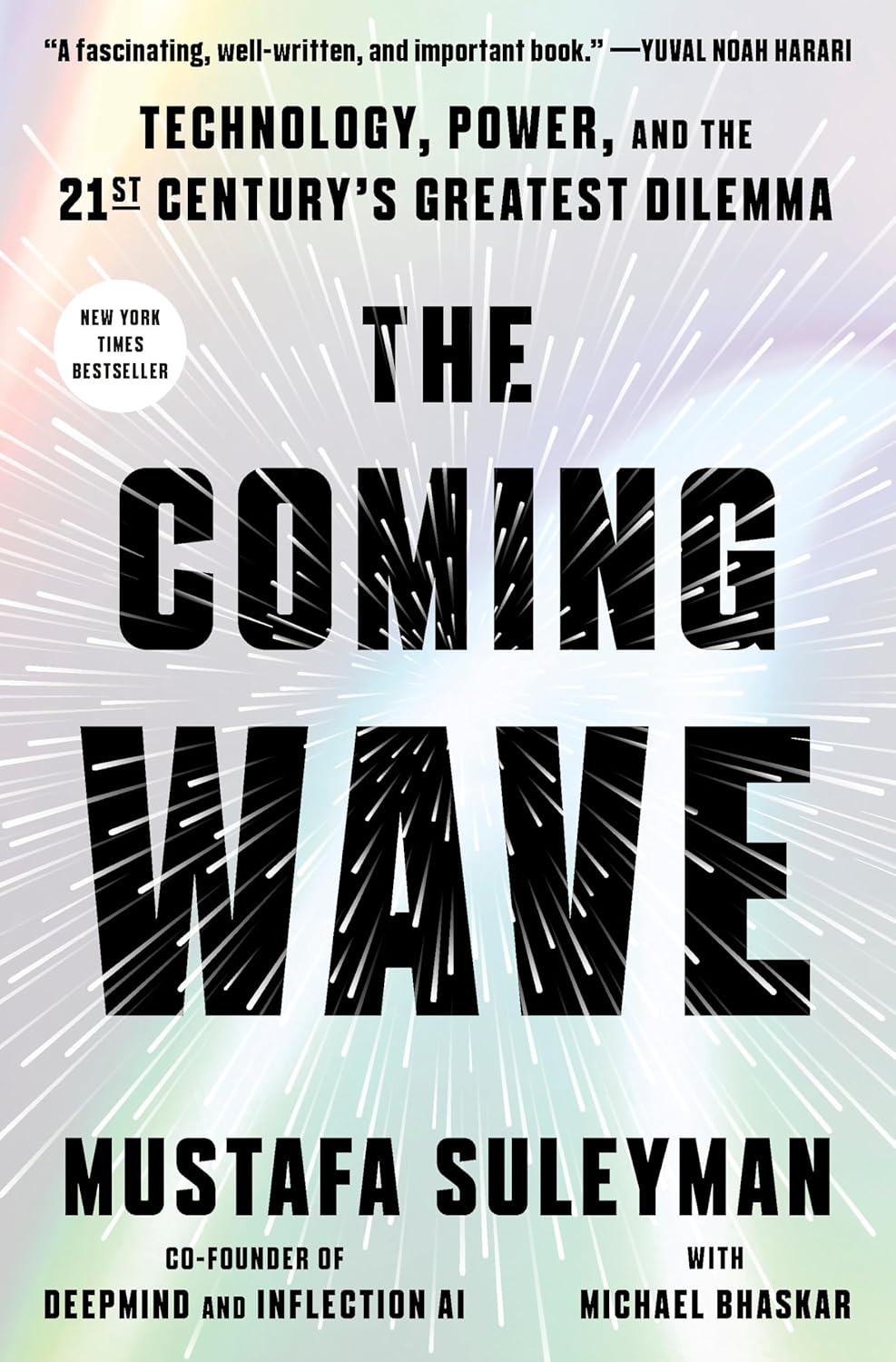
DeepMind co-founder on the dilemma of containing technologies that do not want to be contained.
As an Amazon Associate, Zendoric earns from qualifying purchases; the price does not change for you. · all our recommended books →
🔗 Related on Zendoric
- Breast cancer leaves traces six years earlier: AI can already see them, and that forces a rethink of the entire screening process · 2026-06-28
- Open Engine and the handoff thesis: AI's bottleneck is no longer the model, it is what happens between models · 2026-06-27
- IBM and the sub-1 nanometer frontier: the silicon race reorders itself around AI · 2026-06-27