Military AI doesn't replace steel, it wraps it in software: defense power shifts to whoever controls data and compute

🕒 Published on Zendoric: November 9, 2026 · 00:09
✨ AI-generated · how it's made
Global military spending is hitting record highs and AI is reorganizing it: contracts are migrating from weapons to compute, models and updates. Our take: sovereignty increasingly depends on who holds the software key, not just who has the tanks.
📚 Go deeper

The reference manual for building products on top of AI models: prompts, RAG, fine-tuning, agents, evaluation and deployment.
As an Amazon Associate, Zendoric earns from qualifying purchases; the price does not change for you. · all our recommended books →
By The Express Tribune (opinion by Naveed R. Khan, AI policy analyst at UCSI University) · November 9, 2026.
Global military spending reached a record $2.887 trillion in 2025, the eleventh consecutive annual increase, according to SIPRI (Stockholm International Peace Research Institute). Europe spent $864 billion, up 14% in a year. The United States, China and Russia together account for 51% of the total. Not all of that money goes to AI, but it creates demand for systems that promise faster, more autonomous decision-making.
The size of the military AI market is uncertain. Grand View Research puts it at $9.3 billion in 2024 and $19.3 billion in 2030. Fortune Business Insights cites $18.75 billion in 2025 and $101 billion in 2034. According to the author, this disparity shows that AI is no longer a product category but a cross-cutting layer: intelligence, targeting, logistics, cyber operations, command and autonomous platforms.
The data cited in the article point to a shift in who gets paid. In May, the Pentagon struck deals with seven AI companies to deploy advanced capabilities on classified networks. According to Reuters, its GenAI.mil platform had already been used by more than 1.3 million people in five months. Palantir grew its US government revenue 84% year on year to $687 million in the first quarter of 2026, according to the same agency. And private capital is following suit: Anduril posted $2.2 billion in revenue in 2025 and, according to Reuters, is negotiating funding at a valuation of around $100 billion; Germany's Helsing raised $1.8 billion in July at an $18 billion valuation, and Quantum Systems raised $1.2 billion.
The most important economic nuance is dependency. An aircraft lasts decades with occasional upgrades; an AI system requires retraining, cybersecurity patches, new data and continuous specialized support. SIPRI warns, according to the article, that these products may need monitoring and refinement by the vendor during real-world use. A state can thus own the hardware yet depend on a private company for the intelligence layer that makes it useful.
The European case illustrates this. According to Reuters, in October Palantir had to reassure European customers that neither the company nor Washington can remotely disable Maven. NATO acquired the system in 2025 and, according to the article, declared it fully operational in June 2026. Germany and France have voiced concern about technological dependency.
**Our take.** The author's thesis, which we share, is that software is not replacing steel: it is wrapping steel in software. And whoever controls that wrapper captures the most durable value. It is the same pattern we see in civilian AI: the winner is whoever controls the "plumbing" (compute, data, integration, updates), not just whoever makes the end product. Software that becomes embedded in how an army sees the battlefield generates long contracts, and switching vendors becomes strategically costly.
There are caveats worth keeping in mind. Market figures are consultancy estimates with differing definitions, and several of the revenue and valuation figures come from press reports or rounds still under negotiation, not audited data. Moreover, this is an opinion piece: its conclusion ("that is quite dangerous") is a judgment, not a finding. And, as sector context, the civil-military duality of data centers and models blurs who is "defense industry" and who is not.
In the short term, the real risk is not a science-fiction autonomous AI but something more prosaic: vendor dependency, opacity in algorithm-assisted decisions and a spending race that rewards speed over verification. That is the uncomfortable part, and it calls for evidence-based governance: update rights, auditing and sovereign control of the architecture, issues European governments are already starting to put on the table.
In the long term, the same ability to integrate sensors, data and analysis can reduce errors and collateral damage, and competition from private capital accelerates innovation that will also end up benefiting civilian uses. But that horizon will only materialize if human authority over when and how to act remains intact and control of the software does not become concentrated in a few hands.
📚 Go deeper

The story of NVIDIA and Jensen Huang: how a video-game card company ended up making the most coveted resource on the planet.
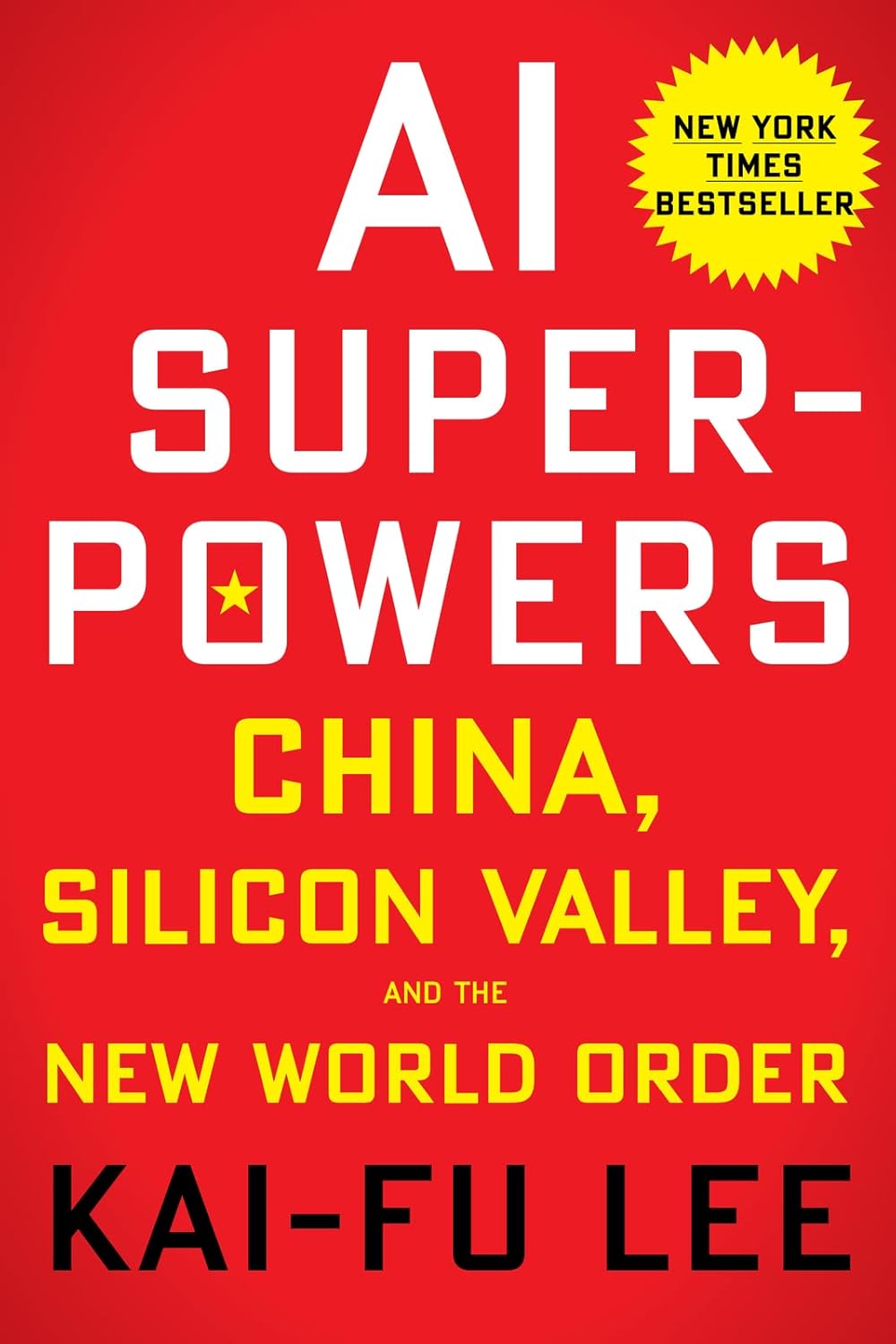
China vs.
As an Amazon Associate, Zendoric earns from qualifying purchases; the price does not change for you. · all our recommended books →
🔗 Related on Zendoric
- Kimi K3 shows China can close the gap fast — the real story is pricing power, not the crown · 2026-07-17
- Anthropic's $40B bill to Musk shows compute, not cleverness, is the real chokepoint in frontier AI · 2026-09-02
- Price pressure: big customers are pushing OpenAI and Anthropic toward open models · 2026-10-07