Like gene editing for neural networks: MIT researchers use GPT-6 Astra to edit a Qwen model's weights and improve its math

🕒 Published on Zendoric: November 5, 2026 · 00:16
✨ AI-generated · how it's made
On November 2, 2026, researchers at MIT's CSAIL lab reported using OpenAI's GPT-6 Astra model to directly edit the weights of a small open-source model, Qwen3.5-0.8B.
📚 Go deeper

China vs.
As an Amazon Associate, Zendoric earns from qualifying purchases; the price does not change for you. · all our recommended books →
Researchers at MIT's CSAIL lab reported on November 2, 2026 that they used OpenAI's GPT-6 Astra model to directly edit the weights of a small open-source model, Qwen3.5-0.8B. According to the VentureBeat article, its MATH-500 score rose from 7.9% to 48.1%, roughly six times higher, by modifying about 0.016% of its weights. The authors (Rikiya Takehi, Jayden Teoh, Alex Zhang and Omar Khattab) call their approach "weight-space programming."
The core idea is for an already trained language model to examine another network's weights, reason about their function and decide what to change, without the usual gradient-based procedure. Conventional training (fine-tuning, other post-training methods, retraining) computes changes from examples, feedback or rewards. Here, by contrast, a model inspects the target network, investigates its behavior and proposes direct patches. In some experiments the weights were provided as text; in others, Astra was given a controlled Python environment to explore larger networks. Takehi summed it up this way: models could treat raw weights as readable, editable code, diagnosing failures and patching them directly.
The Qwen experiment is the most detailed. The researchers gave Astra practice questions, access to the weights via Python and a limited budget of model runs. According to the experiment's documentation, in addition to MATH-500 (7.9% to 48.1%), the edited model improved on GSM8K (13.8% to 67.1%) and on IFEval, an instruction-following benchmark (21.0% to 62.3%). MATH-500 responses that hit the token limit fell from 93.0% to 33.1%.
That last figure is key to interpreting the result. The authors attribute the improvement to Astra removing a numerical direction associated with repetition in selected components of layers 15 and 19, which involved touching 131,072 weights. Before the intervention, Qwen frequently repeated text until it exhausted the allowed output length. The patch reduced that blockage and allowed the model to finish more answers using capabilities it already had. It is a repair, not an injection of mathematical knowledge: the article stresses that the experiment does not show Astra added six times more math to Qwen.
The final patch was small, but finding it took considerable work. The strongest attempt was allowed 50 evaluation requests, each potentially involving hundreds of examples. That attempt took 158 conversation turns, 80 Python executions and 20.3 hours, 4.7 of which were lost waiting out a service outage. As a result, the work does not show that direct editing is faster, cheaper or more effective than conventional training; those savings have not yet been established.
The researchers ran further tests. According to Takehi's announcement, Astra identified four networks that played Breakout, Pong, Pac-Man and Freeway even though they shared architecture, inputs and available actions, without being given tools or a list of candidate games. In a simulated driving task, a trained controller got stuck on a ramp. Given the weights, a description of the scene and a failed trajectory, Astra returned a patch in a single response. It modified 3.5% of the weights and the reported result was a 100% success rate.
It was also asked to build networks from the rules and source code of simplified games (MinAtar), without being able to test them before evaluation. Its Breakout network scored 517.4 points, versus 25.3 for an equivalent network trained with PPO for 500 million steps, an advantage of about 20 times. In Seaquest it trailed the 500-million-step PPO networks, and was slightly behind in Asterix, although it beat the 100-million-step baselines in all three games. The article cautions that the supplied rules and constrained environments leave open questions about generalization.
The negative results matter. Astra failed to establish a math improvement in Gemma 3 270M, which, unlike Qwen in this setup, rarely fell into prolonged repetition. In addition, Astra initially failed to distinguish a model trained to agree with the user (sycophancy) from one trained to answer correctly; it only succeeded when given attention measurements taken during execution. This indicates that access to the weights is not always enough to explain a behavior or to intervene in it successfully. An X account (@1a3orn) pointed out that the announcement thread omitted the Gemma failure, and questioned whether the work demonstrates stronger underlying reasoning: if there is a clear defect, LLMs can help remove it. It acknowledged, however, that the authors included the failures in their blog post.
Reactions were mixed. Yuchen Jin (Databricks) and Chandan Singh (Voyage AI) commented on the results optimistically. At the other end, Maxime Fournes, CEO of PauseAI, wrote that, if real, it could enormously accelerate progress, which he called very bad news and a "terribly reckless" line of research. The article notes that the experiments did not establish those consequences, but that his objection reflects a real tension: methods that help understand a model could also help increase its capabilities. Nor was a recursive self-improvement loop demonstrated, or that the gains compound.
As for the technical context, direct weight editing is not new. ROME (NeurIPS 2022) modified factual associations in transformers and MEMIT (ICLR 2023) extended it to thousands of associations at once. The novelty here is using a general-purpose LLM that investigates the weights and designs changes across very different tasks. Assessing its practical usefulness would require comparing it with specialized editing methods, conventional training and simpler interventions, such as adjusting generation parameters.
For businesses, the applications are hypothetical for now: the researchers report no deployments or business results. Possible uses include repairing small models in specialized workflows (for example, a local assistant that gets stuck generating structured responses) or supporting audits by linking internal structures to behaviors. The economics would require measurement, because discovering and validating a patch has a cost, and the study does not show a reduction in spending alongside the accuracy gains. Access would matter: only those who control the weights can experiment directly, while customers of a hosted API would depend on their provider. Qwen's official page lists an Apache 2.0 license. Each patch should be managed as a new model version, compared with the original on representative tasks, with review for unintended changes and a rollback path; these are proposed requirements, not failures the researchers reported.
The team published experiment logs and the editing artifacts, and says it is developing a benchmark and a supporting framework. It remains to be shown whether this approach can serve for reliable model maintenance, for accelerating capability development, or both, and whether other researchers can reproduce the results.
📚 Go deeper
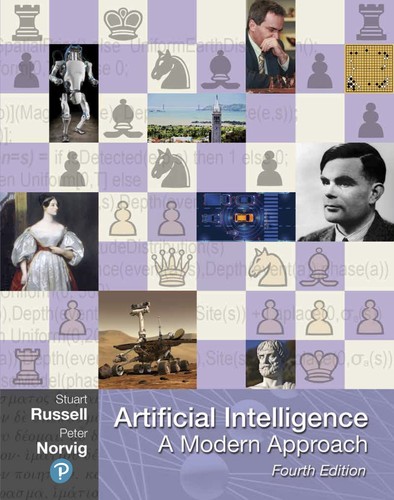
THE AI textbook: used by 1,500+ universities.

The academic "bible" of deep learning, with a Turing Award winner among its authors, and legally free on the web.
As an Amazon Associate, Zendoric earns from qualifying purchases; the price does not change for you. · all our recommended books →
🔗 Related on Zendoric
- Weight-Space Programming: GPT-6 Astra edits Qwen's weights and lifts its MATH-500 score from 7.9% to 48.1% · 2026-11-03
- ECO-IA: when the classroom replaces the corporate lab at the edge computing frontier · 2026-07-07
- Astra, the model OpenAI is preparing to reason without leaving a readable trace, worries AI safety researchers · 2026-09-03