ECO-IA: when the classroom replaces the corporate lab at the edge computing frontier

🕒 Published on Zendoric: July 7, 2026 · 03:25
✨ AI-generated · how it's made
Students at a technical high school in Misiones built a recycling machine that sorts plastic and aluminum using computer vision, running the model directly on a low-cost microcontroller. A small case that illustrates a big trend: AI no longer requires clouds or million-dollar budgets to solve real problems.
📚 Go deeper

The story of NVIDIA and Jensen Huang: how a video-game card company ended up making the most coveted resource on the planet.
As an Amazon Associate, Zendoric earns from qualifying purchases; the price does not change for you. · all our recommended books →
By Canal Doce Misiones · July 6, 2026.
At the Instituto de Enseñanza Agropecuaria y Electromecánica N°3 in San Vicente, two fifth-year students —Tobías Buiak Bareiro and Mía Rosa Benítez— together with their teacher Guillermo Duran Rosselli spent five months building ECO-IA, a recycling machine that automatically identifies and separates plastic and aluminum waste. The hardware is modest and accessible: an ESP32-CAM (a microcontroller with a camera that costs a few dollars), MG996R servomotors, an OLED screen and 3D-printed parts. The brain of the system is a vision model trained on Edge Impulse, a platform designed specifically to run artificial intelligence on devices with minimal resources, without relying on external servers. According to the students themselves, the model reached a 90% accuracy rate distinguishing bottles, plastic cups and aluminum cans, although they acknowledge it still needs to be validated with a wider variety of waste.
The technical detail that deserves attention is not the recycling itself —commendable, but modest in scale— but the fact that the AI model runs entirely on a low-end microcontroller, without a cloud connection. This is what the industry knows as TinyML or edge AI: artificial intelligence that lives on the device, not in a datacenter. Just a few years ago, training and deploying an image classifier with reasonable accuracy required GPUs, advanced software engineering knowledge and budgets that no public high school could afford. That today two teenagers with teacher guidance manage a working prototype in five months, using free or very low-cost tools, is the most concrete proof of something we at Zendoric have been pointing out: the democratization of AI is not a future promise, it is a present reality that has already reached the technical classrooms of provinces like Misiones.
This connects with a broader phenomenon in the sector: the frontier of AI is no longer measured solely by the gigantic language models that OpenAI, Anthropic or the Chinese laboratories compete over, but also by the growing ability to run useful intelligence on tiny, cheap hardware. Platforms like Edge Impulse are part of an ecosystem that is drastically lowering the barrier to entry for solving local problems —waste classification, agricultural pest detection, environmental monitoring— without relying on costly infrastructure or constant connectivity. It is, in miniature, the same principle that underpins our thesis on open-weight: when cost and control are democratized, innovation ceases to be the exclusive property of large corporations and begins to sprout in educational institutions in non-metropolitan areas.
The project has obvious limitations and those responsible acknowledge them with an honesty rare in tech discourse: it only recognizes two materials, it needs validation with more diverse waste, and it still depends on an external power source (the stated goal is to add solar panels for energy autonomy). It is not a product ready to scale at the municipal level, and it would be a mistake of enthusiasm to present it as such. But as an interdisciplinary pedagogical exercise —combining Computer Science, Electronics, Agroecology, English and Mathematics in a single development— it is worth more than its size suggests: it is evidence that the next generation of technicians and engineers no longer learns AI as a separate theoretical subject, but as a tool for solving everyday problems, integrated from secondary school onward.
Our reading is that these initiatives, multiplied across the region, are the silent foundation of the technological abundance we champion in the long term: it will not arrive solely from the laboratories of San Francisco or Beijing, but also from technical schools that teach students to train their own models with limited resources. The short term still demands investment in educational infrastructure and teacher support —without teacher Duran Rosselli and his colleagues, this project would not exist—, but the underlying direction is encouraging: the ability to create with AI is spreading much faster than the wealth that produces it, and that, over time, tends to level the playing field.
📚 Go deeper

Semiconductors as the oil of the 21st century: history, espionage, and why an island of 23 million people underpins the entire AI economy.
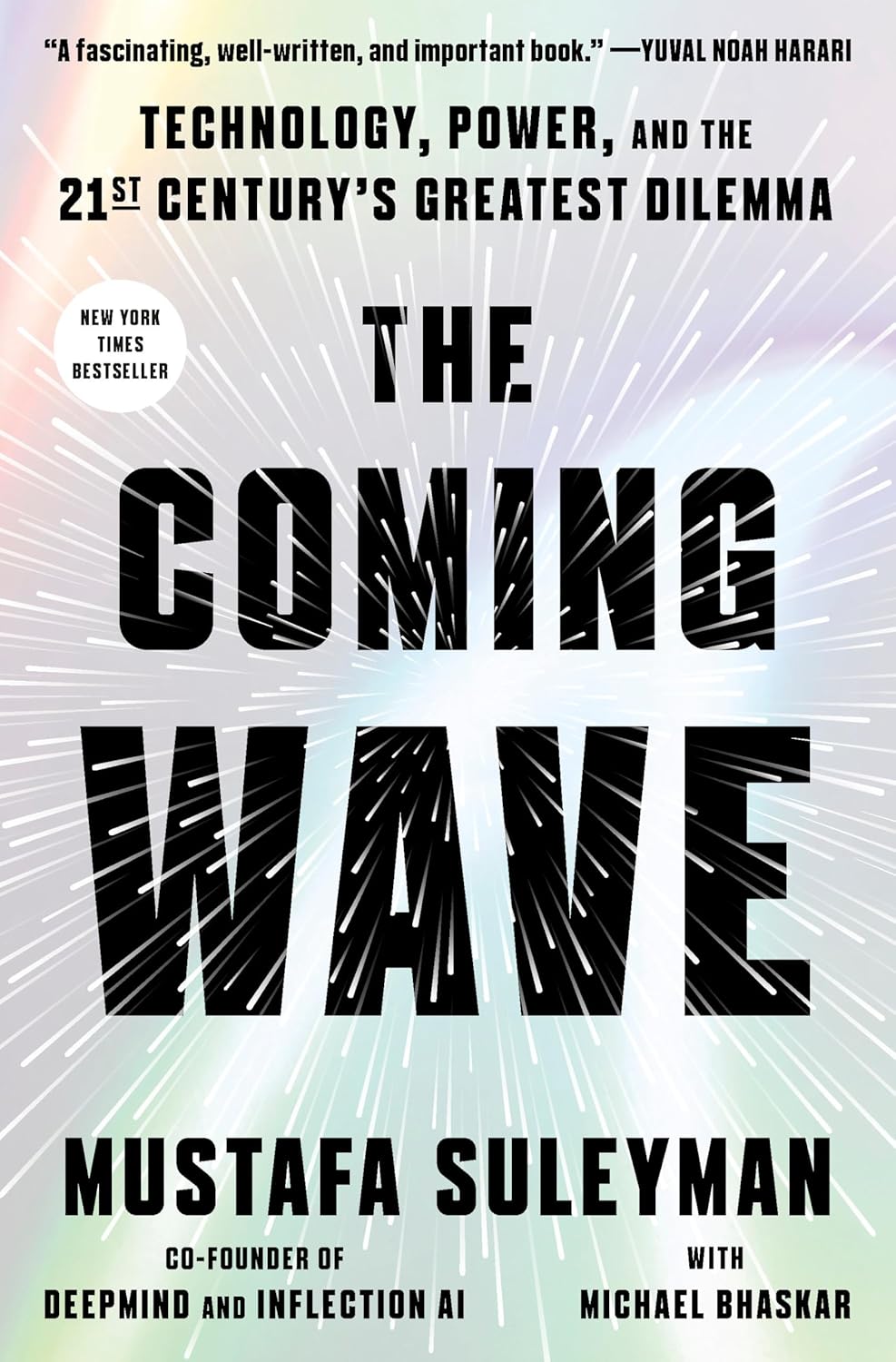
DeepMind co-founder on the dilemma of containing technologies that do not want to be contained.
As an Amazon Associate, Zendoric earns from qualifying purchases; the price does not change for you. · all our recommended books →
🔗 Related on Zendoric
- AI-generated CSAM at an Illinois school: the hardest abuse to detect no longer needs a hidden camera · 2026-07-04
- A student prototype in Bengaluru points to AI's next frontier: everyday nutrition · 2026-07-04
- High school is no longer the ceiling: a self-taught teenager trains AI against head and neck cancer at Penn State · 2026-07-17