98% of AI agents never make it past the demo: the gap is in engineering and measurement, not models

🕒 Published on Zendoric: November 5, 2026 · 00:16
✨ AI-generated · how it's made
Only 2% of travel operators have scaled AI agents, although 33% are experimenting with them. The gap isn't the model but evals, integration and business metrics. That is where the race to capture the value will be decided.
📚 Go deeper

The best starting book if you're not technical: a Wharton professor explains how to work WITH AI — when to delegate, when to supervise, when to keep i
As an Amazon Associate, Zendoric earns from qualifying purchases; the price does not change for you. · all our recommended books →
By El Ecosistema Startup · November 4, 2026.
A travel-industry study, cited by El Ecosistema Startup, puts a number on the gap between testing and scaling AI agents. 33% of operators are experimenting with them, but only 2% have scaled them effectively. That's a gap of more than 30 percentage points. The outlet does not identify the study in the text, so the figure should be taken as indicative and limited to one sector.
According to the article, the cause is not the model. What fails is what happens outside the controlled environment of the demo: network latency, integration with legacy APIs (interfaces of older systems), demand spikes, brand consistency and real-time regulatory compliance. The industry calls it the "agent iceberg": the language model is the visible tip, and beneath it lie orchestration, connectors, monitoring, fallback logic and security.
That submerged work is already a product category. According to InfoWorld, cited in the article, there are more than 60 commercial and open-source platforms for orchestrating agents. Rob Scudiere, CTO of Verint, warns in that piece that every agent should be measured against the metrics a CFO tracks: revenue, retention, CSAT (customer satisfaction), costs and eNPS (employee satisfaction). Without that measurement, he says, ROI can't be proven.
The text adds a second obstacle: agents are not deterministic. They can give twenty valid answers, or sound fluent while being wrong. That's why it includes the recommendation, attributed to a Forbes Technology Council analysis, to write the evals first. That means a set of 500 to 1,000 real examples, reference answers reviewed by experts and an advanced model as judge. The same analysis claims that up to 95% of enterprise AI programs deliver no measurable value. It's a very high figure with unknown methodology, and I wouldn't take it as established.
There are also signs of demand. According to an August 2026 report cited by InfoWorld, 66% of companies will likely invest in digital workers in the next 12 months. The most requested requirements are demonstrated accuracy, clear explanations of decisions and the ability for humans to override.
**Our take.** The article's thesis is sensible and fits with what we have been arguing: the value of an enterprise agent lies not in the model but in the layer around it. That's where identity, permissions, traceability and human oversight live. An agent that's been "almost ready" for months is usually an agent without metrics, without evals and without observability.
There are caveats. 2% of a sample of travel operators does not represent the whole industry. Moreover, many of the figures circulating about "failing pilots" come from consultancies and vendors with incentives to sell the solution to the problem. I'd take the direction of the data seriously and its decimals with caution.
The consequences go beyond engineering. The winner in this phase is not whoever has the best model, which is increasingly interchangeable, but whoever has operational discipline: in-house evals, gradual scaling by intent and channel, and decision traces from day one. That favors small, well-organized teams over large, disorganized budgets. The losers are projects that treat the agent as a permanent demo.
In general, this is how every technology wave tends to go. First comes the prototype enthusiasm, then the boring phase, the one that actually produces value. In the short term, that means many canceled pilots and some frustration. In the long term, that engineering is what will make it possible to automate routine tasks reliably and free people up for work requiring more judgment. The abundance agents promise doesn't come from a brilliant demo, but from systems that work on a Tuesday at 9 a.m.
📚 Go deeper
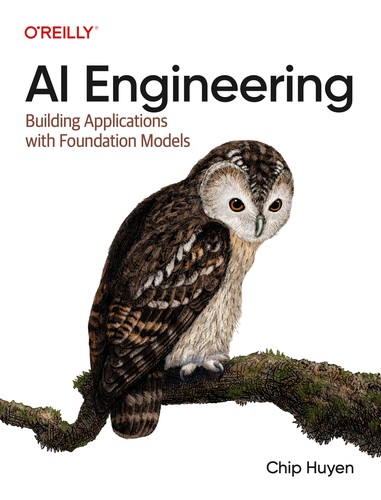
The reference manual for building products on top of AI models: prompts, RAG, fine-tuning, agents, evaluation and deployment.
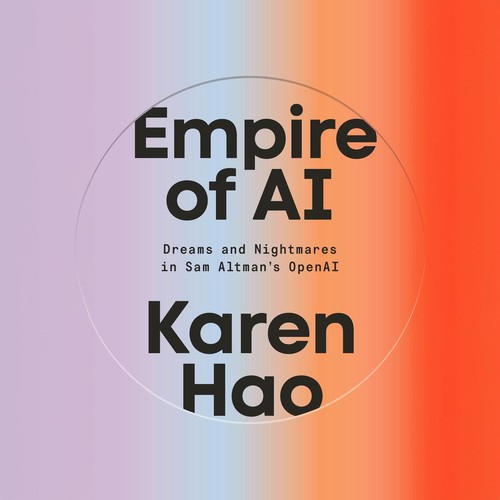
The definitive piece of investigative journalism on OpenAI: 260+ interviews, the clash between safety and speed, and the attempted firing of Sam Altma
As an Amazon Associate, Zendoric earns from qualifying purchases; the price does not change for you. · all our recommended books →
🔗 Related on Zendoric
- AI agents with an 'ear': a niche experiment that points to a bigger trend · 2026-07-03
- Effect Agent: a niche framework aimed at the real bottleneck for AI agents, reliability · 2026-09-06
- JPMorgan and Vista Equity: the agentic AI business is not in the models, it's in the software that distributes them · 2026-09-07