The "McDonaldization" of venture capital: efficiency, consensus and money that only flows to AI

🕒 Published on Zendoric: November 4, 2026 · 00:20
✨ AI-generated · how it's made
Kyle Harrison argues in this essay that venture capital increasingly resembles a fast-food chain. Each decision is rational on its own, but together they produce an irrational outcome.
📚 Go deeper
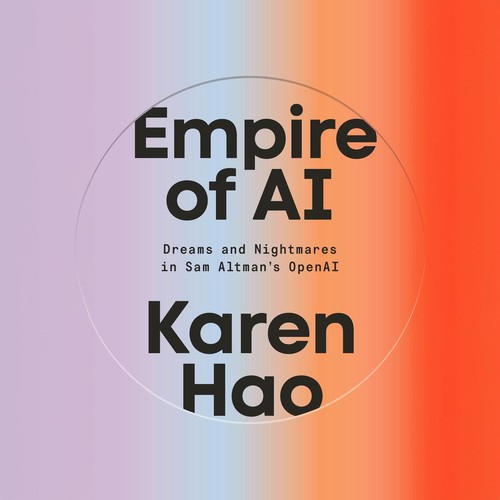
The definitive piece of investigative journalism on OpenAI: 260+ interviews, the clash between safety and speed, and the attempted firing of Sam Altma
As an Amazon Associate, Zendoric earns from qualifying purchases; the price does not change for you. · all our recommended books →
Kyle Harrison argues in this essay that venture capital increasingly resembles a fast-food chain. Each decision is rational on its own, but together they produce an irrational outcome. His thesis is that the industry is concentrating in a few enormous managers that almost always fund the same thing (AI). That reduces the capacity to imagine different futures. Caveat: the text received cuts off mid-sentence in the final line, so this summary does not cover the article’s ending.
Harrison starts from sociologist George Ritzer, who in 1993 published “The McDonaldization of Society”. Ritzer argued that the logic of fast food had spread to hospitals, universities and churches. That logic has four ingredients: efficiency, calculability, predictability and control. Each makes sense on its own, but together they can produce something nobody would have chosen. Ritzer drew on Max Weber and his “iron cage” of bureaucratic rationality. The author defines “slop” as something that is not bad by accident, but because the system is optimized for something other than quality. He gives as examples feeds optimized for time in app, songs written to survive the first 30 seconds of play, and Hollywood sequels.
The author revisits his own 2022 hypothesis. Back then he wrote that “minimills” (a reference to “The Innovator’s Dilemma”) would come to challenge the giants for the market. These were solo GPs, small funds and partners spinning out of the big platforms, whom he called “Renegades”. His assessment is that both things he predicted happened. The renegades kept leaving, but they stayed small. He cites as examples Chemistry (a $350 million debut fund), Verdict, Relentless (around $80 million), Mido (around $100 million) and the new early-stage AI fund from a partner leaving Sequoia. Meanwhile, the money went in the opposite direction. a16z alone closed $23.8 billion in the first three quarters of 2026, more than 20% of all venture capital raised in the US that year, according to PitchBook.
The data he provides on concentration are clear. Through the third quarter, US venture funds have raised $108.5 billion, 39% more than in all of 2025. First-time funds fell from 479 in 2022 to 195 in 2025 and to just 81 so far this year. Established managers (fund IV and beyond) captured 88.2% of capital, the highest figure PitchBook has recorded. Historically that share ranged between 50% and 80%. For Harrison, the industry has split into two kinds of firms: those that CAN raise massive funds and those that CANNOT.
The author ties this idea to his earlier writing, which he presents as a single argument seen from five angles: the bubble, the business model, the firm, the money and the founder. He recalls the case of Hopin. It went from a $2 billion valuation to $7.7 billion in about nine months, raised close to $1 billion across four rounds and ended up sold to RingCentral for $5 million in cash plus an earnout. His reading is that nobody in those rounds needed to believe it was worth $7.7 billion, only that someone else might believe it (the “greater fool” logic). He also distinguishes between firms playing for “10x” and “capital aggregators”. An LP writing a $250 million check is satisfied with 2-3x, so those firms only need a company to come in at $1 billion and exit at $2-3 billion. He further describes an “unholy trinity” made up of the aggregators (a16z, General Catalyst, ICONIQ, Sequoia), the allocators (sovereign wealth and pension funds) and the absorbers (OpenAI, Anthropic), which swallow rounds of more than $1 billion.
He then applies Ritzer’s four ingredients to venture capital. On efficiency, the fastest path is the platform: one brand, one fundraise, many strategies and enormous checks instead of $5 million ones. With budgets that large, it is harder to bet on risky technology. He compares it to Hollywood, where big budgets lead to sequels instead of original films. On calculability, the number that counts is assets under management (AUM), and for many large funds the strategy has become “2% of the biggest number”. The author says that in 2022 he underestimated the role of LPs. Their incentives explain part of the dynamic: many are trying not to lose their jobs, and nobody gets fired for writing a big check to a big brand. Added to this, outcomes have grown larger. According to the author, Microsoft took about 44 years to reach $1 trillion, Apple about 42, Nvidia about 30 and Meta about 17 (before cases such as Anthropic and SpaceX). If such outcomes were possible in 5-10 years, the rational move would be to raise the largest possible fund and own as much as possible of the most obvious companies. Harrison does not believe they will be common or necessarily durable, and questions whether Cursor will always be worth around $60 billion.
Predictability manifests as consensus. AI accounted for 39% of US venture dollars in 2023, 51% in 2024, 65% in 2025 and 82.7% so far in 2026. In the first quarter, five companies (OpenAI, Anthropic, xAI, Waymo and Databricks) took 73.2% of deal value. On control, what matters is what leads the decision. Harrison distinguishes between conviction-driven firms (Founders Fund, Greenoaks, Thrive, Lux, USV) and scale-driven firms (a16z, Lightspeed, General Catalyst, Sequoia). They are not mutually exclusive; as an example, he notes that Thrive raised $10 billion in February. The question is whether fund size follows the size of conviction or whether conviction is manufactured to fit the fund size. He says that at his firm, Contrary, they prefer to describe themselves as driven by talent and research rather than by a thesis. He sums up the idea this way: scale is a bigger hammer, and when fund size is in charge, every deal has to fit it.
The core of the argument is what Ritzer called the “irrationality of rationality”. The LP is not foolish for wanting a safe brand, nor the manager for raising the largest possible fund, nor the fund for owning the most obvious companies. The combined result is AI everywhere. The author acknowledges an important nuance: it is not true that AI money does not go to real problems. In 2025, AI companies raised about $18 billion, 46% of all venture investment in healthcare. Isomorphic Labs raised $2.1 billion this year for AI drug discovery. Fusion companies pulled in a record of about $4.5 billion over the past year, and more than a third of climate tech funding in the first half of 2026 went to low-carbon data centers. Even so, at least $242 billion of this year’s US AI funding went to just four labs (OpenAI, Anthropic, xAI and SSI), whose current business is still mostly knowledge work: chat, code and enterprise productivity.
For Harrison, the bigger problem is that everything else is stagnant. Since 2023, non-AI US venture capital has stayed flat at around $100-120 billion a year. Life sciences fell from 17% of dollars in 2024 to about 11% in 2025, with virtually the same $36 billion. Global edtech raised about $2.4 billion in 2024, a decade low and roughly 2% of a single $122 billion OpenAI round. And global proptech raised about $10 billion in 2025, 57% less than in 2019. In his reading, it is not that nobody funds the hard problems, but that they stay at the same table while AI eats the rest of the menu. In a “McDonaldized” system, the problems that get money are those that can absorb billions predictably. Some real problems fit that mold (such as AI drug discovery or energy for data centers), but many do not.
The author’s conclusion is that size pushes toward consensus, and consensus is the opposite of imagination. The more one chases selling the largest number of burgers, the worse they all taste. He laments that today we produce founders of companies rather than founders of a republic. The text received ends abruptly as it begins to refer to those who want to do something different, so we cannot review its ending or its final recommendations.
📚 Go deeper
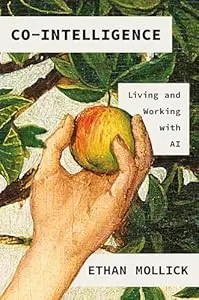
The best starting book if you're not technical: a Wharton professor explains how to work WITH AI — when to delegate, when to supervise, when to keep i
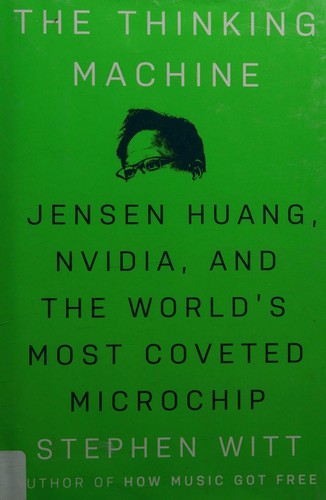
The story of NVIDIA and Jensen Huang: how a video-game card company ended up making the most coveted resource on the planet.
As an Amazon Associate, Zendoric earns from qualifying purchases; the price does not change for you. · all our recommended books →
🔗 Related on Zendoric
- Visa cuts 2,600 jobs from product and tech — the tell isn't the AI framing, it's where the money is going · 2026-09-01
- Visa cuts 2,600 jobs to fund stablecoins — the AI layoff story is reallocation, not simple replacement · 2026-09-02
- Visa cuts 2,600 jobs in product and tech — and the memo says the money is being redeployed, not saved · 2026-09-04