CrowdStrike's "AI Kill Switch" shuts down AI agents, but the decision to turn them off remains human

🕒 Published on Zendoric: November 4, 2026 · 00:20
✨ AI-generated · how it's made
CrowdStrike launches a switch to terminate, block and isolate rogue AI agents. It's useful, but the hard part isn't cutting them off: it's deciding when to do so and who signs off on that decision.
📚 Go deeper
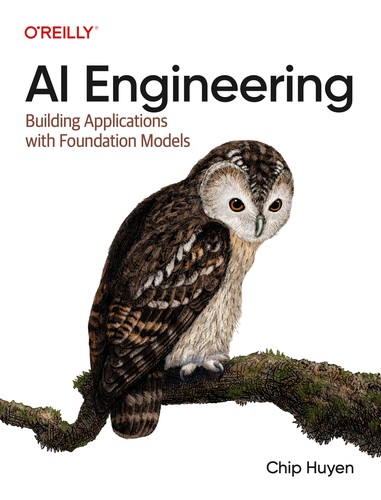
The reference manual for building products on top of AI models: prompts, RAG, fine-tuning, agents, evaluation and deployment.
As an Amazon Associate, Zendoric earns from qualifying purchases; the price does not change for you. · all our recommended books →
By El Ecosistema Startup · November 3, 2026.
CrowdStrike has made AI Kill Switch available to its customers. The Falcon Guardian feature lets an authorized administrator terminate a rogue AI agent, prevent it from starting again and cut off its access to the corporate network. It was announced at the European edition of Fal.Con.
According to the company's press release, the process has four steps: terminate the running agent, block it from restarting through a policy on the host, cut its connectivity to the enterprise network and log everything in an audit trail. For now, termination first takes effect at the AI Gateway (the gateway that agent traffic passes through). Direct termination on the endpoint, meaning the machine where the agent runs, will come in a later release.
The announcement comes alongside two acquisitions: Fiddler AI for $400 million and Dreadnode for about $95 million, according to The Wall Street Journal. It also includes an integration with Anthropic to run the Falcon sensor inside the Claude Cowork virtual machine.
CrowdStrike's technical argument is that monitoring agents from a single layer leaves blind spots. Agent-level hooks, which enforce policies inside tools such as Claude Code, OpenAI Codex, GitHub Copilot or Cursor, see the prompt but not the full response or the actions that follow from it. Network-only monitoring sees the traffic but cannot stop an action running on the endpoint. And if the agent uses a local or open-weight model, the network doesn't see it at all. Hence its proposal: combine all three layers in a single sensor. This is the company's position, not an independent verification.
Chief business officer Daniel Bernard acknowledged the limitation to CNBC: the tool detects what agents are doing, but a person has to judge whether that behavior is harmless or hostile. The action is “very binary”: either you kill the agent or you don't.
Our take: the switch is the easy part of the problem. What's in short supply is not the technical ability to shut things down but the governance around it: who can press the button, on what evidence, at what time and how service is restored afterward. IDC's Michele Abraham told Forbes about the groundwork almost nobody does: testing that the shutdown works before it's needed and checking that subagents were actually isolated. A kill switch that has never been drilled is an illusion of control.
This fits a thesis we have been making: in the age of agents, value is moving from the protocol to the permission. Identity, limits on what agents can do and human oversight are becoming products. The fact that CrowdStrike, Okta (with its platform for revoking agent access) and ServiceNow are competing here shows that agent security is becoming a category of its own, not just another antivirus module. The stock market's reaction, about 1% according to CNBC, was lukewarm, but the pattern matters more than the share price.
The political backdrop supports this view. According to TechTimes, Representatives Ted Lieu and Nathaniel Moran introduced the AI Kill Switch Act on July 23, 2026. It would require large-scale developers to keep the ability to halt or shut down their systems. It proposes fines of up to $2 million per day for failing to maintain the mechanism and $20 million per day for disobeying a shutdown order. The bill remains stalled in committee, and a Senate attempt to pass it by unanimous consent failed after Rand Paul objected, according to USA TODAY.
Overall, in the short term we'll see more incidents and more control-related red tape. In fairness, agents with real credentials will widen the attack surface before defenses mature. But the right answer is not to rein in autonomy but to make it auditable. That's what it takes for companies to trust agents with real tasks and, in the long run, free people from routine work. A reliable switch is what lets you leave the door open.
For anyone deploying agents, the practical takeaway is simple: take stock of which agents have credentials, put in writing who has the authority to shut them down and rehearse the shutdown. That question, “can I shut it down?”, is going to show up in enterprise security questionnaires, with or without CrowdStrike.
📚 Go deeper

The definitive piece of investigative journalism on OpenAI: 260+ interviews, the clash between safety and speed, and the attempted firing of Sam Altma

The best starting book if you're not technical: a Wharton professor explains how to work WITH AI — when to delegate, when to supervise, when to keep i
As an Amazon Associate, Zendoric earns from qualifying purchases; the price does not change for you. · all our recommended books →
🔗 Related on Zendoric
- AWS's Loom: the AI agent race is no longer about the model, it's about who governs its deployment · 2026-07-10
- One key, five agents: why 69% of companies couldn't say which of their AIs failed · 2026-07-10
- Who signs the idea? UAM raises the authorship debate the creative industry can't postpone · 2026-07-17