IMF warns: AI could affect 40% of jobs and is being financed with 50-year debt for 5-year returns

🕒 Published on Zendoric: November 4, 2026 · 00:20
✨ AI-generated · how it's made
Kristalina Georgieva, head of the IMF, describes a "slow-moving tsunami" for employment and warns of a financial mismatch: 50-year debt for projects that pay off in five. The biggest risk may not be jobs but balance sheets.
📚 Go deeper

The best starting book if you're not technical: a Wharton professor explains how to work WITH AI — when to delegate, when to supervise, when to keep i
As an Amazon Associate, Zendoric earns from qualifying purchases; the price does not change for you. · all our recommended books →
By Revista GENTE · November 3, 2026.
International Monetary Fund (IMF) Managing Director Kristalina Georgieva described AI as a “slow-moving tsunami” for the labor market. She said so at Grupo Santander's International Banking Conference in Madrid, as reported by Revista GENTE.
According to Georgieva, within three to five years AI could affect up to 40% of jobs worldwide and up to 60% in advanced economies. “Affect” is not the same as “destroy”: it includes jobs that are transformed and require new skills, and others whose workers could earn more.
As context, the managing director noted that in the United States one in ten jobs already requires AI-related skills, and the trend points toward less routine work.
The second warning is financial and, in our view, the more interesting one. Georgieva noted that the investment boom is being financed with long-term debt: “A project whose benefits could be reaped over five years is being financed with 50-year debt.” It is a maturity mismatch: the debt lasts much longer than the asset that justifies it. If the enthusiasm deflates and investors exit en masse, she warned, markets could suffer serious consequences.
The global economy is currently growing at 3.1%, driven in part by that AI investment, according to the source. In other words, part of the growth being celebrated today depends on the bet paying off.
Georgieva added a question of distribution: a few countries, including the United States, China and India, lead AI production, while others are component suppliers or mere users. And she called for safeguards to be created quickly: “Unless we can very quickly create protection for the incredible power of AI, the risks it entails could outweigh the opportunities.”
Our take: the 40% figure is an estimate of exposure, not a prediction of layoffs, and it should not be read as such. Even so, the direction is credible, and the transition will be hard for those with routine tasks, especially in advanced economies, where, according to Georgieva, the impact will be greatest.
What matters most to us is the link between the two warnings. If AI is financed with long-term debt and profits that arrive late, or not at all, employment and finance cease to be separate problems: a market correction would hit precisely when workers most need resources to retrain. That is the near-term scenario we must not sugarcoat.
That said, Georgieva herself recalls a historical pattern: technologies are overestimated in the short term and underestimated in the long term. We agree. A financial correction would not invalidate the underlying thesis, just as the dot-com bust did not stop the internet. An AI capable of accelerating medicine and making resources cheaper remains the horizon, even if the road includes shocks.
Who wins and who loses: the winners are workers who learn to orchestrate AI and countries with the capacity to produce it; the losers are routine jobs and economies that only consume. The public policy question is how to distribute the cost of the transition before the distribution of abundance arrives. Our nuance: the real limit is not only technological; it is also one of financing and governance.
A caveat about the source: the Revista GENTE piece summarizes the statements without detailing the methodology behind the 40% and 60% figures, so they should be checked against the IMF's own reports before being used as hard data.
📚 Go deeper

How opaque algorithms decide who gets credit, a job or parole — and why they tend to punish the same people.
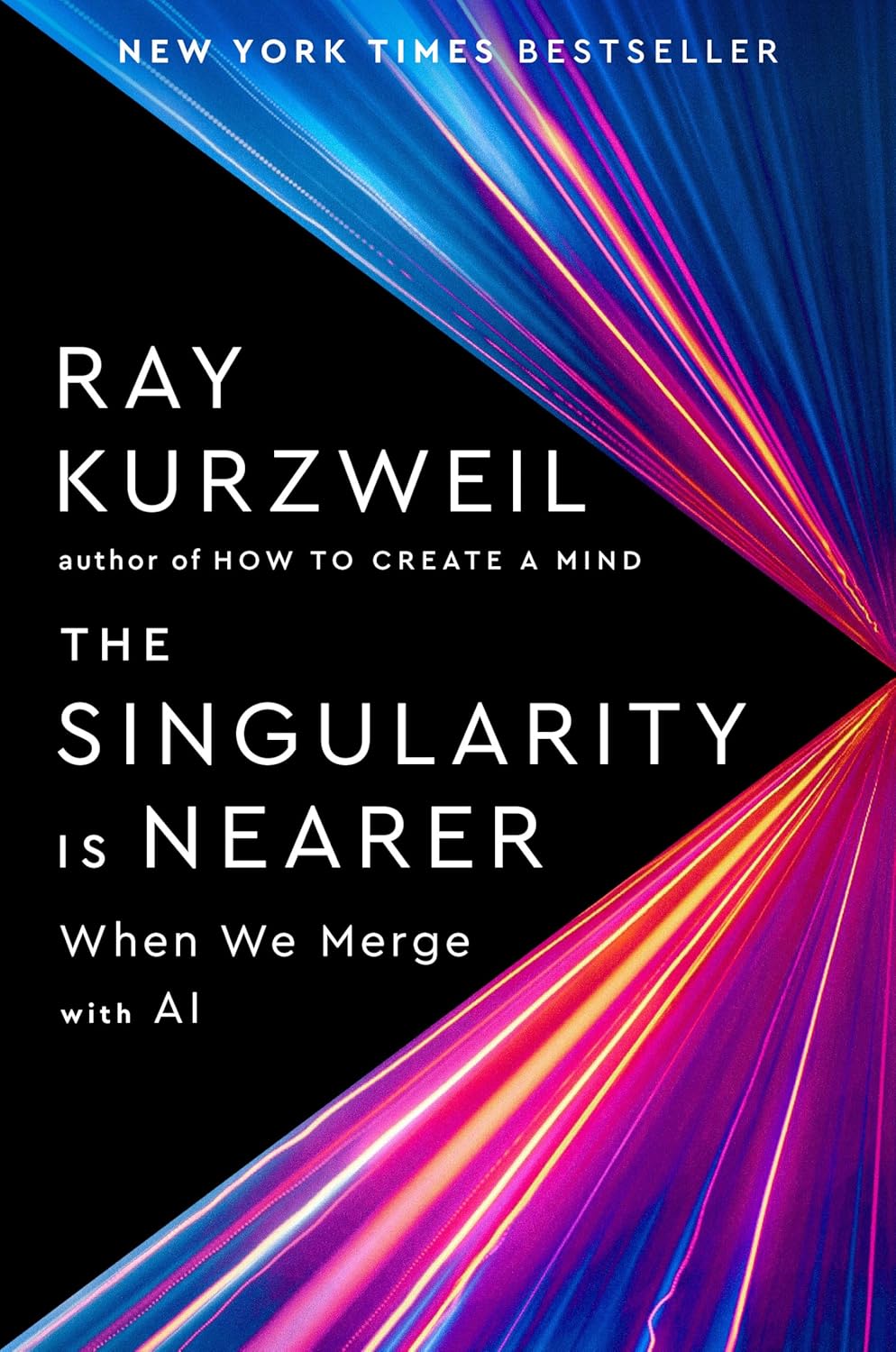
Twenty years after "The Singularity Is Near", Kurzweil revisits his predictions and keeps the date: human-AI merger around 2045.
As an Amazon Associate, Zendoric earns from qualifying purchases; the price does not change for you. · all our recommended books →
🔗 Related on Zendoric
- Anthropic warns AI self-replication may be 'months away': a warning to govern, not a countdown to panic · 2026-10-13
- AI didn't invent fraud, it industrialized it: why the best defense is still slowing down · 2026-06-24
- With 'Jalapeño,' OpenAI stops being just a silicon customer and becomes the architect of its own infrastructure · 2026-06-26