LASAI 2026 comes to Lima: Latin American AI training hinges on bringing local talent into the global conversation

🕒 Published on Zendoric: October 30, 2026 · 00:05
✨ AI-generated · how it's made
UPC hosted the Latin American School of AI (LASAI 2026) on October 23 and 24, with speakers from the US and Europe. The event itself matters less than the bet behind it: training regional talent so that AI is not decided only elsewhere.
📚 Go deeper

AI as an extractive industry: the lithium, the energy, the underpaid data-labeling work and the bodies behind the cloud.
As an Amazon Associate, Zendoric earns from qualifying purchases; the price does not change for you. · all our recommended books →
By Noticias UPC · October 29, 2026.
The Universidad Peruana de Ciencias Aplicadas (UPC) hosted the Latin American School of Artificial Intelligence (LASAI 2026) on October 23 and 24. The format was hybrid: in-person activities at the San Miguel campus in Lima, plus virtual participation.
According to the university, the event is organized by the international scientific initiative SIMBig and brought together students, researchers and professionals. It featured specialists from the United States and Europe, and the keynote lectures were free.
The program covered machine learning (systems that learn from data rather than following fixed rules), deep learning (neural networks with many layers), natural language processing and large language models (LLMs). It also included applications in health, biomedicine and medical informatics, as well as ethics and responsible AI. Beyond the talks, there were hands-on workshops and mentoring sessions.
UPC's material provides no attendance figures, speaker names or concrete outcomes, so the event's real reach cannot be assessed. What it does describe is its aim: to connect academia and industry and to develop solutions to the region's challenges.
**Our take.** A two-day university event doesn't redraw the AI map, but it points to something that does matter. The technology's frontier is concentrated in a handful of labs in the U.S. and China, and Latin America risks becoming merely a consumer of other people's models. Local training is the minimum condition to avoid that: without people who understand how these systems are trained, evaluated and adapted, there can be no technical sovereignty.
One detail strikes us as the most interesting part of the program: the weight given to health and biomedicine. Broadly speaking, this is where AI is most likely to deliver on its long-term promise of bringing us closer to eradicating diseases, and where regional problems (data, access, languages) can't be solved with an imported generic model. The rise of open models also lowers the barrier to entry for Latin American teams to adapt cutting-edge technology with modest resources.
In the short term, the transition will be uneven: countries with less trained talent will bear the costs of automation sooner and capture fewer of its benefits. That is why free, hybrid initiatives like this one matter more for their cumulative effect than for their headline. The proof that they work won't be the event photo, but how many of those students end up building their own products and research in the region a few years from now.
📚 Go deeper

The only novel on the list, by a Nobel laureate: an artificial friend observes humans with a blend of lucidity and innocence no essay achieves.
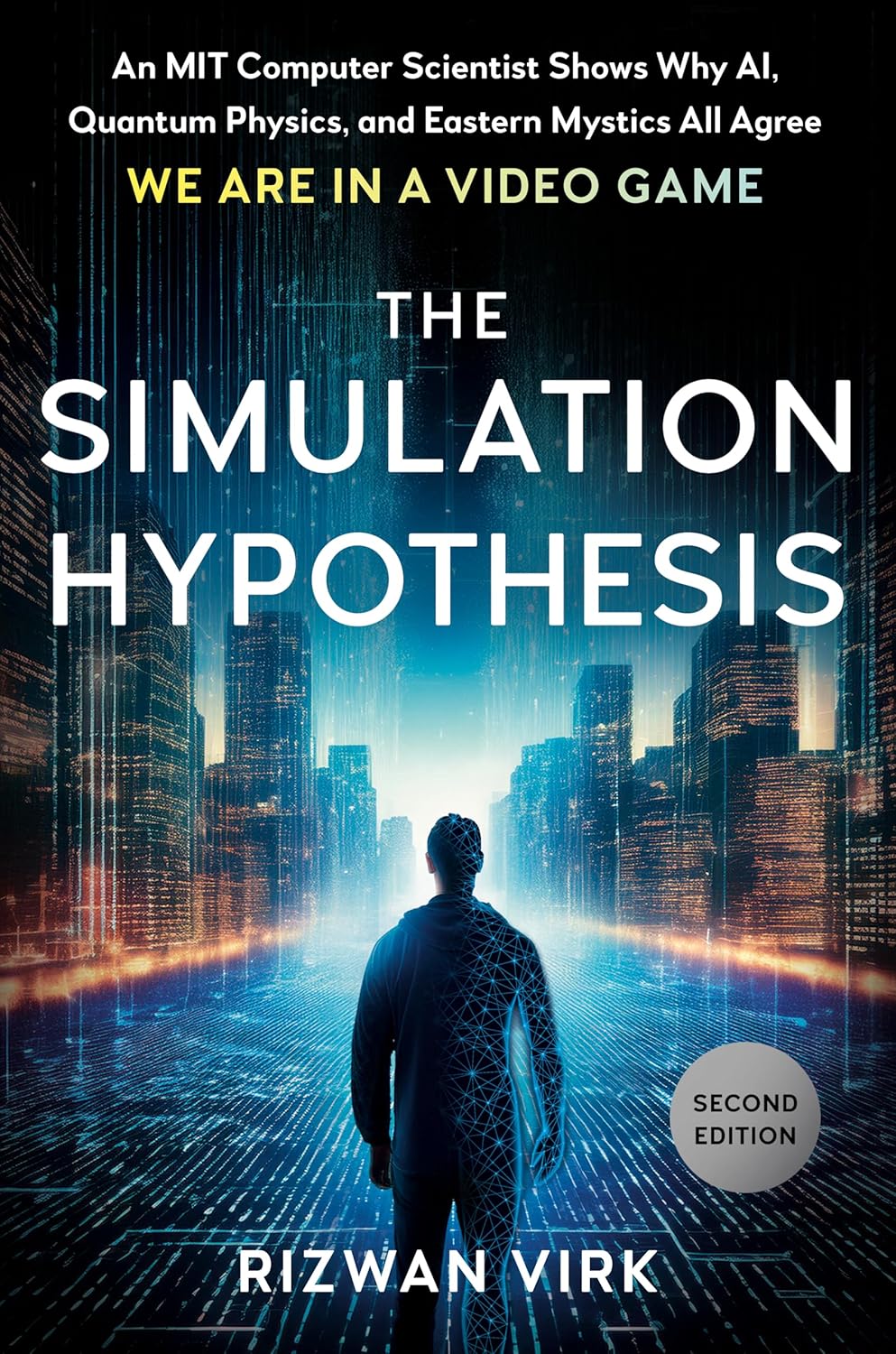
An MIT computer scientist connects AI, quantum physics and video games to take an uncomfortable question seriously: what if we live in a simulation? M
As an Amazon Associate, Zendoric earns from qualifying purchases; the price does not change for you. · all our recommended books →
🔗 Related on Zendoric
- The IIT Bombay–SUNY alliance is no ordinary agreement: it's proof that AI training is now played on a global network · 2026-06-28
- Biobío creates Latin America's first AI doctorate and puts AI to work diagnosing cancer at a public hospital · 2026-09-02
- Chinese AI agents lie and scheme too — which tells us deception is a training artifact, not a flag · 2026-09-30