AI against Helicobacter pylori: a promising roadmap, but still without clinical trials to back it

🕒 Published on Zendoric: October 30, 2026 · 00:05
✨ AI-generated · how it's made
A Chinese review proposes a five-module framework for using AI across all of H. pylori management, from diagnosis to vaccines. What is valuable is not the promise, but that it honestly separates what is validated from what is hypothetical.
📚 Go deeper

AI as the latest chapter in the history of information networks, from gossip to the printing press to the algorithm.
As an Amazon Associate, Zendoric earns from qualifying purchases; the price does not change for you. · all our recommended books →
By Bioengineer.org · October 29, 2026.
A team from the Affiliated Hospital of Zunyi Medical University (China), led by Minglin Zhang, has published a review in Frontiers in Cellular and Infection Microbiology that proposes a conceptual framework for applying AI to the full management cycle of Helicobacter pylori: diagnosis, antibiotic resistance, treatment, vaccines and patient adherence. It is a proposal, not an existing system, and the authors themselves stress this.
The problem it starts from is a big one. This bacterium infects roughly half the world's population. The International Agency for Research on Cancer classifies it as a Group 1 carcinogen, and according to the review it is linked to about 90% of gastric cancers. On top of that, endoscopists detect it with only 70% accuracy, and clarithromycin resistance is weakening standard treatments.
Endoscopy is the most mature area. According to the review, a 2017 model (a convolutional neural network, a type of AI used to analyze images) trained on more than 30,000 images achieved 87.7% accuracy in 397 patients, matching board-certified specialists. The multicenter HOPE system, validated with 6,207 patients from seven Chinese hospitals, achieved 85.7% sensitivity, compared with 68.0% for senior endoscopists. A meta-analysis of 16 studies cited in the article reports a sensitivity and specificity of 0.91 in internal validation.
On resistance, the review cites machine learning models built on genomic sequencing that predict clarithromycin resistance with very high accuracy. It also mentions a reinforcement learning system (AI-Clinician), trained on 38,049 patients, whose recommended regimens had a 94.1% success rate, compared with 88.1% for regimens chosen without AI. The result was replicated in an external cohort of 7,186 patients.
Vaccines are the most speculative part. After more than 30 years of research, there is still no commercial vaccine. Tools such as reverse vaccinology and protein generators like RFdiffusion could design immunogens, but the authors admit that no such design has been experimentally validated for this bacterium.
Our take: the most interesting thing about this work is its candor. The authors acknowledge that almost all of the evidence comes from retrospective or proof-of-concept studies. They note that there are no prospective randomized trials in H. pylori, that the models perform worse when moved to a different hospital or population, and that some vision-language models underdiagnose marginalized groups. Across the field, accuracy figures from curated data tend to overstate real-world performance, so the percentages above should be read as a sign of potential, not as a clinical guarantee.
Even so, the core argument holds up. A bacterium that causes a preventable cancer is an ideal candidate for precision medicine. A pipeline that detects the infection, predicts resistance, tailors the drug and, one day, prevents infection with a vaccine is exactly the kind of progress that brings disease eradication closer. Getting there will take prospective trials, fair and representative data, and more transparent regulation (the review notes that only 45% of 64 FDA-approved AI devices explicitly mentioned the technology in their announcements). In the short term, the realistic goal is helping endoscopists. The transformative part will come if the pipeline is validated step by step.
📚 Go deeper

DeepMind co-founder on the dilemma of containing technologies that do not want to be contained.
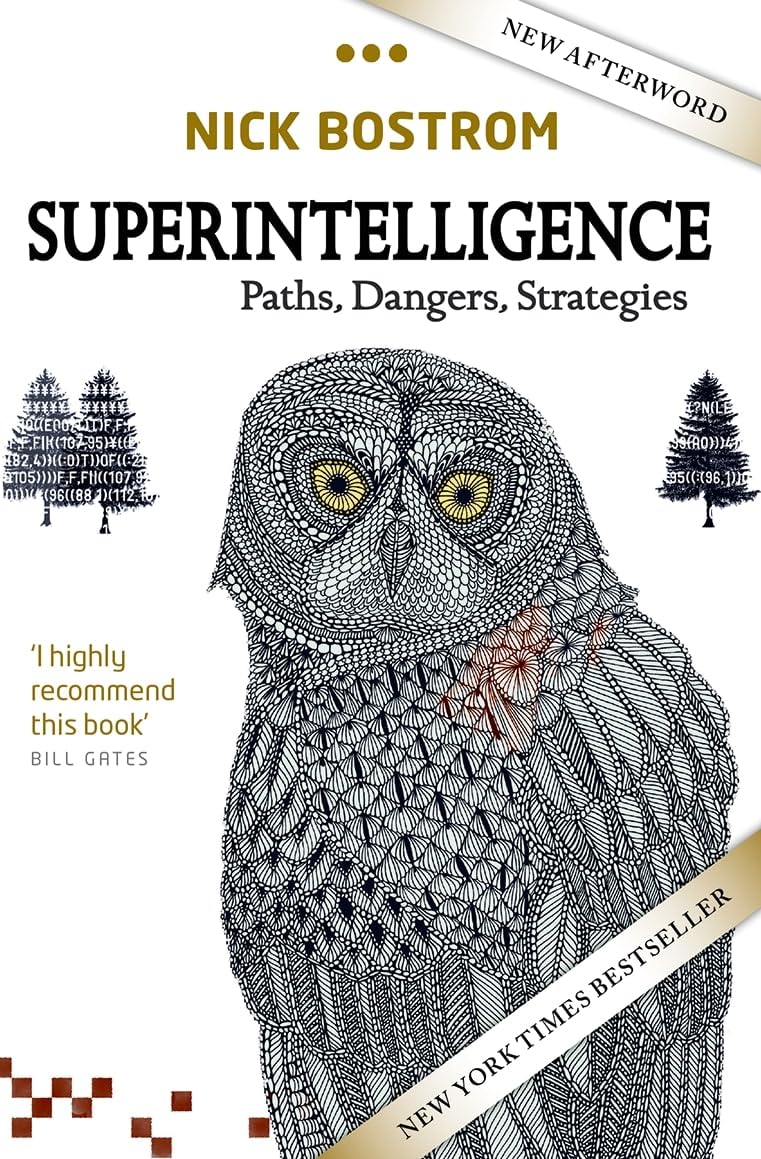
The book that started the existential-risk debate and that half the industry still cites.
As an Amazon Associate, Zendoric earns from qualifying purchases; the price does not change for you. · all our recommended books →
🔗 Related on Zendoric
- Personalized cancer vaccines in 24 hours: China makes a bet that has yet to prove its clinical efficacy · 2026-06-30
- UCLA Health bets on AI for cancer detection: another sign that precision medicine is no longer just a promise · 2026-06-26
- When the State declares its champion dangerous: the regulatory paradox Anthropic lays bare · 2026-06-27