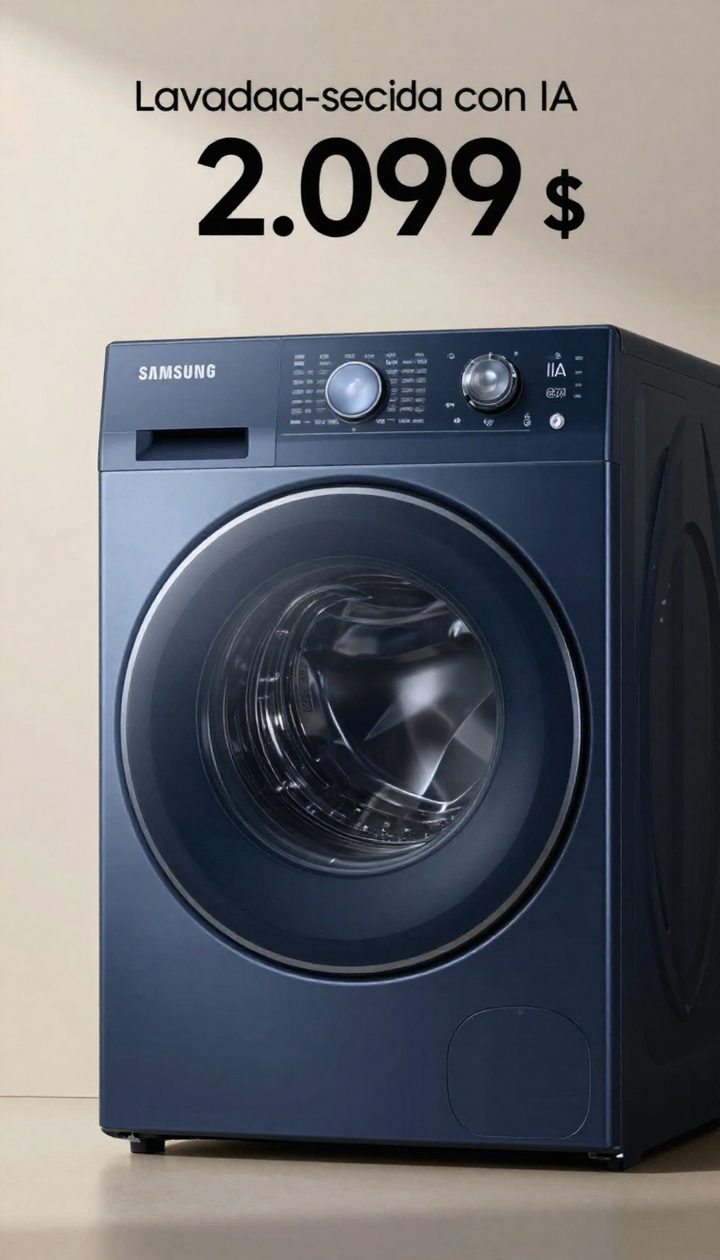
Samsung's AI washer-dryer: the convenience of not moving laundry, at $2,099, but the "AI" is the least of it
🕒 Published on Zendoric: October 30, 2026 · 00:05
✨ AI-generated · how it's made
Apartment Therapy tested both versions of Samsung's Bespoke AI Laundry Combo, vented and ventless. The real advantage is not having to transfer the laundry. The interesting part is how much consumer "AI" is actually sensors and automation.
📚 Go deeper

The definitive piece of investigative journalism on OpenAI: 260+ interviews, the clash between safety and speed, and the attempted firing of Sam Altma
As an Amazon Associate, Zendoric earns from qualifying purchases; the price does not change for you. · all our recommended books →
By Apartment Therapy · October 29, 2026.
Apartment Therapy editor-in-chief Charli Penn tested both versions of the Samsung Bespoke AI Laundry Combo, a 5.3-cubic-foot all-in-one washer-dryer, at home. In her testing, the vented version dried up to an hour faster than the ventless version, though both left clothes completely dry.
The article lists prices of $2,099 for the vented version and $2,299 for the ventless one. The practical difference comes down to installation: the vented model requires a 240 V outlet and an external exhaust duct (the author had to call an electrician), while the ventless model runs on 120 V with no duct, at the cost of slower drying.
In her tests, typical wash-and-dry cycles took under two and a half hours. Samsung advertises cycles of 68 minutes (vented) and 98 minutes (ventless), but the author herself notes that these figures apply to specific test loads and settings, not to real full loads.
The "AI" part comes down to three things: the AI OptiWash & Dry cycle, which Samsung says uses sensors to determine the settings for each load; the automatic detergent dispenser (half a bottle lasted her more than a month); and SmartThings app notifications, which let users pause before drying. It is worth remembering that this is a review by a single user, with no independent measurements of energy use, water use or wear on clothing.
Our take: what wins the author over is not the intelligence but the removal of a human step: remembering to move the laundry. It is a good example of how AI is arriving in the home: not as a brilliant assistant, but as small automations that remove friction. And the "AI" label on home appliances is still largely marketing: sensors and rules that already existed, now with a fashionable name. Without efficiency data, the proven value is convenience.
More broadly, this is the domestic version of our underlying thesis: in the short term, consumer AI is a sum of small conveniences and more connected devices (with their attendant privacy concerns and app dependence). In the long term, the same logic of automating the routine is what could free up human time at scale. A forgotten load of laundry is a minor problem, but the principle is the same.
The review's practical recommendation is sensible: choose based on each home's setup and how much drying speed matters. If a 240 V outlet and duct are already in place, go vented; if not, the ventless still spares you the transfer from washer to dryer.
📚 Go deeper

AI as the latest chapter in the history of information networks, from gossip to the printing press to the algorithm.

DeepMind co-founder on the dilemma of containing technologies that do not want to be contained.
As an Amazon Associate, Zendoric earns from qualifying purchases; the price does not change for you. · all our recommended books →
🔗 Related on Zendoric
- Eight States Sue OpenAI: Consumer Protection Law Is Becoming America's De Facto AI Regulator · 2026-10-17
- AI as the modern Cyrano: a useful crutch that risks hollowing out the very intimacy it promises · 2026-06-25
- AI Traffic Cameras That Watch More Than Traffic: When Convenience Quietly Becomes Surveillance · 2026-06-28