Elvis estate sues Anthropic over 274 songs, and individual artists now become the new front in AI copyright
🕒 Published on Zendoric: October 25, 2026 · 00:08
✨ AI-generated · how it's made
Authentic Brands Group and the Presley family accuse Anthropic of training its AI on 274 copyrighted Elvis songs without permission. Their lawyer calls it infringement 'at a scale never seen before.' Lawsuits from record labels have usually ended in settlements and licensing deals. A case brought for a single artist could change who sits at the negotiating table.
📚 Go deeper

The definitive piece of investigative journalism on OpenAI: 260+ interviews, the clash between safety and speed, and the attempted firing of Sam Altma
As an Amazon Associate, Zendoric earns from qualifying purchases; the price does not change for you. · all our recommended books →
The Elvis Presley estate is taking Anthropic to court. According to Billboard, as cited by VICE, Authentic Brands Group and the Presley family filed a lawsuit accusing Anthropic of using 274 copyrighted Elvis songs, including 'Can't Help Falling in Love', without permission to train its artificial intelligence. Lead attorney Richard Busch went further and claimed that Anthropic built its entire empire 'based on copyright infringement at a scale never seen before.' These are allegations from the plaintiffs. The available material includes no response from Anthropic, and no court has ruled.
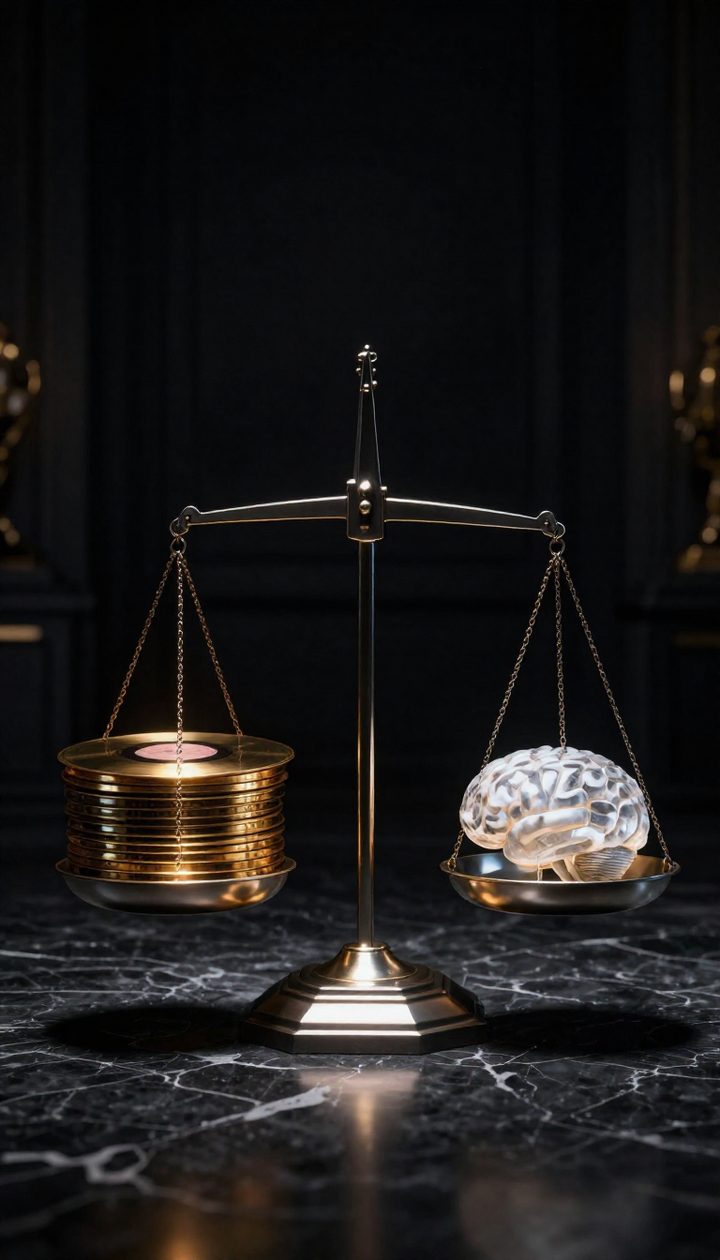
The context explains why the case matters. Record labels have sued AI companies over their catalogs before. As VICE notes, those disputes usually end the same way: a settlement, then a quiet commercial partnership that turns the 'back door' into a licensed front door. What Billboard highlights here is the plaintiff. A lawsuit on behalf of one artist, rather than a label, could set a major precedent for the rest of the music industry. Hundreds of estates and individual rights holders now have a model for going to court on their own.
The case also arrives at a sensitive time for Anthropic. We have argued that if Anthropic goes public, its decisions stop being only doctrine and become material financial risk. Copyright is the clearest example. A lawsuit like this one hits the base layer of the business: the data the models were built on. And it is unlikely to be the last. The industry is also seeing disputes over likeness and consent, not just catalogs. VICE recalls a case from this year. Suno ran an ad featuring Mary J. Blige that, according to the reporting, she never approved. The company says it dealt with someone posing as her representative, and it pulled the ad when it learned she wanted nothing to do with it.
Our reading: this lawsuit won't stop AI, and it shouldn't. But it does push toward something the sector has avoided: putting a price on what it used for training. The legal question of whether training on protected works is fair use (the US doctrine that allows limited use without permission) is still open, and that uncertainty works against everyone. Creators don't get paid. Labs carry contingent liabilities they can't size. Investors buy risk they can't see. Each settlement with a big label solves one problem and leaves the rest of the market without rules.
Our long-term optimism needs a fair foundation. AI that amplifies creativity, helps restore archives and opens new forms of musical expression is a promising part of the abundance we expect. It won't be legitimate if it rests on the sense that it took others' work without asking. The way forward is neither litigating forever nor ignoring the problem. It is licensing standards, transparency about training data and fair payment to the people who created the material. A case brought on behalf of a single artist, if it gets far enough, could be the push the industry needs to build that system before the courts impose one.
📚 Go deeper

DeepMind co-founder on the dilemma of containing technologies that do not want to be contained.

AI as the latest chapter in the history of information networks, from gossip to the printing press to the algorithm.
As an Amazon Associate, Zendoric earns from qualifying purchases; the price does not change for you. · all our recommended books →
🔗 Related on Zendoric
- Elvis estate sues Anthropic over 274 songs, testing whether one artist can make AI training costly · 2026-10-24
- DARPA's 100,000-agent swarm bets on decentralized AI — the hard problem is control, not scale · 2026-07-17
- $1.5 billion: judge approves the largest copyright settlement of the AI era with Anthropic · 2026-07-21