OpenAI launches the Decisions API: faster, cheaper bounded decisions for apps and agents

🕒 Published on Zendoric: October 24, 2026 · 00:20
✨ AI-generated · how it's made
OpenAI has announced general availability of the Decisions API, a dedicated endpoint built with GPT-6 Luna. It is designed for the small decisions that apps and agents make constantly within a workflow: classifying an input, deciding where to route a request or choosing the next…
📚 Go deeper

The definitive piece of investigative journalism on OpenAI: 260+ interviews, the clash between safety and speed, and the attempted firing of Sam Altma
As an Amazon Associate, Zendoric earns from qualifying purchases; the price does not change for you. · all our recommended books →
OpenAI has announced the general availability of the Decisions API, a dedicated endpoint built with GPT-6 Luna. It is designed for the small decisions that apps and agents constantly make within a workflow: classifying an input, deciding where to route a request or choosing the next action. Each one is simple, but at scale their latency and cost add up. OpenAI's pitch is to focus Luna's intelligence on questions with bounded answers and deliver near-real-time decisions from text, images and structured inputs.
According to the company, the API is up to 10 times faster than using GPT-6 Luna through the Responses API. Several new features have been added since the public beta: native integration with GPT-Live, prompt caching for reused context, and inference residency in the US and the EU. Developers can also pass native JSON inputs, include images in question instructions and ask up to 400 questions per request, double the previous limit. OpenAI also says it has kept improving latency, with additional capacity in several regions of Asia.
How it works: the developer defines a question and its allowed answers, and supplies context as text, images or native JSON. The API returns one of three response types. The first is 'predicate', a probability from 0 to 1 that a condition is met, for example whether a product has visible damage. The second is 'choice', which selects one of the predefined options, such as continue, retry or ask for clarification. Along with the chosen option, it returns probabilities and a confidence value. The third is 'score', which rates an input against ordered levels of a rubric, for example the severity of damage. The result is the probability-weighted average of the level indices.
Internal uses at OpenAI: the dots team uses it to cut response times and improve interactivity. The Personal Finance team categorizes transaction descriptions. The Communications team classifies press coverage by topic and scores whether it reinforces or challenges key narratives, to identify what deserves a closer look.
Customer testimonials, all cited by OpenAI and based on each company's own evaluations:
• Box: in an evaluation with 30 insurance certificate cases, route selection was about 5 times faster than with the Responses API, with the same accuracy. The lowest-confidence cases are sent to reviewers.
• Datadog: uses it to score the risk of agent-generated rshell commands before executing them and to remediate incidents autonomously. It reports a p95 40 times faster than with available frontier models, with comparable accuracy, allowing decisions to sit on the critical path of a remediation action.
• Ramp: attributing AI costs to actual work is 4 times faster and 30% cheaper than with GPT-6 Luna, with no loss of accuracy.
• Sierra: uses it to choose the next action in live customer conversations. It runs under 280 ms at p95, about 3 times faster and at 90% lower cost per call than its previous approach, with no drop in customer outcomes.
• Speak: with the GPT-Live integration, time to next action fell by more than 90%, from 1.4 s to 0.13 s, for a more interactive language-learning experience.
Voice integration: the Decisions API integrates natively with GPT-Live, which brings natural, expressive conversation to voice apps, with smooth handling of interruptions. A customer service agent could decide whether to ask a clarifying question, route the request or escalate an issue. An avatar could adjust its facial expression while the user is speaking. OpenAI's example adds a 'decisions' trigger in session.triggers of a GPT-Live session, tied to the session.input_transcript.delta event. It defines a 'choice' question with the reactions neutral, happy, sad and concerned. GPT-Live emits a decision.event and the app reads the chosen reaction to animate the character. The page also includes a time-limited interactive demo.
Pricing and availability: the API is available today with GPT-6 Luna through the dedicated Decisions endpoint. It costs $0.10 per million input tokens, and $0.01 per million for cached input. Only input tokens are billed: there is no charge for output tokens. Regional processing is available in the US and the EU, as is Zero Data Retention for eligible customers. Pricing for 30-minute and 12-hour cache writes is detailed in OpenAI's pricing guide.
Getting started: OpenAI recommends starting with a recurring decision the app makes often. You need to define the question, the possible answers and the context required to tell them apart. Then it's worth testing it with real examples, in the Decisions Playground with your own text or images, or by following the developer guide.
Bottom line: the performance figures come from OpenAI and its customers, not from independent evaluations. The comparisons use different baselines: the Responses API, GPT-6 Luna, frontier models or each company's previous approach. Even so, the message is clear. For bounded decisions on the critical path of agents and live conversations, OpenAI offers a specialized alternative with lower latency and a very low price, focused on input and with no charge for output.
📚 Go deeper

The reference manual for building products on top of AI models: prompts, RAG, fine-tuning, agents, evaluation and deployment.
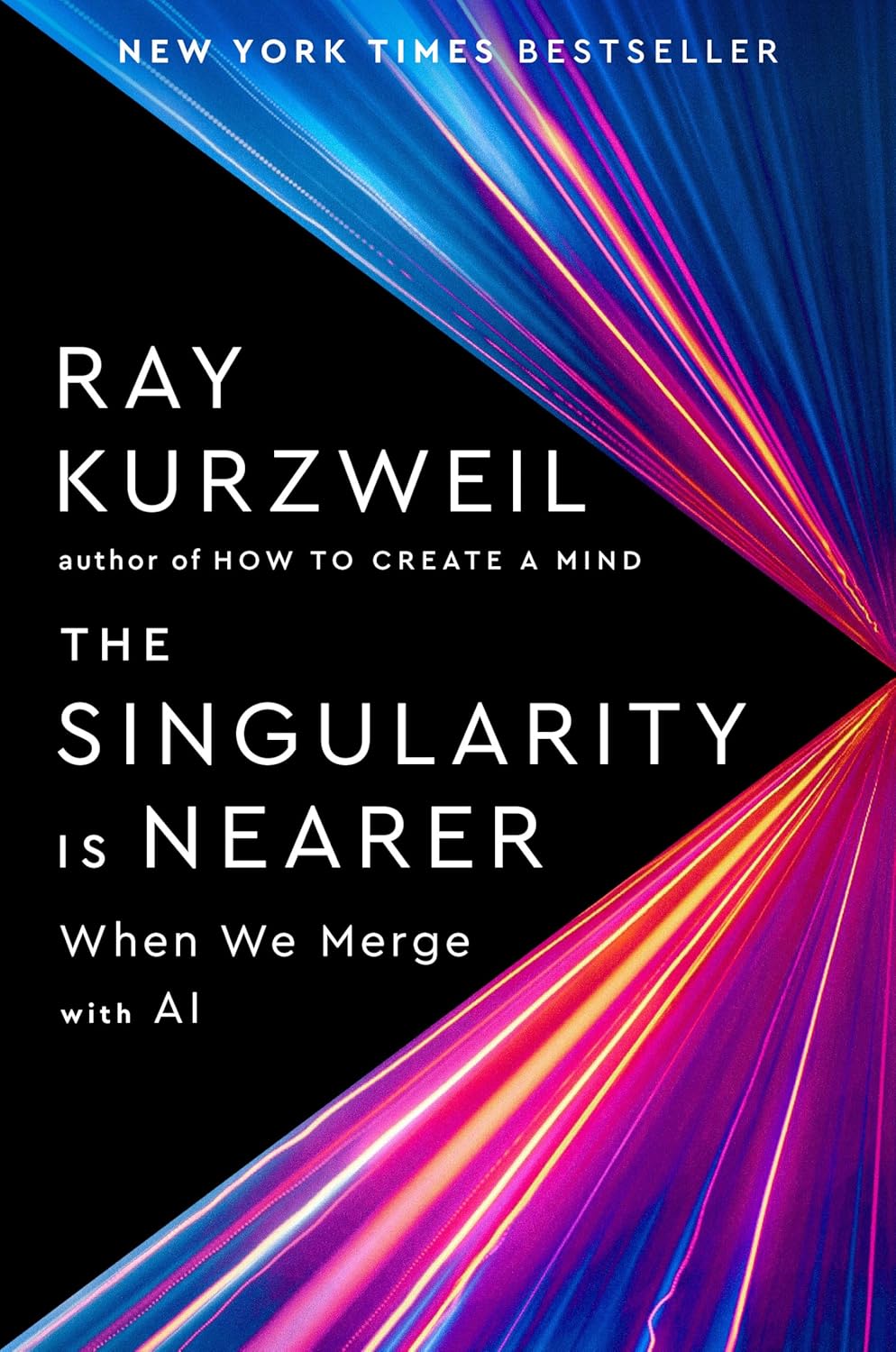
Twenty years after "The Singularity Is Near", Kurzweil revisits his predictions and keeps the date: human-AI merger around 2045.
As an Amazon Associate, Zendoric earns from qualifying purchases; the price does not change for you. · all our recommended books →
🔗 Related on Zendoric
- OpenAI launches GPT-5.6: the Sol, Terra and Luna family bets on efficiency and performance per dollar · 2026-07-11
- OpenAI's Decisions API: betting on agents that decide more cheaply, not necessarily more smartly · 2026-10-01
- Claude Science and NVIDIA bring AI agents into the lab: traceability as a maturity test · 2026-07-02