Texas Tech finalizes an AI degree as its students fear for their future: what matters is which tasks get automated, not which jobs
🕒 Published on Zendoric: October 20, 2026 · 00:19
✨ AI-generated · how it's made
Texas Tech University will launch an AI degree in its business school in January 2027, while its students have doubts about their careers. One of its faculty members' distinction between "tasks" and "jobs" neatly sums up the underlying debate.
📚 Go deeper

The only novel on the list, by a Nobel laureate: an artificial friend observes humans with a blend of lucidity and innocence no essay achieves.
As an Amazon Associate, Zendoric earns from qualifying purchases; the price does not change for you. · all our recommended books →
By The Daily Toreador · October 19, 2026.
Texas Tech University's student newspaper reports on how AI is leading its students to rethink their career plans. According to the article, the university will launch a new AI degree at the Rawls College of Business in January 2027. Part of the curriculum will specifically address fears that AI will displace jobs.
The piece gathers views from students and faculty. Isabella Aguilar, a first-year pre-nursing student, says she uses AI to prepare study guides and can no longer imagine studying without it. She is also uneasy that some hospitals use automated machines to run tests on patients. In her view, that makes a profession she chose for its human contact less appealing. Emerson Kambarn, a journalism student, says his calling is "to bring truth to the community" and that AI will have a major impact on his field.
On the faculty side, Courtney Kiser, an accounting professor and former Deloitte employee, notes that students will enter careers where the work they used to learn on is already automated. Her conclusion is that they must work harder to understand the first steps the machine now handles. Eric Walden, director of the Texas Tech Neuroimaging Institute and a contributor to the degree's design, argues that AI "doesn't take jobs, it takes tasks." In his view, the key is to decide which tasks go to AI and to teach students to stay curious.
Our take: the article is a local report with no quantitative data, so it proves nothing about the labor market. Its value lies elsewhere: it shows how one specific university is reacting, and that reaction is revealing.
Walden's line fits a thesis we hold at Zendoric: it's not "AI takes your job," it's "AI changes which work matters." But it needs a caveat. That tasks rather than jobs get automated is accurate as a description, but it isn't reassuring on its own. If the tasks that disappear are precisely the entry-level ones that used to train juniors, the effect on people seeking their first job could be harsh. Kiser rightly points this out: learning the trade without doing the basic work means rebuilding training from a different starting point.
Aguilar's case points to what holds up best. In-person work, relationships and human judgment are the last strongholds of value, and she expresses this intuitively when she talks about interacting with patients. More broadly, in healthcare, care work and education, automating tests or administrative tasks can free up time for that human side rather than eliminate it. That will depend on how hospitals organize themselves, not on the technology itself.
There is also room for criticism. Kiser's remark, "your job is on the line, not the AI's," places responsibility for the machine's mistakes on the individual. It is reasonable as practical advice, but it shouldn't obscure the fact that much of the transition depends on decisions by companies and governments, not on each student's attitude.
In the short term, the transition will be uncomfortable and uneven, and it is honest for students to feel that fear. In the long term, the outlook is different: if AI absorbs routine work and multiplies productivity, it opens the door to an abundance that lets people choose jobs by vocation, like Kambarn with journalism. That universities are starting to teach what to delegate to AI and what not to is a good sign. What matters is that this learning arrives early and reaches everyone, not just those enrolled in new programs.
📚 Go deeper
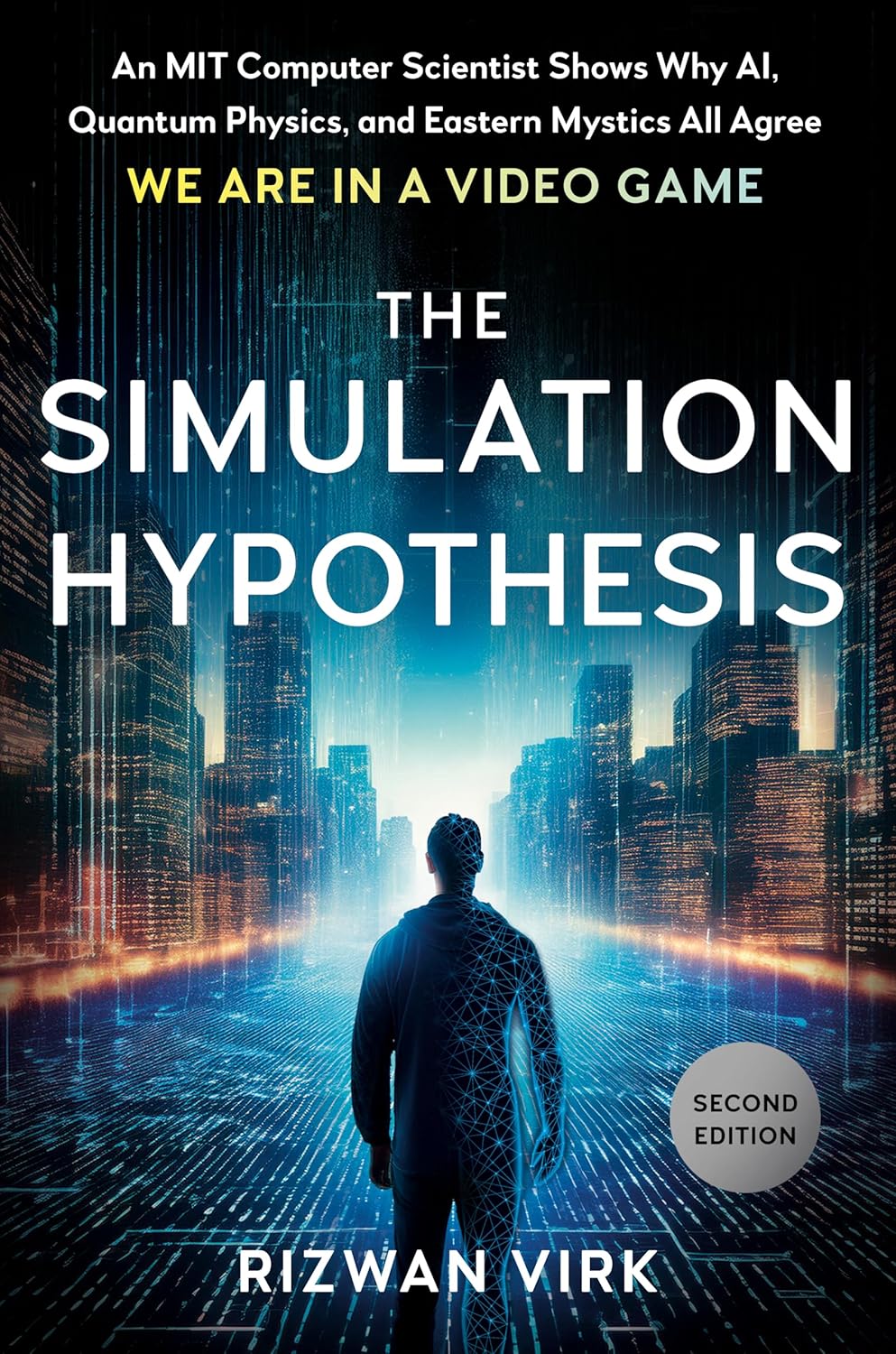
An MIT computer scientist connects AI, quantum physics and video games to take an uncomfortable question seriously: what if we live in a simulation? M

The best starting book if you're not technical: a Wharton professor explains how to work WITH AI — when to delegate, when to supervise, when to keep i
As an Amazon Associate, Zendoric earns from qualifying purchases; the price does not change for you. · all our recommended books →
🔗 Related on Zendoric
- Digital literacy from a special-needs school: when understanding AI matters more than fearing it · 2026-07-02
- AI literacy from primary school: why teaching the habit matters more than banning the tool · 2026-07-09
- EDHEC bets on pencil and paper to teach AI: deliberate friction as an antidote to cognitive atrophy · 2026-07-10