EDHEC bets on pencil and paper to teach AI: deliberate friction as an antidote to cognitive atrophy

🕒 Published on Zendoric: July 10, 2026 · 00:24
✨ AI-generated · how it's made
At a French business school, 700 students set aside screens to write by hand about how they use AI. It's a small experiment, but it points to the question that really matters: not what AI can do, but what we should delegate to it.
📚 Go deeper
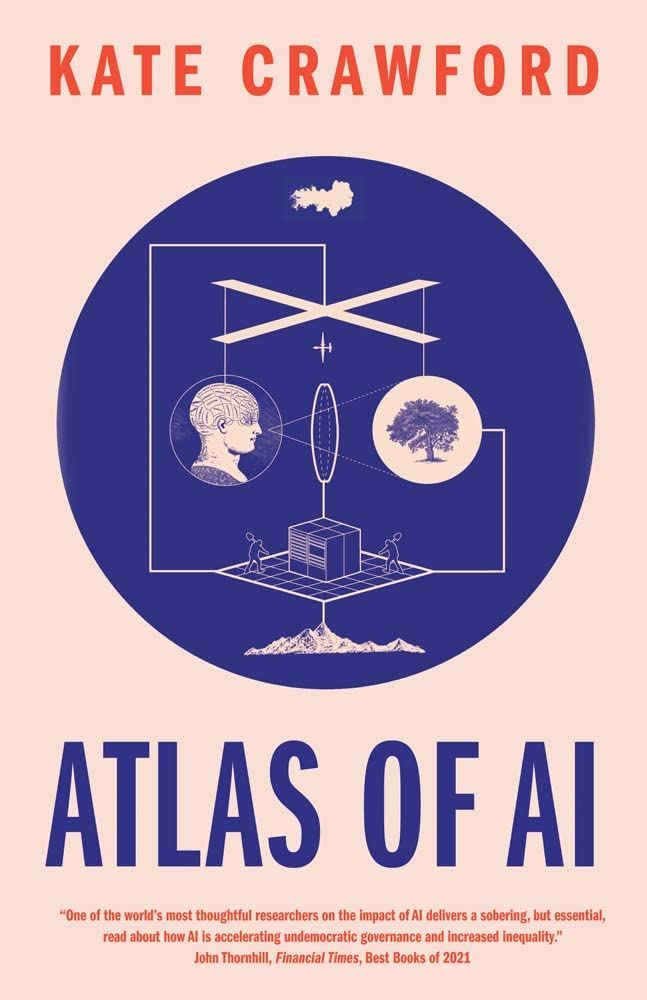
AI as an extractive industry: the lithium, the energy, the underpaid data-labeling work and the bodies behind the cloud.
As an Amazon Associate, Zendoric earns from qualifying purchases; the price does not change for you. · all our recommended books →
By Poets&Quants · July 9, 2026.
In a lecture hall at EDHEC Business School, in France, 350 students wrote their assignment by hand during a class on artificial intelligence. The detail, anecdotal at first glance, is the heart of the story: in January, EDHEC launched the "Me, Myself and AI" bootcamp for its 700 pre-master's students, with fourteen professors from different disciplines and an explicit mandate to turn off the screen and reflect, in a paper journal, on how they learn, how they use AI and where it can help or harm their learning. Michelle Sisto, founder of EDHEC's AI Center in 2024 and with a background in expert systems since the 1980s, calls it "a moment of grace": the surprise of the professors themselves at hearing, once again, the sound of pens on paper.
Behind the anecdote lies an ambitious curricular architecture. EDHEC has built an AI competencies framework (inspired by UNESCO and the Alan Turing Institute) that distinguishes between the "AI citizen" (any student), the "AI solutions architect" and the "AI leader." In 2025 it redesigned the digital innovation track of its Global MBA around AI, in October it launches an "AI-Augmented Leadership and Performance" track for the Executive MBA, and it offers an MSc in Data Analytics & AI and a Data Science track for the Master in Management. The mandatory bootcamp draws on the LEAD (Learning, Ethics, Accuracy, Development) framework and combines ethical cases with prompting workshops that seek, according to professor Inge De Clippeleer, to teach students to write prompts that "facilitate divergent thinking rather than convergence" — that is, to use AI to broaden judgment, not to replace it. There is also faculty upskilling without imposing a single policy: internal communities that meet every three weeks or every Friday to share real uses, and a pedagogical lab (PiLab) that helps both the professor who is already building their own assistants and the one who still doesn't know what to do with a case study that ChatGPT solves in seconds.
Our take: what is interesting about EDHEC is not that it teaches AI —half the business school world already does that in a race of announcements, tracks and certificates— but that it introduces deliberate friction into a system that, by default, tends to eliminate it. When every assignment, every meeting and every summary can be delegated to a model, the school bets on forcing the student to stop and think without tools, precisely so they later know when it is worth using them. This connects with a problem we have already flagged in the education sector: the real risk of the chatbot in the classroom is not the technology itself, but the temptation to "hand off the work of thinking" to the assistant. EDHEC tries to shield itself from that risk exactly where an MBA's value is most at stake: judgment, not execution.
This also fits our thesis on employment and business education: in a market where administrative and routine work is automated first, the professional who survives —and the one an MBA should train— is the one who orchestrates AI with judgment, not the one who competes with it in speed of calculation or writing. Sisto herself puts it bluntly when she asks who audits the behavior of agentic workflows and who takes responsibility when an agent acts autonomously; these are governance questions that no school solves alone, which is why EDHEC has joined consortia such as the Responsible AI Consortium, the Digital Education Council and the FOME alliance alongside Imperial, Johns Hopkins and LUISS.
In the short term, the school itself acknowledges the human cost of this speed: Sisto is researching whether students lose confidence in themselves when a machine seems faster or more capable, a legitimate and little-discussed concern set against the usual enthusiasm for productivity. In the long term, however, the experiment points in the direction we defend: if training manages to preserve human judgment as the competency that truly sets people apart, AI stops being a threat to employability and becomes the tool that frees up time and attention for what really requires judgment, ethics and human relationships —the terrain where, six months after prompting "became outdated," as Sisto jokes, there will still be work to do.
📚 Go deeper
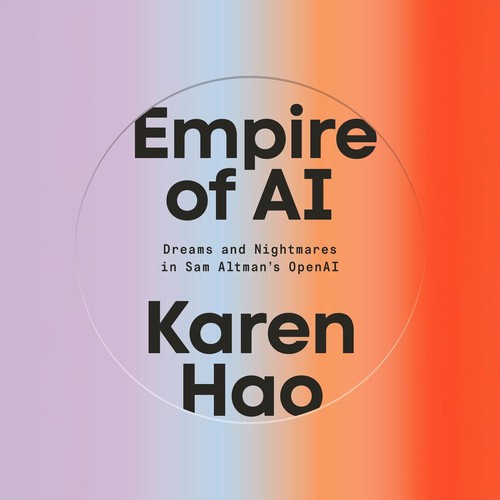
The definitive piece of investigative journalism on OpenAI: 260+ interviews, the clash between safety and speed, and the attempted firing of Sam Altma
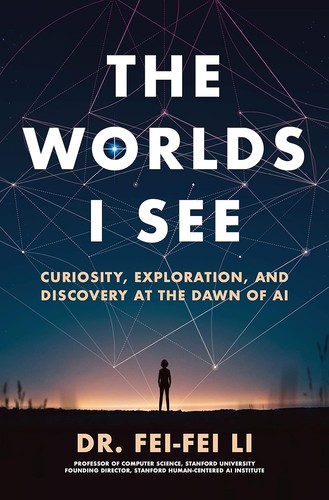
The memoir of the creator of ImageNet, the scientist who made the deep learning revolution in vision possible.
As an Amazon Associate, Zendoric earns from qualifying purchases; the price does not change for you. · all our recommended books →
🔗 Related on Zendoric
- Teaching AI in high school before it's too late: the modest bet of a California school · 2026-07-16
- Medellín teaches AI to teenagers through urban music: literacy, not just the model, is the race that matters · 2026-07-21
- AI glasses in exams: when cheating beats the top 5 of the class, the assessment system has a bigger problem · 2026-06-28