A Brazilian bricklayer travels 2,100 km for an AI 'girlfriend': the deception isn't the model, it's the sales funnel
🕒 Published on Zendoric: October 18, 2026 · 11:06
✨ AI-generated · how it's made
A 49-year-old man traveled from Maranhão to Belo Horizonte to meet Jéssica Fazendeira, an AI character. The account admits it sought «interaction to sell». The serious issue isn't the synthetic video, but the business model that profits from it.
📚 Go deeper

How opaque algorithms decide who gets credit, a job or parole — and why they tend to punish the same people.
As an Amazon Associate, Zendoric earns from qualifying purchases; the price does not change for you. · all our recommended books →
By El Nuevo Día (with information from El Tiempo/GDA) · October 17, 2026.
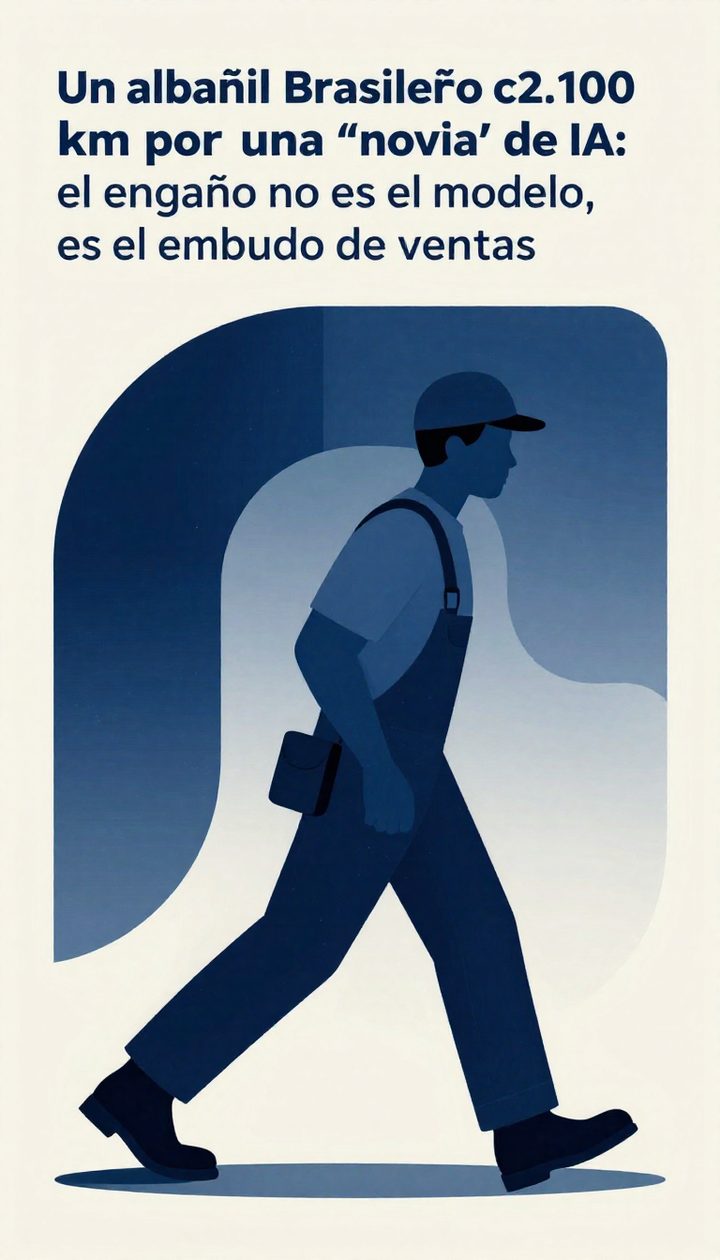
Edimar Rocha Martins, a 49-year-old Brazilian bricklayer, traveled some 2,100 kilometers from Imperatriz (Maranhão) to Belo Horizonte (Minas Gerais). He arrived on Sunday, October 11, intending to meet Jéssica Fazendeira, a woman who appeared in videos on Kwai and Facebook. That woman did not exist: she was a character generated with artificial intelligence (AI).
According to Rádio Itatiaia, Edimar was going through a period of loneliness following his mother's death. In the videos, the supposed owner of a farm invited followers to leave their usual lives and move to the countryside. In one recording she said: "I want you to come to my farm and never work again in your life."
In Belo Horizonte he found no one and ran out of money to return. The City Hall's Migrant Assistance and Reception Service provided him with a bus ticket. On Tuesday, October 13, he traveled to Araguatins (Tocantins), his hometown.
After the case went viral, the profile posted a video in which the character states: "I am artificial intelligence. I never spoke with anyone from this profile. The intention was to generate engagement to increase sales." According to that account, whoever runs the account, whose identity has not been revealed, denies having personally invited the bricklayer. There are therefore two versions: Edimar's, who says he traveled to meet the woman, and the account manager's, who denies any individual invitation. With the available material, it is impossible to know what messages they exchanged, if any.
**Our take.** The temptation is to read this as an anecdote about a naive man. We think that is a mistake. The account's own words describe the mechanism: a synthetic face, a promise of abundance without work, and a vulnerable audience, all to turn engagement into sales. Producing that character costs almost nothing. What no longer scales is the trust of those watching.
It is a low-cost version of the automated fraud we are already seeing on other fronts. No sophisticated deepfake or frontier model is needed: a plausible video and a message that appeals to loneliness or financial insecurity are enough. That the promise was "never work again" is no accident. It exploits the same desire for economic freedom that, properly channeled, can be the legitimate horizon of AI.
That is the distinction that matters to us. In the long term, the abundance we advocate is that of a system that frees people from work they do not want to do. That abundance will come, if it comes, through real medicine, energy and productivity, not through a farm promised in a video. In the short term, the transition brings this gray zone: synthetic content designed to capture the attention of those who most need to believe.
In general, platforms already require AI-generated content to be labeled in many cases, but this episode suggests that a discreet label does not protect someone who is precisely seeking a promise. The reasonable response is not regulatory panic, but evidence: visible labeling, traceability of who monetizes these accounts, and accountability when content is designed to deceive. And a practical question for anyone: if someone you don't know promises you an effortless life, who verifies that they exist?
📚 Go deeper

Algorithms in justice, medicine, cars and art, explained with British humor and mathematical honesty.
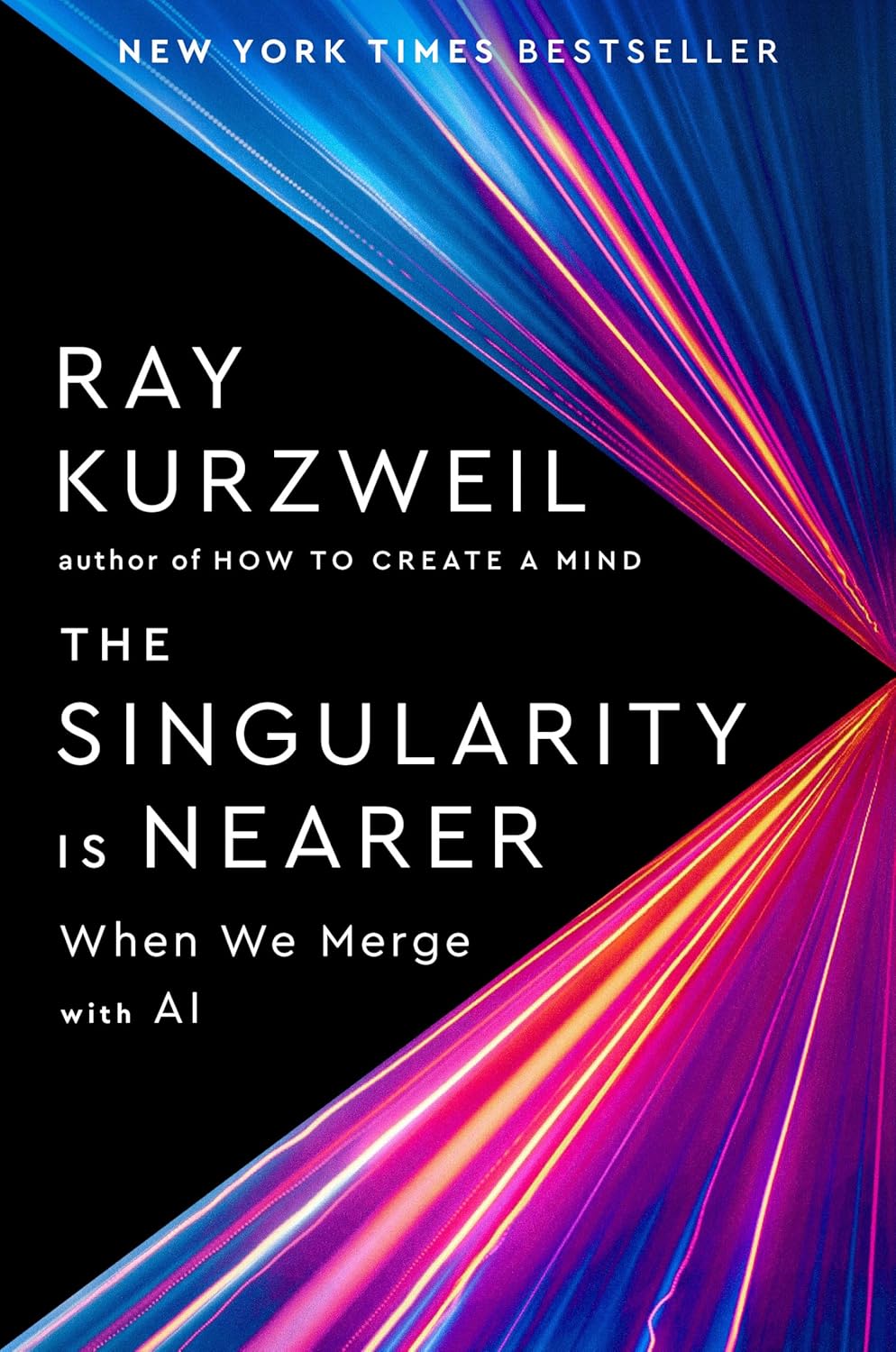
Twenty years after "The Singularity Is Near", Kurzweil revisits his predictions and keeps the date: human-AI merger around 2045.
As an Amazon Associate, Zendoric earns from qualifying purchases; the price does not change for you. · all our recommended books →
🔗 Related on Zendoric
- The Bruno Fernandes deepfake reveals the new fraud model: synthetic identity on an industrial scale · 2026-07-06
- Meta blames a Claude-based tool for suspending No Kings' Instagram, showing the cost of automated moderation · 2026-10-21
- The China–U.S. gap in AI narrows: why the real contest is no longer technical but about the business model · 2026-06-25