The China–U.S. gap in AI narrows: why the real contest is no longer technical but about the business model

🕒 Published on Zendoric: June 25, 2026 · 09:00
✨ AI-generated · how it's made
The Economist suggests the U.S. lead in artificial intelligence could be the narrowest in more than a year, spurred by a new Chinese model. With the memory of DeepSeek R1 still fresh, the relevant question is not who has the best benchmark, but who sustains a profitable business when the frontier becomes nearly free.
📚 Go deeper
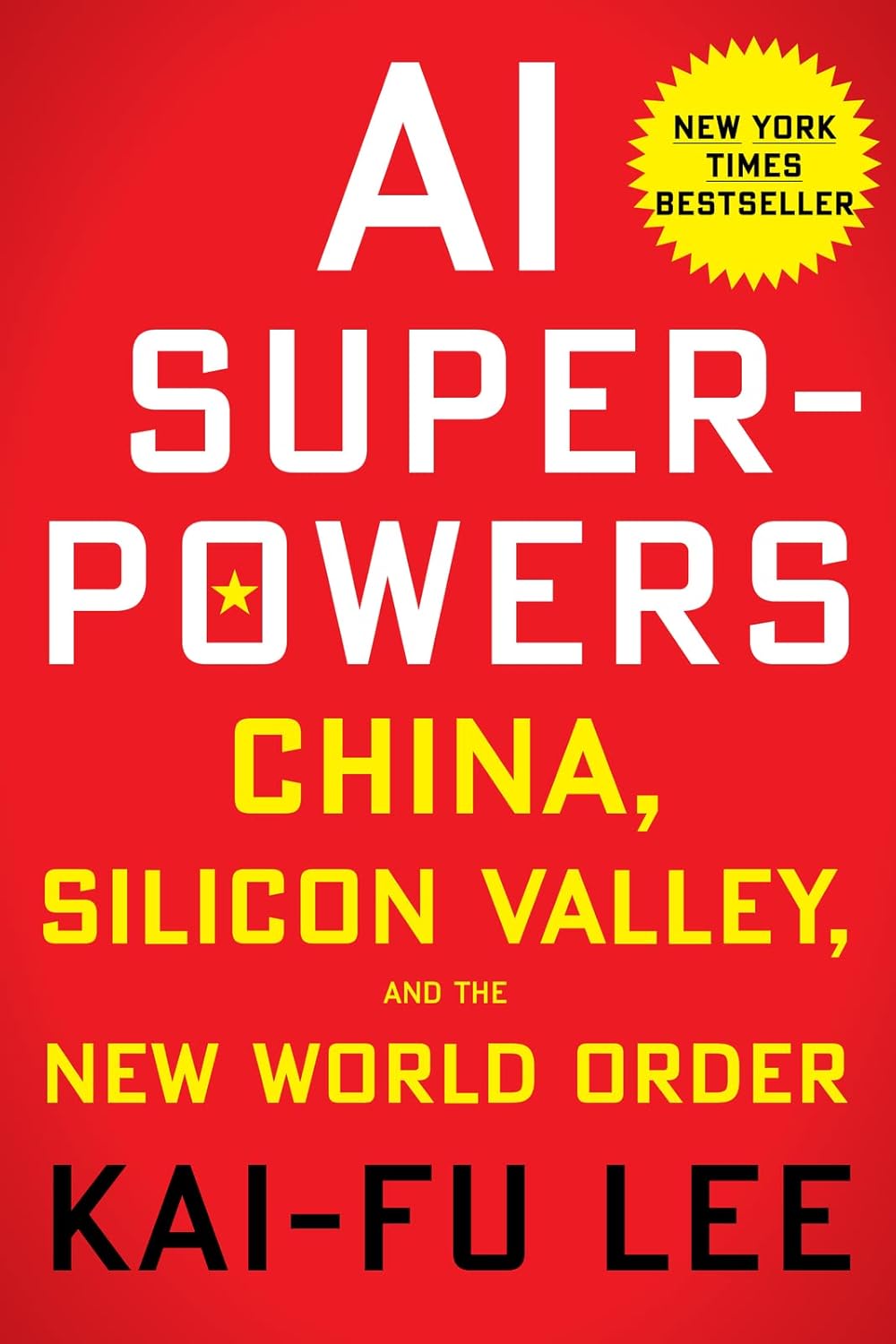
China vs.
As an Amazon Associate, Zendoric earns from qualifying purchases; the price does not change for you. · all our recommended books →
The thesis put forward by The Economist in its article of 21 June 2026 —only the introductory paragraph of which could be accessed, since the rest remains behind a paywall— is striking more for what it suggests than for what it spells out: the United States' lead over China in artificial intelligence would be at its narrowest in more than a year, driven by the release of a new Chinese model whose name does not appear in the available excerpt. This limitation is worth underscoring: there are no verifiable benchmarks, model name or market reaction in the accessible text, so any reading must stay in the realm of analysis rather than firm assertion.
The only precedent the publication mentions in the visible portion does, however, serve as a compass. According to the article itself, the launch of DeepSeek R1 in January 2025 'wiped a trillion dollars off US capital markets', with Nvidia momentarily losing 17% of its value and the Nasdaq falling 3.1% in a single session. What is interesting is the diagnosis that accompanies those figures: investors' unease stemmed not only from the model's technical quality, but from the fact that it was distributed for free. Therein lies the nerve of this entire conversation.
Because the underlying question has ceased to be purely a matter of engineering. If a competitive model can be offered at no cost, the challenge for Western labs is not so much to stay ahead on an evaluation table —an advantage that, as the narrative itself shows, erodes within months— as to prove that AI can be, at once, revolutionary and profitable. The text recalls precisely that global stock-market valuations have come to depend increasingly on that twofold promise. When the technological frontier is democratized so quickly, value migrates toward other layers: distribution, integration into products, inference efficiency, trust and regulatory compliance.
Read in a positive light, a second Chinese 'AI moment' in 2026 would not have to be interpreted as a threat, but as a sign of the global ecosystem's maturity. Open and, in part, free competition speeds up access to powerful tools, pushes prices down and forces every player to justify its value proposition with something more than raw power. For companies and developers, a world with several poles of innovation and increasingly affordable models is, quite simply, a world with more options.
The obligatory caution remains: without access to the full content, it is not possible to gauge the real magnitude of the Chinese advance or the market's response, and it is prudent not to extrapolate from a 2025 episode what will happen in 2026. What this excerpt does allow us to anticipate is where the decisive battle of the coming months will be fought. It will not be only about who trains the best model, but who turns that capability into a sustainable business when intelligence, once again, threatens to become an almost free commodity.
📚 Go deeper
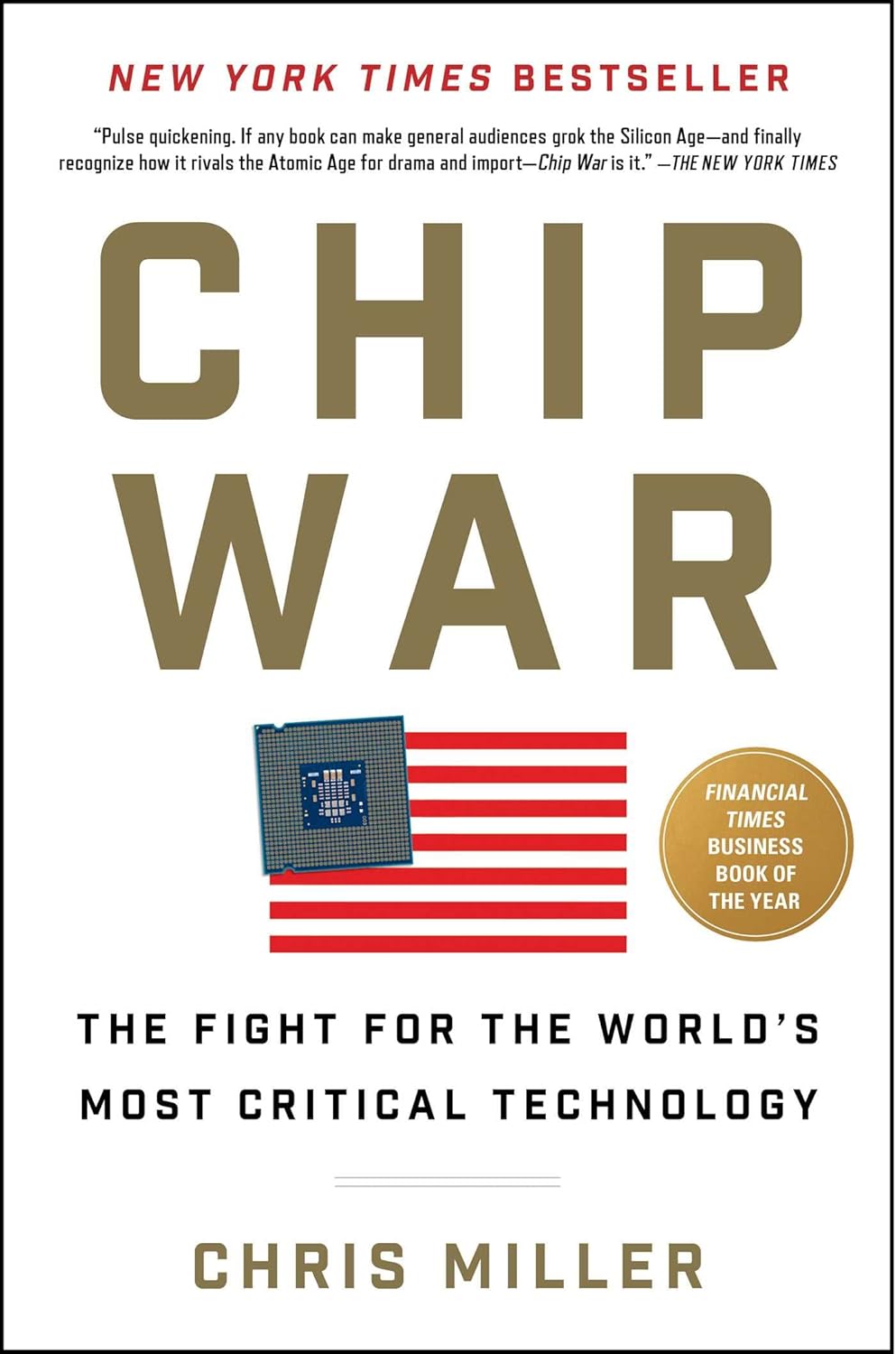
Semiconductors as the oil of the 21st century: history, espionage, and why an island of 23 million people underpins the entire AI economy.

The reference manual for building products on top of AI models: prompts, RAG, fine-tuning, agents, evaluation and deployment.
As an Amazon Associate, Zendoric earns from qualifying purchases; the price does not change for you. · all our recommended books →
🔗 Related on Zendoric
- The distillation wars: why frontier labs now fight ghost armies of fake accounts · 2026-07-11
- Bessent warns the U.S. could sanction China over 'theft' of AI models through distillation · 2026-07-23
- U.S. Treasury threatens sanctions against China's Moonshot over alleged distillation of Anthropic's Fable model · 2026-07-24